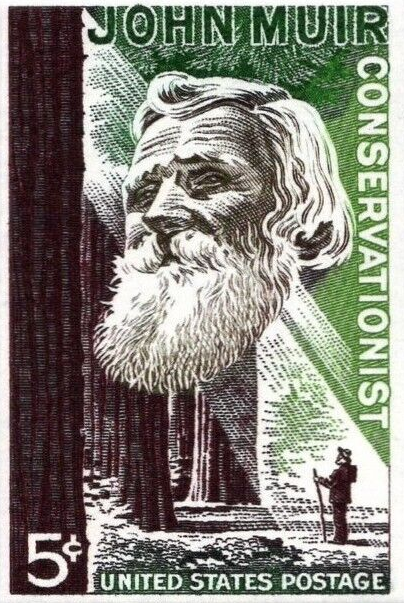
John Muir |
Early LifeJohn Muir was born on April 21, 1838, in Dunbar, Scotland. He grew up exploring the rugged coastline and countryside near his home, which helped spark his love for nature. In 1849, his family immigrated to the United States, settling in Wisconsin. There, Muir worked hard on his family’s farm but found time to invent mechanical tools and explore the outdoors. He later attended the University of Wisconsin, where he studied botany and geology, although he never finished his degree. His curiosity about the natural world only grew stronger during these years. Adventures in NatureMuir loved to travel and study plants and animals. In 1867, after an accident nearly blinded him, he decided to devote his life to experiencing and protecting nature. He set out on a long walk from Indiana to Florida, a journey of about 1,000 miles. Later, he traveled west and fell in love with California’s Sierra Nevada mountains, especially Yosemite Valley. He spent years exploring the region, climbing peaks, and studying glaciers. His writings about Yosemite inspired many people to care about preserving such beautiful places. Preserving the WildernessMuir believed that nature was sacred and needed to be protected from logging, mining, and other human activities. He wrote books and articles describing the beauty of the wilderness and urging Americans to take action. He worked to convince the U.S. government to protect Yosemite, which became a national park in 1890. He also played a key role in the creation of other national parks, such as Sequoia and Mount Rainier. His efforts helped launch the modern conservation movement in the United States. Later Years and LegacyIn 1892, Muir co-founded the Sierra Club, an organization dedicated to protecting natural areas. Under his leadership, the Sierra Club fought to preserve wilderness and educate people about conservation. Muir’s friendship with President Theodore Roosevelt was also important. In 1903, the two camped together in Yosemite, and Roosevelt later expanded the national park system. John Muir died on December 24, 1914, in Los Angeles, California. Today, he is remembered as the “Father of the National Parks” and as one of America’s greatest environmental voices. His writings still inspire people to value and protect nature.
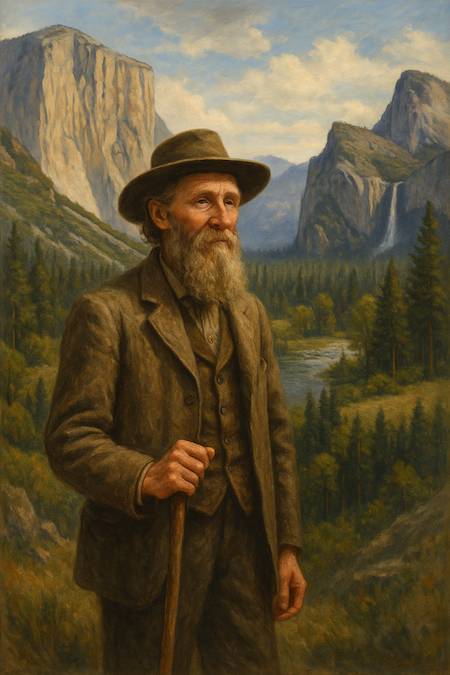
Depiction of John Muir at Yosemite National Park Discussion Questions
Glossary
Interesting Facts
Timeline
Early LifeJohn Muir was born in 1838 in Dunbar, Scotland. He enjoyed exploring the countryside near his home. In 1849, his family moved to Wisconsin. Muir worked on the farm but loved building inventions and studying plants. He later went to the University of Wisconsin, where he studied nature, but did not finish his degree. Discovering NatureIn 1867, after almost losing his eyesight in an accident, Muir decided to spend his life with nature. He walked 1,000 miles from Indiana to Florida and then traveled west to California. In Yosemite Valley, he explored mountains, forests, and glaciers. His love for the wilderness grew, and he began writing about its beauty. Protecting the WildernessMuir believed wild lands should be protected. He wrote books and articles urging Americans to save these places. His efforts helped make Yosemite a national park in 1890 and led to the creation of other parks like Sequoia and Mount Rainier. His work started the modern conservation movement. LegacyIn 1892, Muir co-founded the Sierra Club to protect natural areas. In 1903, he camped with President Theodore Roosevelt in Yosemite, inspiring Roosevelt to expand national parks. Muir died in 1914, but he is remembered as the “Father of the National Parks.” His writings continue to inspire people to care for nature. |