Chester A. Arthur |
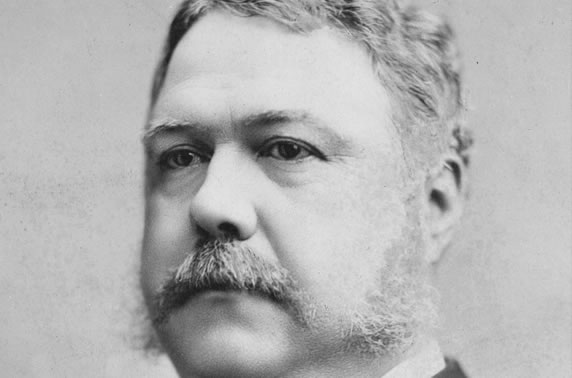 |
Early LifeChester A. Arthur was born on February 5, 1829, in Fairfield, Vermont, but grew up in Schenectady and other towns in New York. He was the fifth of nine children. His father, a converted Baptist minister, was a strong abolitionist. In 1845, Arthur enrolled at Union College, where he became president of the debate society while also working as a schoolteacher. In 1853, he moved to New York City to study law. He was admitted to the New York State Bar in 1854 and joined a law firm that became Culver, Parker, and Arthur. The firm won several important cases involving the rights of enslaved people. Political RiseIn 1859, Arthur married Ellen Herndon, and together they had three children, two of whom survived childhood. During the Civil War, he served as Quartermaster General for the New York State militia. In 1863, he returned to private practice, but his clients included many linked to New York’s Republican political machine. His ties to these influential figures pulled him further into politics, and Arthur soon became a trusted insider in New York’s Republican circles, despite their reputation for corruption. Vice PresidentIn 1871, President Ulysses S. Grant appointed Arthur as Collector of the Customs House of the Port of New York, one of the most powerful and profitable political positions in the country. In the 1880 election, Republican candidate James A. Garfield chose Arthur as his running mate to secure backing from New York’s political machine. Garfield and Arthur won narrowly, with the highest voter turnout in American history (78.4%). When Garfield was assassinated in July 1881, Arthur became the 21st President of the United States. PresidentNicknamed the “Gentleman Boss,” Arthur surprised many by pushing for reforms rather than corruption. His greatest achievement was the Pendleton Civil Service Reform Act of 1883, which required government jobs to be awarded based on merit instead of political favoritism. He also vetoed the Chinese Exclusion Act, which would have banned Chinese immigration for 20 years. Although Congress overrode his veto and passed a 10-year restriction, Arthur showed unexpected independence. His reformist positions weakened his support within the Republican Party, which refused to nominate him for a second term. By then, Arthur was suffering from kidney disease and was too ill to continue. He left office in 1885 and died on November 18, 1886. Most Famous Quote“Men may die, but the fabrics of our free institutions remain unshaken.” – Chester A. Arthur Timeline of Chester A. Arthur’s Life
Interesting Facts
Glossary
Discussion Questions
Early LifeChester A. Arthur was born on February 5, 1829, in Fairfield, Vermont. He grew up in Schenectady and other towns in New York as the fifth of nine children. His father was a Baptist minister and strong abolitionist. In 1845, Arthur attended Union College, where he led the debate society and worked as a teacher. He moved to New York City in 1853 to study law and was admitted to the bar the next year. His law firm, Culver, Parker, and Arthur, won several important cases defending the rights of enslaved people. Political RiseIn 1859, Arthur married Ellen Herndon, and they had three children, though only two survived childhood. During the Civil War, he served as Quartermaster General for New York’s militia, providing supplies and equipment. Afterward, Arthur returned to law practice but gained powerful clients connected to New York’s Republican political machine. His growing ties pulled him deeper into politics, where he became a trusted figure in Republican circles, despite their reputation for corruption. Vice PresidentPresident Ulysses S. Grant appointed Arthur as Collector of the Customs House of the Port of New York in 1871, a position of great power and wealth. In the 1880 election, James A. Garfield chose Arthur as his running mate to gain support from New York’s political leaders. Garfield and Arthur narrowly won with the highest voter turnout in history. When Garfield was assassinated in 1881, Arthur became the 21st President of the United States. PresidentArthur, known as the “Gentleman Boss,” surprised many by supporting reforms. His biggest success was the Pendleton Civil Service Reform Act of 1883, which made government jobs dependent on merit rather than political influence. He also vetoed the Chinese Exclusion Act, which attempted to ban Chinese immigration for 20 years. Though Congress passed a 10-year version instead, Arthur showed independence from party pressure. His reform efforts cost him Republican support, and his party refused to nominate him again. Suffering from kidney disease, Arthur left office in 1885 and died on November 18, 1886. |