Menominee Nation |
|
Origin of the NameThe name "Menominee" comes from the Ojibwe word *manoominii*, meaning "wild rice people." This name reflects the tribe's deep relationship with wild rice, a central food and cultural symbol. The Menominee call themselves *Mamaceqtaw*, meaning “the people.”RangeThe Menominee traditionally lived in what is now northeastern Wisconsin and the Upper Peninsula of Michigan. Their territory included thick forests, rivers, and access to the Great Lakes, especially Green Bay. Today, the Menominee Indian Reservation is located in Menominee County, Wisconsin.
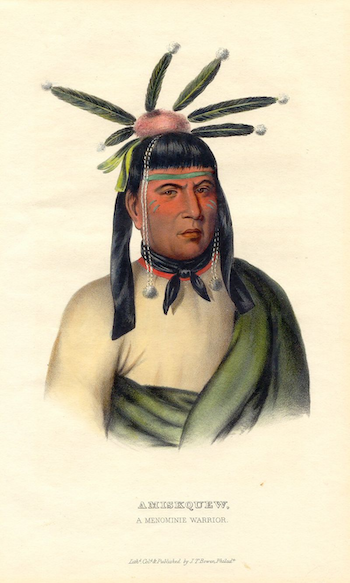
Amiskquew, a mid-19th century Menominee warrior DietWild rice was a staple of the Menominee diet, harvested from local lakes and rivers. They also hunted deer, bear, and small game, and fished in rivers and lakes. The Menominee practiced limited agriculture, growing corn, beans, and squash. Berries, nuts, and maple syrup were also important food sources.
Spearing Salmon By Torchlight, by Paul Kane. It features Menominee spearfishing at night by torchlight and canoe on the Fox River. How Did the Menominee Grow Rice?The Menominee did not grow wild rice like a typical farm crop. Instead, they harvested it from natural lakes and rivers, where it grew wild. Their method was sustainable and respectful of nature. Traditional Wild Rice Harvesting
Wild rice, known as manoomin, was considered sacred by the Menominee. They held ceremonies to honor the rice harvest, and their careful methods helped protect rice beds for future generations. Home TypeMenominee families lived in wigwams made from saplings covered with birch bark or mats made from cattails. These dome-shaped homes were well-suited to the forested environment and could be easily built and dismantled with the seasons.CultureThe Menominee have a rich cultural heritage centered around nature, especially trees and rice. They believe in *manitowak*, spiritual beings present in all living things. In Menominee belief, manitowak are powerful spiritual beings that exist in all parts of nature—animals, plants, water, rocks, and even the wind. The term can mean “spirits” or “mystical forces,” and it reflects a worldview where everything in the natural world is alive and connected. Manitowak are respected and honored through ceremonies, stories, and offerings. They can be helpful or harmful depending on how they are treated. This belief system encouraged the Menominee to live in harmony with the environment, always showing respect for the spirits that surround them. The tribe holds seasonal ceremonies, such as the wild rice harvest celebration. One famous story involves the Great Bear and the stars: it is said that the bear runs across the sky, chased by hunters, and when he is caught in the fall, his blood stains the trees red—explaining autumn leaves. They were expert woodworkers, creating bark containers, birch canoes, and beautifully carved tools. The Menominee are also known for their sustainable forest management practices, which continue to this day. WarfareThe Menominee were skilled warriors but generally tried to maintain peace with neighboring tribes. Conflicts did occur, especially with the Dakota (Sioux) and later during the French and Indian Wars, when the Menominee allied with the French. In the 1800s, they resisted forced relocation and signed several treaties that eventually led to their present reservation.Discussion Questions
Glossary
Where They LivedThe Menominee lived in Wisconsin and Michigan, near forests and lakes. Today, they live on a reservation in Wisconsin. What They AteWild rice was their most important food. They also hunted animals, fished, and grew corn, beans, and squash. Berries and maple syrup were also part of their diet. HomesThey lived in wigwams—round homes made from wood and bark. These were easy to build and fit the forest environment. Beliefs and TraditionsThe Menominee believed in manitowak, spirits found in everything in nature. They told stories like the one about the Great Bear in the sky, which explained the changing seasons. They also made birchbark canoes and carved wooden tools. Rice HarvestingInstead of farming rice, they harvested it from lakes. People in canoes used sticks to knock the rice into the boat. The rice was then dried, roasted, and cleaned for storage. Fighting and PeaceThey tried to stay peaceful but fought enemies when needed. They helped the French during wars in the 1700s. Later, they signed treaties and stayed in Wisconsin. |