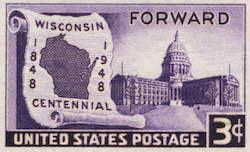
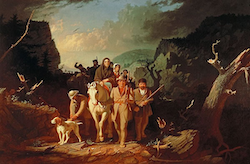
Wisconsin's history began with Native American nations like the Menominee, Ho-Chunk, and Ojibwe, followed by French explorers and fur traders in the 1600s. It became a U.S. state in 1848, growing rapidly through logging, farming, and immigration, especially from Germany and Scandinavia.
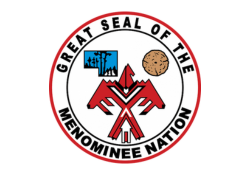
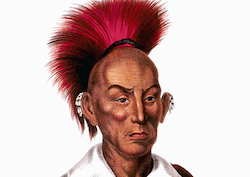
The Menominee Nation is a Native American tribe originally from what is now Wisconsin, known for their sustainable forestry practices and strong connection to the land. Despite being terminated as a tribe in the 1950s, they successfully regained federal recognition in 1973 and continue to manage their reservation and forest today.
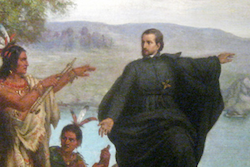
Jacques Marquette and Louis Joliet were French explorers who, in 1673, led an expedition to explore the Mississippi River in search of the Northwest Passage. Though they discovered the river flowed south and not west to Asia, their journey provided valuable maps and opened the interior of North America to further French exploration.
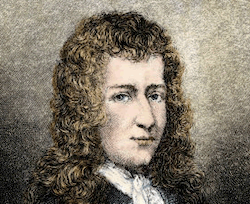
Robert Sieur de La Salle was a French explorer who claimed the entire Mississippi River Basin for France in 1682, naming it Louisiana. His ambitious expeditions expanded French influence in North America, though his final colonization attempt ended in disaster and his own death.
The Northwest Territory was a vast area of land in the early United States, stretching from the Great Lakes to the Ohio River and including parts of modern-day Ohio, Indiana, Illinois, Michigan, Wisconsin, and Minnesota. It was gained after the British ceded it following the French and Indian War and eventually became the foundation for several new states.
The Black Hawk War was a conflict between the U.S. military and the Sauk and Fox tribes in 1832, led by the Sauk leader Black Hawk, as they resisted being displaced from their lands in Illinois. After a series of battles, Black Hawk and his followers were defeated, and the U.S. government forced them to surrender and give up their land.
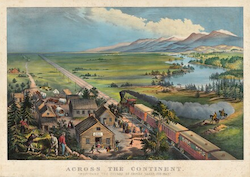
Manifest Destiny was the 19th-century belief that the United States was destined by God to expand its territory across North America. It was used to justify westward expansion, the displacement of Native Americans, and wars such as the Mexican-American War.