The Kansas-Nebraska Act |
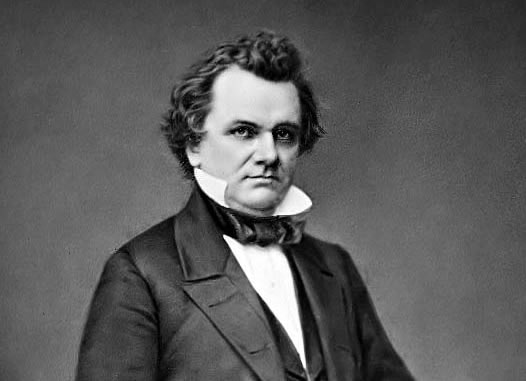
Stephen A. Douglas |
|
In 1854, Congress passed the Kansas-Nebraska Act, which organized the remaining territory acquired in the Louisiana Purchase so that such territories could be admitted to the Union as states. Learn more about the Louisiana Purchase Popular Sovereignty in Kansas and NebraskaProbably the most important result of the Kansas-Nebraska Act was its language concerning the contentious issue of slavery. Proposed by Stephen A. Douglas, and signed by president Franklin Pierce, the bill divided the region into two territories. Territory north of the 40th parallel was called Nebraska Territory, and territory south of the 40th parallel was called Kansas Territory. The most controversial aspect of the Kansas-Nebraska Act was that each territory would decide for itself whether or not to permit slavery. This stipulation repealed the Missouri Compromise of 1820 which stated that slavery was prohibited north of 36 degrees 30'. Learn more about the Missouri Compromise Bleeding KansasAs there was more support for slavery in Kansas, both pro-slavery and anti-slavery advocates organized teams of people to settle in the state. Not surprisingly, the area became a battleground for both sides, and the resulting violence caused the territory to be referred to as "Bleeding Kansas," and was one of the first major causes of the Civil War. Eventually, on January 29, 1861, after much controversy, Kansas was admitted to the Union as a free state - just months before the first shots of the Civil War were fired. Discussion Questions
The Kansas-Nebraska ActIn 1854, Congress passed the Kansas-Nebraska Act to organize the land from the Louisiana Purchase so new states could be added to the Union.Popular Sovereignty in Kansas and NebraskaThe Act, created by Stephen A. Douglas and signed by President Franklin Pierce, split the area into two parts: Nebraska Territory (north) and Kansas Territory (south). It allowed people in each territory to vote on whether to allow slavery, a concept called "popular sovereignty." This overturned the Missouri Compromise of 1820, which had banned slavery north of 36° 30′ latitude.Bleeding KansasBecause Kansas had more pro-slavery support, both sides—those for and against slavery—sent settlers there to influence the vote. Violent clashes broke out, and the territory became known as "Bleeding Kansas." This conflict was one of the early signs of the Civil War. In 1861, Kansas joined the Union as a free state, just before the war began. |
| Kansas-Nebraska Act Activities |