Abraham Lincoln - the Middle Years Part 2 |
Abe Reveals His Views on SlaveryAbe became an influential force of the Whig party in the Illinois legislature and was reelected in 1836, 1838, and 1840. During this time, the issue of slavery became more and more contentious in Illinois and many other states. In 1837, Lincoln first spoke publicly to the legislature concerning his views on slavery when it passed a set of resolutions against abolitionist (anti-slavery) groups. Although Illinois was a free state at the time, it had many people who supported slavery, especially in its southern portions. In addressing the legislature, Abe opposed the resolutions and asserted that he believed slavery was an evil institution. Despite his feelings against slavery, Lincoln admitted he did not think the time was right to free all of the slaves. Abe Earns his Law LicenseIn 1836, Lincoln endeavored to study law. Not surprisingly, by the end of 1836, he was admitted to the Illinois state bar and obtained his license to practice. The next year, he moved to Springfield, where he was already popular with the city's residents for his efforts to get the state capital moved there from Vandalia. Despite the fact he had become a lawyer, Abe was still in debt, had no money, and had no place to live. Sometime shortly after arriving in Springfield, Abe took up residence in the upstairs room above a store owned by Joshua Speed. Abe could not afford to pay the price for his own room so Joshua offered to share his room. Abe, who was carrying all of his possessions in two saddlebags when he inquired about the price for a room, remarked “Well, Speed, I am moved!" after setting his saddlebags on the floor of the room. Abe and Joshua quickly became inseparable and forged a lifelong friendship.
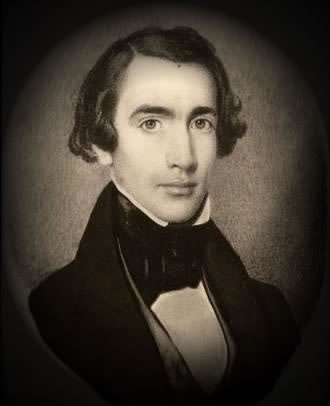
Joshua SpeedThe Master StorytellerAbe soon became a respected lawyer, known for his honesty, wit, oratory and hard work. In the 1830's, lawyers and lawmakers were expected to travel to circuit courts throughout the state, often times covering great distances. Abe was assigned to what was called the eighth judicial circuit. As a politician and lawyer, Abe would travel to such courts to explain to the people the meanings of the laws created in the legislatures that were being applied to the local cases. Abe endeared himself to the people with the anecdotes and stories he used to explain the difficult concepts to people in terms they could understand. Often times, such educational "sessions" were held in the village tavern or meetinghouse, would include meals, and would last well into the night. It was at these "sessions" where Abe's legend was born and grew; where his stories, speeches, and explanations became legendary. Though poor, Abe was beginning to make a name for himself beyond the confines of New Salem or even Springfield.Discussion Questions
Abe Reveals His Views on SlaveryAbraham Lincoln became an important leader in the Whig Party while serving in the Illinois legislature. He was reelected in 1836, 1838, and 1840. During this time, debates about slavery became more heated in Illinois and across the country. In 1837, Lincoln gave a public speech to the legislature, opposing a resolution that was against anti-slavery groups. Although Illinois was a free state, many people in the southern part still supported slavery. Lincoln said he believed slavery was wrong, but he also said the time wasn’t right to end it entirely. Abe Earns His Law LicenseIn 1836, Lincoln began to study law. By the end of that year, he passed the bar exam and became a licensed lawyer. In 1837, he moved to Springfield, where people already knew him for helping move the state capital from Vandalia to Springfield. Even though he was a lawyer, Lincoln had no money or home. He ended up sharing a room above a store with Joshua Speed, who became one of his closest friends. The Master StorytellerLincoln gained a reputation as an honest and hardworking lawyer. In the 1830s, lawyers traveled from town to town to work in different courts. Lincoln traveled the "eighth judicial circuit" to help explain the law and represent people in court. He became popular for using stories and humor to explain complicated issues. These sessions, often held in local taverns, helped make Lincoln well-known throughout the state and beyond. Go on to next page: Middle Years Part 3 |
| Lincoln Activities |
|
| Lincoln Pages |