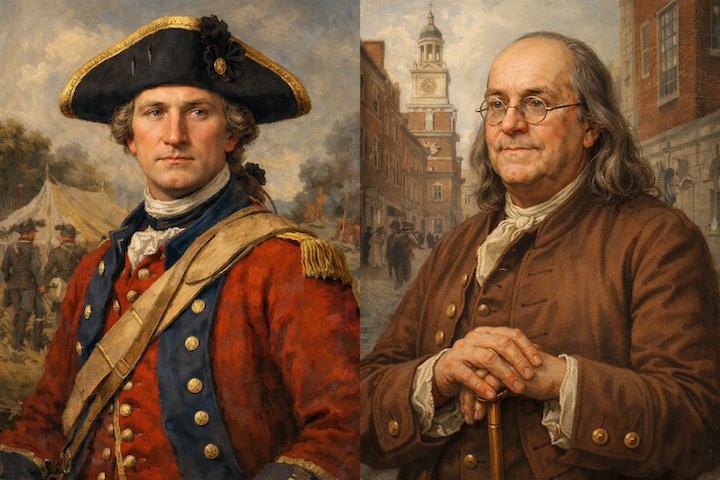
The Roles of Benjamin Franklin and George Washington in the French and Indian War |
Introduction: Two Different Roles in One WarThe French and Indian War (1754–1763) was fought for control of North America. Great Britain and France battled over land, trade, and power, and many Native American nations chose sides based on what they believed would best protect their people. Two important colonial figures—George Washington and Benjamin Franklin—played very different roles in this conflict. Washington became known for his early military actions on the frontier, while Franklin supported the war effort through leadership, planning, and cooperation between the colonies. George Washington: A Young Officer on the FrontierIn the early 1750s, George Washington was a young Virginia officer. British leaders wanted to stop French expansion into the Ohio River Valley, a region both sides claimed. Washington was sent to deliver a message warning the French to leave. The French refused, and tension quickly turned into violence. In 1754, Washington and his men clashed with a French force in the wilderness. Soon after, Washington built a small fort called Fort Necessity. The French attacked, and Washington was forced to surrender. Even though it was a defeat, Washington gained valuable experience. He learned how difficult frontier warfare could be and how important supplies, alliances, and strategy were. His early role in the war helped launch his military career and made him more widely known in the colonies. George Washington’s ImpactWashington’s actions did not “cause” the entire war by himself, but they did help spark the first fighting. His missions and battles showed that the land conflict in the Ohio River Valley could no longer be solved by words alone. His experiences also prepared him for future leadership during the American Revolution. Benjamin Franklin: A Leader, Organizer, and Problem SolverBenjamin Franklin did not fight on the battlefield, but he played a major role in supporting Britain’s war effort. Franklin was a printer, writer, and political leader in Pennsylvania. During the French and Indian War, he worked to unite the colonies for defense and helped organize supplies and support for soldiers. One of Franklin’s most important ideas was that the colonies needed to cooperate. In 1754, he supported a plan for colonial unity called the Albany Plan of Union. The plan was not adopted, but it was an early attempt to bring the colonies together for shared defense. Franklin also helped raise money, arrange transportation, and gather resources such as food, wagons, and equipment—supplies that were essential for armies trying to fight in distant forests and frontier forts. Learn more about the Albany Plan “Join, or Die”: Franklin’s Famous WarningDuring the French and Indian War, Benjamin Franklin published one of the most famous political cartoons in American history called “Join, or Die.” The image showed a snake cut into pieces, with each piece labeled as a different colony. Franklin used the cartoon to warn that the colonies were weak if they acted alone. He believed that unless the colonies cooperated and worked together for defense, they would fail against powerful enemies like France. The cartoon supported his Albany Plan of Union and helped spread the idea that colonial unity was necessary for survival. Although the colonies did not unite at the time, “Join, or Die” became an early symbol of cooperation that would later influence the American Revolution. Benjamin Franklin’s ImpactFranklin’s work showed that war required more than soldiers—it required organization, communication, and teamwork. His efforts to encourage unity and improve colonial coordination helped shape later American ideas about cooperation between colonies. Even though the Albany Plan failed, it planted an important seed: the colonies could accomplish more when they worked together. Comparing Their RolesGeorge Washington and Benjamin Franklin contributed to the French and Indian War in different ways. Washington’s role was military and took place on the frontier, where battles and forts decided control of land. Franklin’s role was political and practical—he helped the colonies work together and support the war effort through planning and resources. Together, their experiences helped shape the future of American leadership and cooperation. Discussion Questions
Glossary
George Washington’s RoleGeorge Washington was a young officer from Virginia during the French and Indian War. British leaders sent him to the Ohio River Valley to tell the French to leave the land. The French refused, and fighting soon began. Washington and his soldiers built a small fort called Fort Necessity. The French attacked the fort, and Washington was forced to surrender. Although Washington lost the battle, he gained important experience. He learned how hard it was to fight in forests and wilderness areas. These lessons helped prepare him to become a strong military leader later during the American Revolution. Benjamin Franklin’s RoleBenjamin Franklin did not fight in battles, but he helped the colonies in other important ways. He was a writer, printer, and leader in Pennsylvania. Franklin believed the colonies needed to work together to defend themselves. He helped organize supplies such as food, wagons, and equipment for soldiers. Franklin also supported a plan called the Albany Plan of Union. This plan would have united the colonies so they could protect themselves better. Even though the plan did not pass, it was an important idea. “Join, or Die” and the Idea of UnityFranklin created a famous cartoon called “Join, or Die.” It showed a snake cut into pieces, with each piece representing a colony. Franklin used the image to warn that the colonies would be weak if they stayed divided. He believed cooperation was necessary to survive. Why Their Roles Were ImportantGeorge Washington helped on the battlefield, while Benjamin Franklin helped by planning and bringing colonies together. Both men played different but important roles in the French and Indian War. Their experiences helped shape future American leadership and ideas about unity.
|
| Washington/Franklin French and Indian WarActivities |
|