The Battle of Monmouth Courthouse |
||
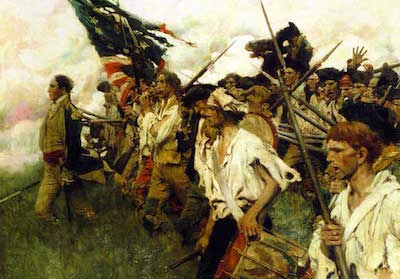
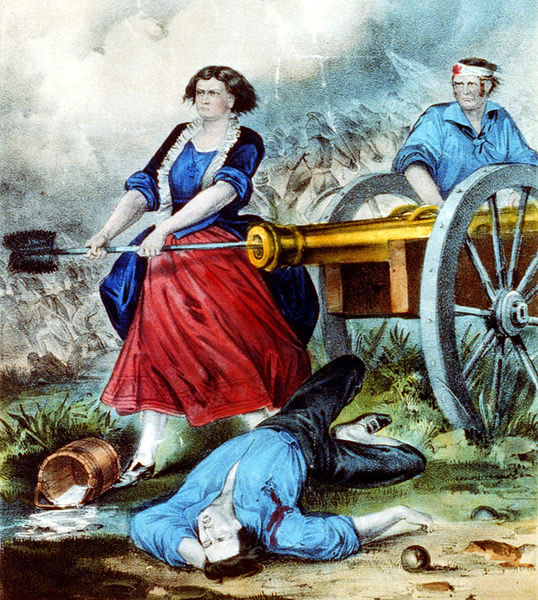
Perfect OpportunityFollowing the winter and spring at their encampment at Valley Forge, the Continental Army was trained and refreshed. Commander-in-Chief of Continental forces, George Washington, had learned that British forces had planned to evacuate Philadelphia and return to New York in fear of a naval blockade. The 100 mile march from Philadelphia to New York would occur largely through the state of New Jersey. Washington saw the evacuation as a perfect opportunity to strike at the British. A Deadly Battle on a Blistering DayOn the blistering afternoon of June 28, 1778, Washington ordered a detachment of 5,000 men to strike at the British rear guard as they departed Monmouth Courthouse, New Jersey on their way to New York. The strike was initiated to delay the British until the main American force could engage them. Patriot General Charles Lee was in charge of the initial attack, which failed miserably and resulted in a disorganized retreat. An enraged General Washington reportedly reprimanded Lee before taking command of the retreating soldiers. Placing himself in the line of fire among the retreating Continentals, Washington rallied the soldiers who regrouped and held the British in check until the main American force could arrive. The battle raged throughout the entire day with neither side gaining a decisive advantage. Only the arrival of dusk silenced the muskets and cannon. Although Washington wanted to resume the battle in the darkness, British forces had withdrawn from the area to continue their march to New York City.
An Encouraging DrawPatriot forces suffered approximately 500 casualties in the battle while British forces suffered as many as 1,000. Dozens, if not, hundreds of soldiers died of heat stroke rather than from combat. The battle is historically seen as a tactical draw, although the Patriots did not stop the British march to New York. The Patriots, did however, prove they could successfully battle the British in open combat. Monmouth was the last major battle waged in the Northern Theater. British forces would soon turn their attention on the Loyalist-friendly Southern colonies.
After spending the winter and spring at Valley Forge, the Continental Army was stronger and better trained. George Washington, the leader of the Continental Army, learned that the British were planning to leave Philadelphia and go back to New York because of a possible naval blockade. Since the British would march about 100 miles through New Jersey, Washington saw a great chance to attack them. A Deadly Battle on a Blistering DayOn June 28, 1778, a very hot day, Washington sent 5,000 soldiers to attack the back of the British army near Monmouth Courthouse, New Jersey. The goal was to slow them down until the rest of the American army could catch up. General Charles Lee led the first attack, but it failed and the troops started retreating in confusion. Washington was angry and took control, placing himself among the retreating soldiers. He encouraged them to regroup and fight back. The battle lasted all day, with no clear winner. When night came, the British left and continued marching to New York. Washington wanted to keep fighting, but the British were already gone. An Encouraging DrawThe Patriots had about 500 casualties, and the British had up to 1,000. Many soldiers died from heat stroke instead of battle wounds. The fight is seen as a draw, even though the Patriots didn’t stop the British. However, they showed they could stand up to the British in open battle. Monmouth was the last major battle in the northern colonies. Afterward, the British turned their focus to the southern colonies, where they had more support.
|
||
| Monmouth Courthouse Activities | ||
|