 |
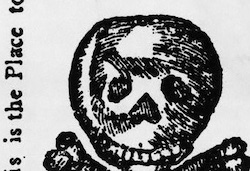
Day 1: The Stamp Act and No Taxation Without Representation
The first lesson of our Revolutionary War unit focuses on Stamp Act, the formation of the Sons of Liberty, and the new motto "No Taxation Without Representation." It contains a Power Point presentation with script, detailed lesson plan, web-based article, several literacy and reading comprehension activities, fun creative thoughts activities, and much more. |
|
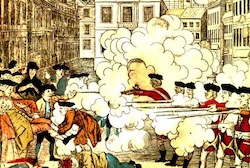 |
Day 2 and 3: The Boston Massacre
This lesson explores the Townshend Act and the Boston Massacre. It includes a PowerPoint presentation, a detailed lesson plan, several differentiated articles, an image analysis activity, multiple reading comprehension activities including those utilizing primary sources, a writing activity on propaganda, and much more. |
|
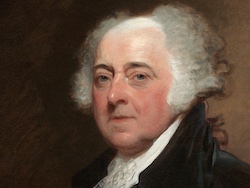 |
Day 4: The Adams Family
This lesson introduces John and Abigail Adams and includes a PowerPoint presentation, detailed lesson plans, and numerous literacy and writing activities, including those that incorporate primary sources. It also features an interactive Adams family tree, a John Adams illustrated comprehension story, along with a bonus article and primary source activity focused on the “My Dearest Friends” letters exchanged between the two. |
|
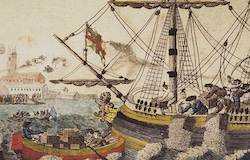 |
Day 5 and 6 - The Boston Tea Party and Intolerable Acts
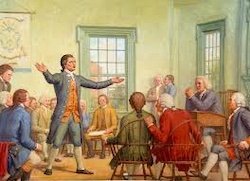
This lesson explores the Boston Tea Party in depth, including the “too big to fail” East India Company, the unwritten “etiquette” of the Boston Tea Party, and the resulting Intolerable Acts. This two-day lesson includes a detailed lesson plan, Power Point presentation with script, multiple differentiated articles, writing activities, reading comprehension exercises, and much more. |
|
 |
Day 7 - The First Continental Congress
This lesson examines the First Continental Congress, including its members, purposes, and goals. It features a PowerPoint presentation, a detailed lesson plan, an interactive Congress chart with a scavenger hunt, and related activities. |
|
 |
Day 8 - Paul Revere and His Midnight Ride
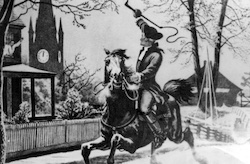
This lesson explores the life of Paul Revere, including his legendary midnight ride to warn that British troops were approaching Lexington. It features a detailed lesson plan, a PowerPoint presentation, an animated, interactive map of Revere's path, a primary source comprehension activity, and several additional literacy and engaging activities. |
|
 |
Day 9 - Battles of Lexington and Concord
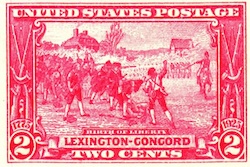
This lesson explores the battle that gave rise to “the shot heard round the world”—the opening conflict of the Revolutionary War known as the Battles of Lexington and Concord. It includes a detailed lesson plan, a scripted PowerPoint presentation, differentiated articles and biographies, an interactive People of Lexington and Concord chart with a scavenger hunt, and multiple reading comprehension activities.
|
|
 |
Day 10 - Fort Ticonderoga and the Noble Train of Artillery
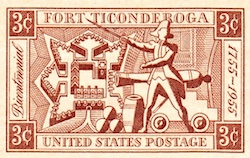
This lesson examines the capture of Fort Ticonderoga and the daring transport of its cannons over 300 miles to Boston—an effort known as the Noble Train of Artillery. It includes a scripted PowerPoint presentation, a detailed lesson plan, optional articles and biographies, an interactive Noble Train map, and multiple reading comprehension activities. |
|
 |
Day 11 - The Second Continental Congress
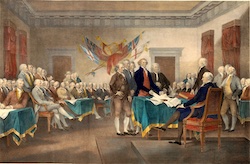
This lesson examines the Second Continental Congress, including its members, purposes, and goals. It features a PowerPoint presentation, a detailed lesson plan, an interactive Congress chart with a scavenger hunt, and related activities. |
|
 |
Lesson 12: John Hancock
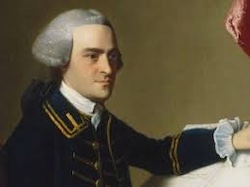
This lesson uses a PowerPoint presentation as an anchor to introduce students to John Hancock’s life, leadership, and role in the American Revolution, supported by a differentiated article and reading comprehension activities. Students also engage in a creative, printable or online signature activity that explores the symbolism and risks behind Hancock’s famous signature on the Declaration of Independence. |
|
 |
Lesson 13: The Continental Army
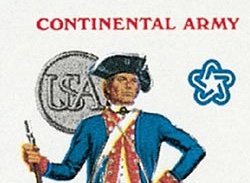
This lesson uses a PowerPoint presentation as an anchor to explain how the Continental Army was created, the challenges it faced, and how it evolved into an effective fighting force during the American Revolution. Students deepen understanding through a differentiated article, an interactive ranks module with a scavenger hunt, and reading comprehension activities, even as the lesson intentionally looks ahead to later events in the war. |
|
 |
Lesson 14: The British Military Machine and Hessian Forces
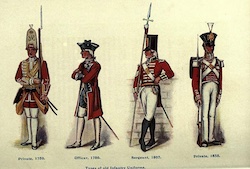
This lesson uses an interactive module as the anchor to teach students how the British Army in North America was organized, who its key leaders were, and how its hierarchy compared to the Continental Army. Students also investigate Hessian (German) auxiliary troops through a differentiated reading and comprehension activities, and complete a scavenger hunt to explain how Britain’s global war responsibilities affected the fight for America. |
|
 |
Day 15-16: George Washington
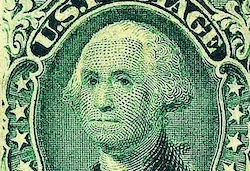
This two-day lesson uses a PowerPoint presentation as an anchor to explore George Washington’s entire life and legacy, intentionally moving beyond the current unit chronology to provide a complete picture of his leadership in war and peace. Students engage with differentiated articles, interactive maps and stories, and a structured writing task to explain why Washington is remembered as the Father of Our Country. We offer a vast amount of additional literacy and comprehension activities, and interactive games and projects involving Washington. |
|
 |
Day 17: Battle of Bunker Hill
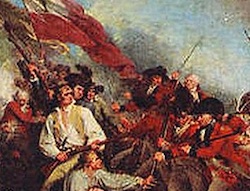
This lesson uses a PowerPoint presentation as an anchor to examine the Battle of Bunker Hill and explain why it was a pyrrhic victory for the British despite their technical win. Students analyze how the heavy losses forced British officers to rethink their strategy through a key interactive module, supported by differentiated readings and comprehension activities. |
|
 |
Day 18: Emerging Sub-Plot: Benedict Arnold and the Quest for Canada
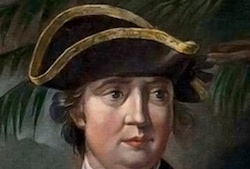
This lesson uses a PowerPoint presentation as an anchor to examine Benedict Arnold’s failed invasion of Canada as a key sub-plot of the American Revolution and how early setbacks shaped his growing resentment. Students then analyze an interactive article and module on Arnold’s betrayal, treason in American history, and his potential legacy, even as the lesson intentionally looks ahead to events covered in future units. |
|
 |
Day 19: Thomas Paine and Common Sense
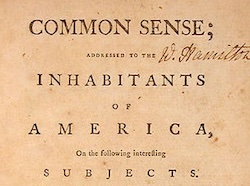
This lesson uses a PowerPoint presentation as an anchor to examine the life and ideas of Thomas Paine and how his pamphlets shaped public opinion during the American Revolution. Students explore the Thomas Paine Pamphlets interactive module with a scavenger hunt, analyze figurative language from The Crisis, and complete reading comprehension activities to better understand the power of revolutionary words. |
|
 |
Day 20: Loyalists vs Patriots
This lesson explores the deep divisions between Loyalists and Patriots during the American Revolution through a differentiated reading, an interactive quote-analysis activity, and a historically grounded writing task. Students apply their understanding by identifying political viewpoints and composing a mock conversation between Benjamin Franklin and his son William that demonstrates how revolutionary beliefs could divide even the closest families. |
|
 |
Days 21-22: The Declaration of Independence
This two-day lesson explores the Declaration of Independence through a teacher-led PowerPoint, an explanatory article, and an interactive scavenger hunt that helps students analyze the document’s ideas and historical context. Students then apply their understanding through a creative narrative about discovering a hidden historical treasure and targeted reading comprehension activities that reinforce the Declaration’s meaning and significance.
|
|
 |
Day 23: Thomas Jefferson
This lesson uses a teacher-led PowerPoint, a supporting article, and an interactive “Renaissance Man” module to explore the life, ideas, and achievements of Thomas Jefferson across writing, politics, science, and architecture. Students then apply their understanding through scavenger hunts, writing and reading activities, and a Virtual History Teacher role-play that deepens analysis and historical thinking. |
|
 |
Day 24: The Reckoning - Battles of New York City
This lesson uses the Battles of New York PowerPoint as an anchor to examine leadership under pressure, highlighting how George Washington held the Continental Army together despite repeated defeats. Through discussion, interactive exploration, a scavenger hunt, and reading comprehension activities, students analyze why survival and perseverance were critical to the American Revolution’s ultimate success. |
|
 |
Day 25: The New Hope - Battles of Trenton and Princeton
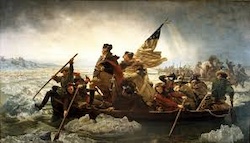
This lesson uses a teacher-led PowerPoint as the anchor, supported by an online article on the Battle of Trenton, an interactive exploration module, and a scavenger hunt to build historical understanding. Students then apply their learning through a reflective “Moral Victories” writing prompt, reading comprehension activities, or a creative analysis of the Washington Crossing the Delaware painting.
|
|
 |
Days 26-27: The Saratoga Campaign
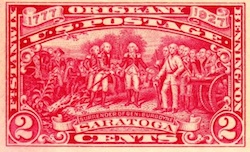
This lesson centers on a detailed PowerPoint presentation and is reinforced by an article on the Battle of Saratoga, an interactive module tracing the goals and movements of the three British generals, and an accompanying scavenger hunt. Students extend their learning through optional readings on Brandywine and Germantown, a “Turning Point” writing prompt with sharing opportunities, and a final discussion on the global impact of French entry into the war.
|
|
 |
Days 28-29: Benjamin Franklin
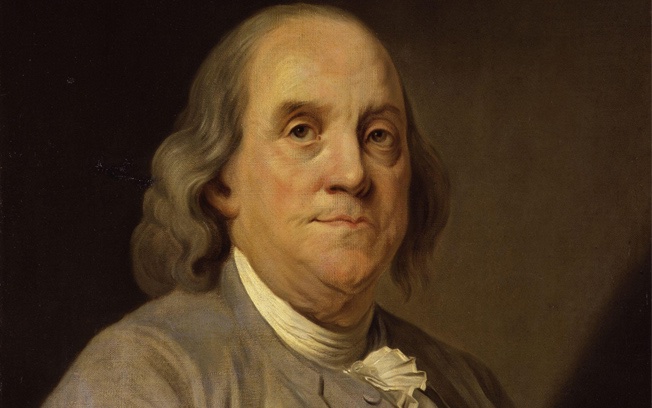
This two-day lesson uses a teacher-led PowerPoint, articles, and interactive modules to explore Benjamin Franklin’s life as a printer, inventor, scientist, diplomat, and Founding Father. Students deepen their understanding through scavenger hunts, creative design and game-based activities, and reading comprehension tasks that highlight why Franklin is considered America’s original Renaissance Man. |
|
 |
Day 30: The Treaty of Alliance with France
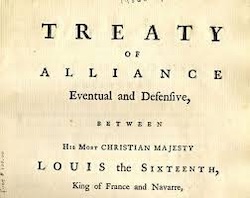
This lesson uses a teacher-led PowerPoint, article analysis, and an interactive scavenger hunt to explore the Treaty of Alliance of 1778 and how long-standing rivalry between England and France helped the American colonies gain a powerful ally. Students also examine Benjamin Franklin’s diplomacy in France to understand how negotiation and international politics played a crucial role in winning the American Revolution. |
|
 |
Day 31: Winter of 1777-1778 at Valley Forge
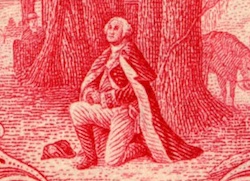
This lesson uses a teacher-led PowerPoint, article reading, and immersive writing to explore the hardships and transformation of the Continental Army during the Winter at Valley Forge. Students analyze suffering, leadership, and morale by writing a historically accurate letter from the perspective of a soldier and may extend their learning through comprehension and creative activities. |
|
 |
Day 32: The Battle of Monmouth Courthouse
This lesson uses a teacher-led PowerPoint, article reading, and an interactive investigation to examine how training and leadership transformed the Continental Army during the Battle of Monmouth Courthouse. Students also explore the legend of Molly Pitcher to distinguish between historical evidence and tradition while analyzing how practice and perseverance lead to improvement. |
|
 |
Day 33: The Southern Theater
This lesson uses a teacher-led PowerPoint to explain the British shift to the Southern Campaign and the key battles that led to American victory in the Revolutionary War. Students then apply their understanding through an interactive Southern Campaign map and scavenger hunt, supported by optional reading articles for deeper analysis. |
|