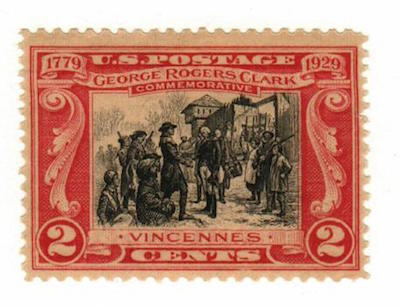
Battle of Vincennes |
A British Fort Far From the Center of FightingFort Vincennes was a British fort located on what now is the border of Indiana and Illinois, along the Wabash River. At the time, it was in what was called the Northwest Territory, far from most of the fighting in the Revolutionary War. The English had initially built in during the French and Indian War. The fort was square in shape and defended on several sides by blockhouses: towers made of thick timbers and musket-proof, equipped with a cannon. In early 1779, a new lieutenant governor named Henry Hamilton came to the region. Hamilton decided to reinforce the fort with new defenses, making it even more impenetrable. George Rogers Clark and the Miserable March to VincennesThe Americans knew they needed to strike the fort before the reinforcements were completed and the site became even harder to conquer. The man chosen for the job was Lieutenant Colonel George Rogers Clark, who was stationed 180 miles west of Fort Vincennes in Kaskaskia. Clark left Kaskaskia on February 6, 1779, with 172 American and French soldiers. The trip to Vincennes was very challenging during the winter, as the wet conditions forced the soldiers to wade through cold standing water and drained much of their food. The group reached the town of Vincennes on February 23. Many of the townspeople were American sympathizers who kept the invasion quiet so that Clark and his men could take the British by surprise. Surprise AttackThe day of the attack, Hamilton didn't realize that the Americans had arrived until he heard them firing on the fort. Clark had organized a barricade facing the fort, keeping the British in. Clark's strategy proved effective, and the morning of February 24, he demanded that the British surrender. Hamilton refused, but agreed to meet Clark and discuss terms, knowing that he was in a bad spot. The morning of February 25, the British surrendered Fort Vincennes, and the Americans renamed it Fort Patrick Henry. Legacy of the BattleThe Battle of Vincennes was an American victory, but is also infamous for another encounter that occurred at the same time. During the fight, a war party of native Americans and French-Canadians entered Vincennes, ignorant to the presence of American soldiers. In the fight that followed, Clark captured some of the group; while he let the French-Canadians go, he brutally killed the Native Americans and threw their bodies in the river as revenge for native raids in the frontier area. Clark never denied or apologized for his cruel actions in Vincennes. Fort Vincennes was a British fort located in the Northwest Territory (now near the border of Indiana and Illinois) on the Wabash River. It was built during the French and Indian War and was reinforced in early 1779 by British Lieutenant Governor Henry Hamilton to make it harder to attack. George Rogers Clark's Tough JourneyThe Americans knew they needed to act before the fort’s defenses became stronger. Lieutenant Colonel George Rogers Clark was chosen for the task. In February 1779, Clark set off with 172 soldiers from Kaskaskia, 180 miles away. The journey was difficult, with cold water and little food. They reached Vincennes on February 23, and local American sympathizers kept their presence a secret. Surprise Attack and SurrenderOn February 24, Clark’s men attacked the fort. The British didn’t realize the Americans had arrived until they heard gunfire. Clark set up a barricade around the fort and demanded the British surrender. Hamilton refused, but agreed to meet with Clark. The next morning, on February 25, the British surrendered, and the fort was renamed Fort Patrick Henry. Legacy of the BattleAlthough the Battle of Vincennes was a victory for the Americans, it was also marked by brutal actions. A group of Native Americans and French-Canadians unknowingly entered the town and clashed with Clark's men. Clark captured some of the group and killed several Native Americans in revenge for previous raids. He never apologized for his actions, which remain controversial. |