One if by Land, Two if by Sea |
|
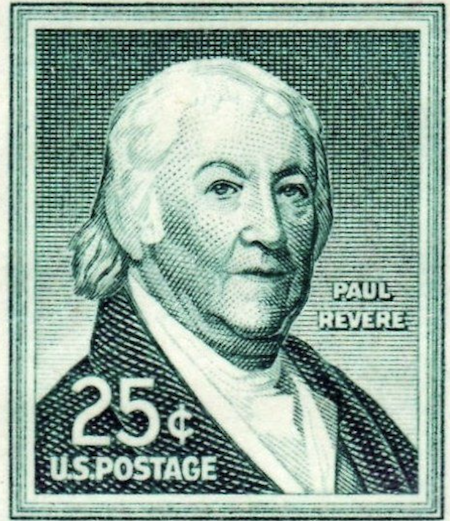
The phrase "One if by land, two if by sea" holds a significant place in American history, echoing from the days of the American Revolution and the stirring events that led to the birth of a new nation. This cryptic message, immortalized by Henry Wadsworth Longfellow in his poem "Paul Revere's Ride," encapsulates a pivotal moment in the struggle for independence. The Context:In the tense days leading up to the Battles of Lexington and Concord on April 19, 1775, the American colonies were on the brink of armed conflict with British forces. The colonial militia, aware of the possibility of a British military expedition, needed a reliable signal to indicate the route of the approaching enemy. Paul Revere's Midnight Ride:Paul Revere, a silversmith and patriot, played a crucial role in alerting his fellow revolutionaries about the impending British movements. On the night of April 18, 1775, Revere, along with William Dawes and Samuel Prescott, embarked on a daring ride from Boston to Concord to warn the colonial militias about the advancing British troops.
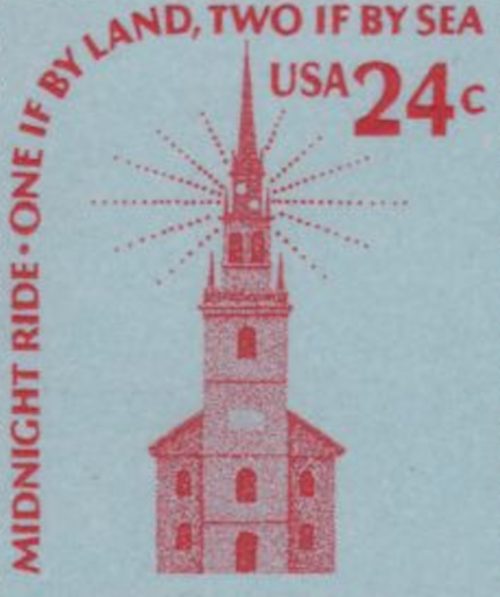
The Signal:To communicate the route of the British forces, and in the event that Revere was unable to fulfill his mission as a messenger, a lantern signal was arranged at Boston's Old North Church to communicate with the citizens of Charlestown, a village across the Charles River from Boston. The plan was simple yet ingenious: one lantern if the British were advancing over land through Boston Neck, and two lanterns if they were coming by sea, crossing the Charles River. The Old North Church was chosen because with a steeple that rose to 191 feet, it was the tallest building in Boston. Furthermore, the church's custodian, Robert Newman, was an ardent Patriot and had access to the church in the middle of the night. The Message in Verse:Henry Wadsworth Longfellow immortalized this episode in his poem "Paul Revere's Ride," written in 1861. The poet romanticized and popularized the historic event, cementing the "one if by land, two if by sea" signal in the collective memory of the American people. Longfellow's PoemHe said to his friend, “If the British march By land or sea from the town to-night, Hang a lantern aloft in the belfry arch Of the North Church tower as a signal light,– One if by land, and two if by sea; And I on the opposite shore will be, Ready to ride and spread the alarm Through every Middlesex village and farm, For the country folk to be up and to arm.” The phrase "One if by land, two if by sea" is an important part of American history. It comes from the time of the American Revolution and was made famous by the poem "Paul Revere’s Ride" by Henry Wadsworth Longfellow. It marks a key moment in the fight for American independence. The ContextBefore the Battles of Lexington and Concord on April 19, 1775, tensions were high between the American colonists and British soldiers. The colonists knew the British might be planning a military move, and they needed a signal to know how the British would approach. Paul Revere's Midnight RideOn the night of April 18, 1775, Paul Revere, a silversmith and patriot, rode with William Dawes and Samuel Prescott from Boston to Concord. Their mission was to warn the colonial militias that British troops were on the way. The SignalIn case Paul Revere couldn’t deliver the warning himself, a backup plan was set. At the Old North Church in Boston, lanterns would be used to send a signal across the river to Charlestown. One lantern meant the British were coming by land. Two lanterns meant they were coming by sea. The church was chosen because it had the tallest steeple in Boston, and its caretaker, Robert Newman, supported the Patriot cause and had access to the building. The Message in PoetryIn 1861, poet Henry Wadsworth Longfellow wrote "Paul Revere’s Ride," which made the story even more famous. His poem helped fix the signal—"one if by land, two if by sea"—in the minds of Americans for generations to come. Longfellow's PoemHe said to his friend, “If the British march By land or sea from the town to-night, Hang a lantern aloft in the belfry arch Of the North Church tower as a signal light,– One if by land, and two if by sea; And I on the opposite shore will be, Ready to ride and spread the alarm Through every Middlesex village and farm, For the country folk to be up and to arm.” |