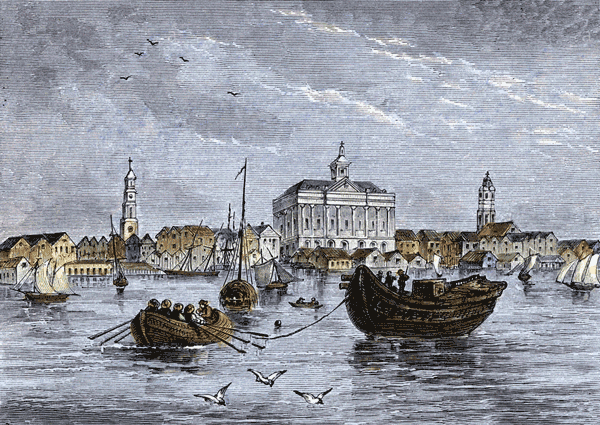
Siege of Charleston |
Tactical Change - Occupying the Southern ColoniesFollowing the defeat at Saratoga and tactical draw at Monmouth Courthouse, the British military changed its strategy. It had failed to make significant progress in the northern and middle colonies and its ultimate plan to isolate New England along the line of the Hudson River had failed. Knowing that Loyalist support was greater in Georgia and the Carolinas, the British made a major military adjustment and began its Southern Campaign, designed to invade and occupy the southern colonies with help from colonists loyal to England. In December of 1778, the campaign officially began with the British seizure and subsequent occupation of Savannah, Georgia. The British next set their sights on a much bigger prize - Charleston. A Hopeless Situation in CharlestonPatriot military forces quickly realized Charleston would be a likely target for the British. Commander-in-Chief George Washington appointed Benjamin Lincoln in charge of the city's defenses in December 1779. Unfortunately for Lincoln, Washington could not afford to offer additional defenses or reinforcements because of the need to keep significant forces near New York. Upon arriving in Charleston, Lincoln realized it was a dire situation. Many of the fortifications protecting Charleston were inadequate or unfinished. While Lincoln and his soldiers worked feverishly to improve the fortifications, British lieutenant general Henry Clinton and 13,500 British and Hessian soldiers were closing in on Charleston from the sea. American efforts did little to halt the British advances, and by April 1, Charleston was under siege. By April 9, British forces had begun shelling Charleston from its harbor. Over the coming days, however, Lincoln refused several of the British demands for surrender. By April 22, the situation was totally hopeless for Lincoln. He proposed surrender terms to Clinton in which he would capitulate in exchange for the freedom of his soldiers. Clinton refused and the bombardment of the city intensified, resulting in several damaging fires that threatened to engulf the entire city. On May 12, with no bargaining power, Lincoln was forced to surrender under harsh terms. Clinton demanded the capture and incarceration of over 2,500 soldiers, many of whom would die in squalid British prisons. In addition, the Americans were forced to surrender 300 cannons and over 6,000 muskets. Largest Patriot Surrender in the Revolutionary WarFollowing the siege, the largest and most important city in the southern colonies was in British control. The surrender at Charleston would represent the single largest Patriot surrender of soldiers and weapons during the entire war.
After setbacks in the north, the British changed tactics. Their plan to isolate New England had failed. Knowing there was more Loyalist support in the South, they began a Southern Campaign. In December 1778, they captured Savannah, Georgia, and aimed next for Charleston. Charleston Faces a Tough BattleThe Patriots knew Charleston was a target. George Washington put Benjamin Lincoln in charge of its defense in December 1779. But Washington couldn’t send more troops. Lincoln found the city poorly defended. While trying to fix this, British General Henry Clinton arrived with 13,500 troops. By April 1, Charleston was under siege. On April 9, the British began bombarding the city. Lincoln refused to surrender at first, but by April 22 the situation was hopeless. He asked for terms, but Clinton refused. The bombing worsened, and on May 12, Lincoln surrendered. Over 2,500 American soldiers were taken prisoner, along with 300 cannons and 6,000 muskets. Biggest Patriot Surrender of the WarThe fall of Charleston gave the British control of the South’s biggest city. It was the largest surrender of American troops and weapons during the Revolutionary War. |
| Siege of Charleston Activities |
|