Siege of Yorktown

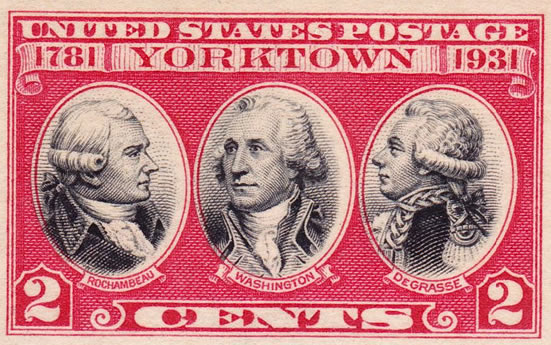
Yorktown Sesquicentennial

March Toward the Chesapeake

By 1780, the Revolutionary War was raging in both the North and the South, and French forces had fully committed in the American effort to defeat the British. A major objective of the French-American forces was to liberate New York City, which had been occupied by the British. Initially, George Washington had wanted the combined forces to engage the British in New York City, but French General Comte de Rochambeau convinced him that the chance for success would be greater if the combined forces engaged British forces farther south in the Chesapeake Bay, where Another French General, Comte de Grasse, could direct his massive fleet from its Caribbean post. Here, Washington's land troops and French naval troops could encircle British forces under Charles Cornwallis, who were camped at Yorktown, Virginia. Meanwhile, when the decision was finally made, French and American land forces, which included 5,500 new French soldiers, had met near New York City to begin their movements to Virginia. Their meeting outside of New York confused British intelligence, which assumed they planned to liberate New York City. This prevented British General Henry Clinton and British forces occupying New York City from sending aid to Cornwallis in Virginia.

Setting the Trap

During September of 1781, the combined land forces of Rochambeau and Washington marched south. The plan was strictly confidential, and the generals kept their final destination secret from even the soldiers. American forces marched over 200 miles in a period of about two weeks. The plan worked perfectly. By the end of September, American land forces under Rochambeau and Washington had trapped Cornwallis's army in the west, and Comte de Grasse's naval forces had trapped Cornwallis from the east. A siege had begun. There would be no British reinforcements.

General Washington firing the first shot at Yorktown

Closing in on Cornwallis

On October 6, 1781, Washington's land troops began digging a trench that would be 2,000 yards long, running from Yorktown to the York River. The trenches were dug to allow the movement of larger artillery toward the British fortifications. Three days later, cannons and guns were dragged into place. By the afternoon, French and American guns were spraying bullets into the British defenses from land and water. The gunfire persisted all through the night, destroying British firepower. Many British soldiers began deserting. By October 12, French forces had destroyed a number of British frigates in the harbor. As the days dragged on for the British, trenches were dug closer and closer to the British fortifications. On October 14, American and French forces stormed two fortifications (redoubts) successfully, with Alexander Hamilton leading the way for the Americans. Large guns were moved to the newly won locations, rendering all of the British defenses within range.

Surrender

British surrender at Yorktown; note the French naval blockade

Cornwallis, desperate for reinforcements that would never reach him in time, hatched a plan to try to escape across the York River. Bad weather, however, disabled his transport boats and Cornwallis was finally forced to surrender. On October 17, surrender negotiations began and were finalized two days later. As a result of the surrender, the Americans took more than 7,000 British troops prisoner and the entire Revolutionary War had nearly come to an end. According to legend, as the British soldiers formally surrendered, their drummers and fifers played the tune to the The World Turn'd Upside Down. Yorktown would be the last major battle of the war.

Siege of Yorktown Video from Mtvernon.org

By 1780, the Revolutionary War was being fought in both the North and South. France had fully joined the American side. The goal was to take back New York City from the British. At first, George Washington wanted to attack New York. But French General Rochambeau convinced him they had a better chance of winning in the south, in the Chesapeake Bay area. There, French naval forces under Comte de Grasse could help from the sea. British General Cornwallis was camped in Yorktown, Virginia, and the combined American and French forces planned to trap him. When American and French troops gathered near New York City, it tricked the British into thinking New York was still the target. This kept British forces in New York and away from Cornwallis.

Setting the Trap

In September 1781, Washington and Rochambeau led their troops south. Their destination was a secret, even from their own soldiers. The troops marched over 200 miles in about two weeks. By the end of the month, Washington’s land forces trapped Cornwallis from the west, and the French navy trapped him from the east. The siege of Yorktown had begun. No help would come for the British.

Closing in on Cornwallis

On October 6, 1781, Washington's troops began digging long trenches to move heavy cannons closer to the British. On October 9, the cannons were in place, and French and American troops fired at British positions. The attacks continued through the night. British ships were destroyed and soldiers began to flee. On October 14, American and French troops captured two key British forts. Alexander Hamilton led the charge for the Americans. Big guns were moved to these new positions, putting all British defenses within range.

Surrender

British General Cornwallis tried to escape across the York River, but bad weather ruined his plans. On October 17, 1781, he began surrender talks. By October 19, the British officially gave up. More than 7,000 British troops were captured. This major win brought the Revolutionary War close to an end. According to legend, the British played the song "The World Turned Upside Down" as they surrendered. Yorktown was the last big battle of the war.

Yorktown Activities