The East India Company |
|
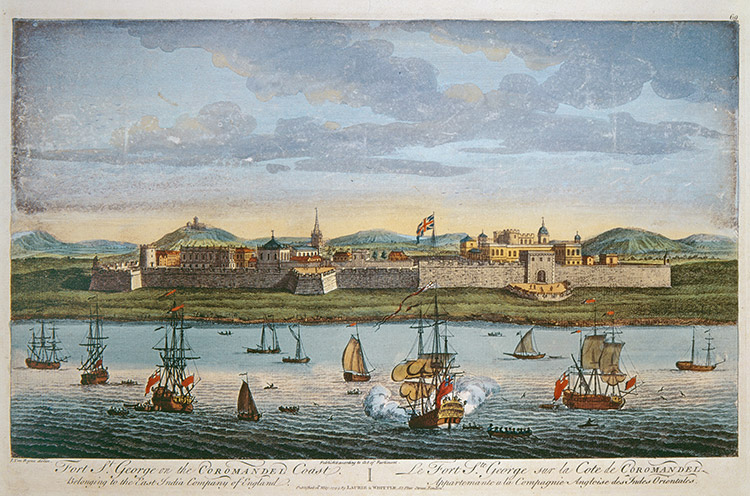
The World's Largest CompanyThe East India Company was an important company in England that imported a wide variety of goods from Asia including tea, silk, cotton, salt, indigo, and even foreign land. It was authorized on the last day of the year 1600 by Queen Elizabeth I. It would eventually become a joint venture between England's wealthy aristocrats and Parliament. The company became so big, and so powerful, that it accounted for up to half of the trade conducted in the entire world in the 1700s and 1800s. The company itself would control much of India and would maintain an army of more than 260,000 soldiers - more than twice the size of the British army. Despite its colossal power, the East India Company often faced financial problems and dissolved in 1874. Too Much Unsold Tea!The East India Company played an important role in the Boston Tea Party. In 1772, the Tea Act on the colonies was re-authorized, when the part of the 1767 Townshend Act that repealed the tax expired. Predictably, with the increased tax burden, fewer people in the colonies were willing to import British tea, causing sales to plummet. In the meantime, the East India Company continued to import tea from Asia into England, leaving a huge surplus of tea that could not be sold. Parliament Awards it a Tea MonopolySoon, it became clear that unless Parliament intervened, the East India Company could face bankruptcy. After considering a number of options, Parliament concluded that forcing it upon the American colonists, at a price that would undercut American tea smugglers, was the best solution. In 1773, it issued the Tea Act on the Colonies, specifically designed to bail out the East India Company from its financial crisis. As part of the act, the East India Company was granted a total monopoly on the colonial tea trade, while colonists would pay a tax of three cents on each pound of imported tea. The monopoly put the legitimate colonial tea merchants out of business and threatened the viability of smuggled tea as the East India Tea was less expensive. Colonists also started to believe that if Parliament was willing to issue a tea monopoly to one of its companies, that other British companies would receive monopolies for additional goods or services. On December 16, 1773, the Sons of Liberty in Boston made it perfectly clear how the colonists would respond to the Tea Act, by staging the Boston Tea Party. Discussion Questions
Glossary
The World's Largest CompanyThe East India Company was a powerful British company that traded many goods from Asia like tea, silk, cotton, salt, and indigo. It was started in 1600 by Queen Elizabeth I. Over time, rich British leaders and Parliament helped run it. At its peak in the 1700s and 1800s, it handled about half of the world's trade. It even controlled parts of India and had an army of 260,000 soldiers—twice the size of Britain’s own army. Still, the company had money problems and shut down in 1874. Too Much Unsold Tea!The East India Company was involved in the events leading up to the Boston Tea Party. In 1772, a tea tax returned after an earlier tax was removed. Because of the tax, fewer American colonists bought British tea. But the company kept importing tea into England, and it soon had a large amount of tea that no one wanted to buy. Parliament Gives It a Tea MonopolyParliament feared the company would go broke. To help, they passed the Tea Act in 1773. This law gave the East India Company full control (a monopoly) over the colonial tea trade. The company could sell tea at low prices, even with a three-cent tax per pound. This hurt local merchants and smugglers who could no longer compete. Many colonists worried that Parliament would give other British companies special rights too. The Boston Tea PartyOn December 16, 1773, a group called the Sons of Liberty protested the Tea Act. They dressed as Native Americans, boarded British ships in Boston, and dumped the tea into the harbor. This protest became known as the Boston Tea Party. |