Thomas Paine |
|||
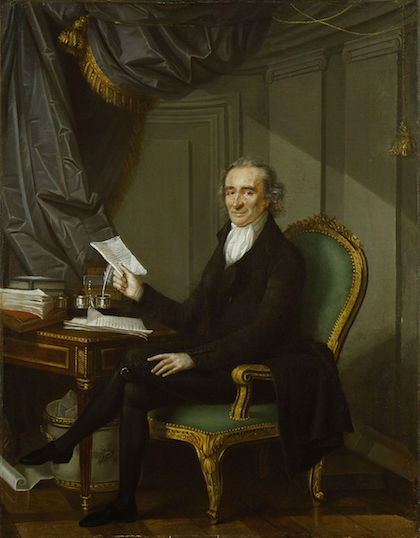
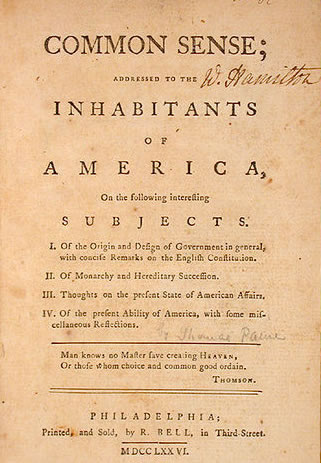
Early LifeThomas Paine was born in England in 1737. He was the son of uneducated English farmers. In his early years, he served as an apprentice in his father's corset making business, but eventually served as a merchant seaman before starting his own corset business. In 1759, Paine married Mary Lambert, who would soon die during childbirth. Encouraged to Come to America by Benjamin FranklinAfter the death of his wife, Paine moved around England and took several different jobs such as a servant, tax collector, and teacher. In 1771, Paine married Elizabeth Ollive, his landlord's daughter. It was during this time, while living in Lewes, East Sussex, that he became involved in local politics. In 1772, he published his first political work, known as The Case of the Officers of Excise, which championed better pay and working conditions for tax collectors. That same year, Paine met Benjamin Franklin, who encouraged him to move to America and wrote him a recommendation to do so. Paine arrived in Philadelphia on November 30, 1774, just days after obtaining a legal separation from his second wife. Upon his arrival in America, he was near death from Typhoid, which had claimed the lives of five other passengers on the ship. Publishing Common Sense and The CrisisAlthough it took six weeks for Paine to recover from the trip to America, he quickly made his mark on American politics and sentiments. On January 10, 1776, he anonymously published Common Sense, a pro-independence pamphlet that would galvanize the colonists against the British and that would greatly influence the expediency of the Declaration of Independence. Paine's pamphlet quickly spread through the colony's literate population and became the international voice of the pro-independence colonies. Common Sense would quickly become the top selling publication of the 18th century. That same year, he penned The Crisis, which greatly helped to inspire the Continental Army. Below is a famous quote from The Crisis:
Paine's Fall From GraceDuring and after the Revolution, Paine worked in France on French-American foreign affairs. It was during this time that he began to advocate the French Revolution. On January 29, 1791, he published The Rights of Man, a pamphlet encouraging the French Revolution and criticizing European monarchies. At first, he was seen as a great asset to the revolutionaries of France and was appointed to the French Convention and was named an honorary French citizen. However, as powers shifted in revolutionary France, Paine quickly became unpopular, was arrested, and scheduled to be executed (though he escaped execution by chance). During his incarceration, Paine penned The Age of Reason, a pamphlet that condemned organized religion. This pamphlet ultimately alienated many of his former supporters and resulted in his virtual ostracism from politics upon his return to America. Paine died in New York City in 1809. According to record, only six people came to his funeral. Thomas Paine was born in England in 1737. His parents were uneducated farmers. He first worked with his father making corsets, then became a sailor, and later started his own corset business. In 1759, he married Mary Lambert, who died during childbirth.
Encouraged to Come to America by Benjamin FranklinAfter his wife’s death, Paine held different jobs like servant, tax collector, and teacher. In 1771, he married Elizabeth Ollive. While living in Lewes, he got involved in politics. In 1772, he wrote his first political piece asking for better pay for tax collectors. That year, he met Benjamin Franklin, who encouraged him to move to America. Paine arrived in Philadelphia in 1774, very sick with typhoid, just after separating from his second wife. Publishing Common Sense and The CrisisAfter recovering from illness, Paine quickly became influential. On January 10, 1776, he published Common Sense, a pamphlet that supported independence from Britain. It became extremely popular and helped push the colonies toward the Declaration of Independence. Later that year, he wrote The Crisis, which motivated American soldiers. One of its famous lines is: “These are the times that try men's souls... the harder the conflict, the more glorious the triumph.” Paine's Fall From GracePaine supported the French Revolution and published The Rights of Man in 1791. At first, he was praised in France and given citizenship. But later, he was arrested and almost executed. While in prison, he wrote The Age of Reason, criticizing organized religion. This angered many people and hurt his reputation. He returned to America but was mostly ignored. He died in New York City in 1809, and only six people came to his funeral. |
|||
| Thomas Paine Activities | |||
|