The Land Ordinances of 1784 and 1785 |
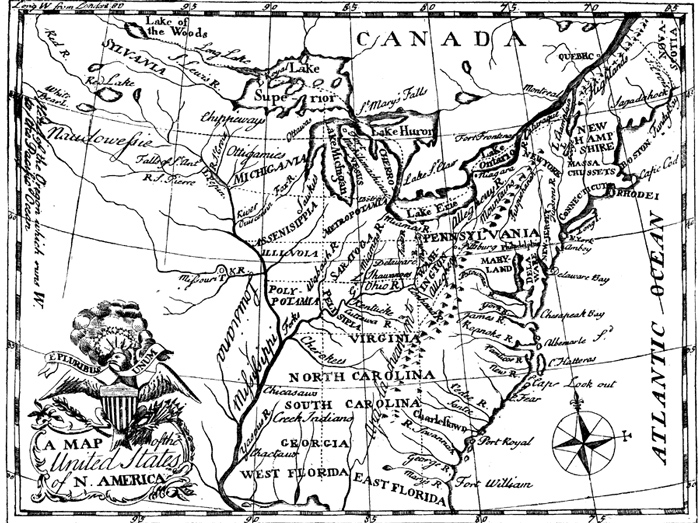
Ordinance of 1784The Ordinances of 1784 and 1785 were drafted by Thomas Jefferson. The primary purposes of the ordinances were to create procedures for dividing the land east of the Appalachian Mountains and west of the Mississippi River for settlement. This land was originally claimed by New York and Virginia, but was ceded to the newly created federal government during the Revolutionary War. Specifically, the Ordinance of 1784 divided the land into self-governing districts, that could each apply for statehood when its population equaled that of the least populous state. As part of the Ordinance of 1784, Jefferson added an article that would have effectively ended the spread of slavery, but this article (the last) failed by a single vote and was not adopted. Below are Jefferson's five main articles from the Ordinance of 1784:
Ordinance of 1785The Ordinance of 1785 created the blueprint for dividing the Northwest Territory into rectangular land parcels called townships, which could further be subdivided into areas as small as 640 acres. Each acre was set at a price of $1.00. Because Congress, under the Articles of Confederation, lacked the power to levy and collect taxes, it hoped that selling land in this manner would help to refill the U.S. Treasury. Interestingly, the Ordinance of 1785 called for a section 16 in each township to be reserved for public school buildings, thereby establishing a means for the funding of public education. The Ordinance of 1784 was written by Thomas Jefferson to help organize land west of the Appalachian Mountains and east of the Mississippi River. This land was given to the federal government by New York and Virginia during the Revolutionary War. The ordinance divided the land into districts that could become states once their population matched that of the smallest existing state. Jefferson also tried to ban slavery in these new territories after the year 1800, but this idea failed by just one vote. Here are the five main ideas in Jefferson's ordinance:
Ordinance of 1785The Ordinance of 1785 set up a plan for dividing the Northwest Territory into square sections called townships. Each township could be broken into smaller lots, with each acre sold for $1.00 to help raise money for the government, which couldn’t collect taxes under the Articles of Confederation. It also set aside a section of land in each township—section 16—for public schools. This helped create a system for funding public education in new territories. |