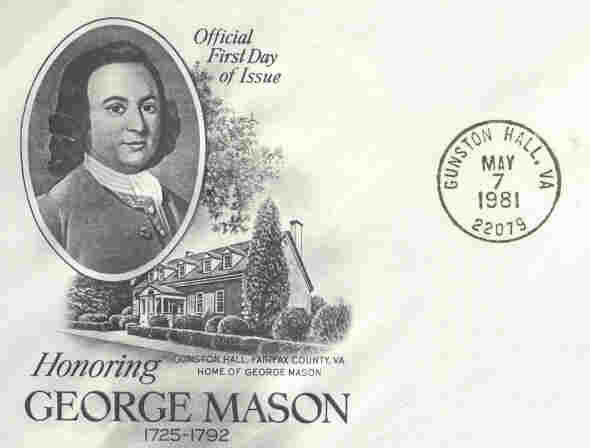
George Mason |
Early LifeGeorge Mason was born on December 11, 1725, in Fairfax County, Virginia. At the age of ten, he lost his father in a boating accident. This event left Mason as the heir to large tracts of land in Massachusetts and Virginia. In 1735, he moved in with his uncle, John Mercer, whose extensive library of over 500 books on law inspired Mason's love of learning. In his early twenties, Mason studied law and managed his plantation. By 1749, he became a member of the Ohio Company, which developed land along the Ohio River and western territories. The Fairfax ResolvesIn 1750, Mason married Ann Eilbeck, and they had twelve children, nine of whom survived into adulthood. Mason became involved in local politics as a justice in the Fairfax County courts and, in 1759, was elected to the Virginia House of Burgesses. That same year, he and his family moved to Gunston Hall, their plantation on the Potomac River. In 1774, Mason wrote the Fairfax Resolves, a document opposing the British blockade of Boston Harbor following the Boston Tea Party. It called for a boycott of British goods and even proposed abolishing slavery. The Virginia Declaration of RightsIn 1776, Mason authored the Virginia Declaration of Rights, a groundbreaking document that asserted individual rights and emphasized life, liberty, happiness, and safety for all. This document influenced other colonies and served as the foundation for the United States Bill of Rights. Refusing to Sign the U.S. ConstitutionIn 1786, Mason attended the Constitutional Convention in Philadelphia as a Virginia delegate. Though active in drafting the new framework, he refused to sign the U.S. Constitution because it lacked a declaration of rights. His refusal angered many, including George Washington, and damaged their friendship. However, Mason’s stance helped ensure the eventual inclusion of the Bill of Rights in 1791. Later Life and LegacyGeorge Mason died in 1792 at his home, Gunston Hall. Today, his legacy lives on through George Mason University in Fairfax, Virginia, which bears his name. Most Famous Quote"All men are by nature equally free and independent, and have certain inherent rights..." – George Mason, Virginia Declaration of Rights (1776) Discussion Questions
Glossary
Five Interesting Facts
Timeline of George Mason’s Life
George Mason was born on December 11, 1725, in Fairfax County, Virginia. He lost his father at age ten in a boating accident. After his father's death, George inherited large tracts of land in Massachusetts and Virginia. At 10, George moved to live with his uncle, John Mercer, where he discovered a love for reading, especially law books. He studied law and worked on his plantation. In 1749, he joined the Ohio Company to develop land along the Ohio River. The Fairfax ResolvesIn 1750, George married Ann Eilbeck, and they had twelve children, nine of whom survived to adulthood. He became involved in politics and was appointed a justice in the Fairfax County courts. In 1759, he was elected to the Virginia House of Burgesses. Later that year, George and his family moved to Gunston Hall, a large plantation on the Potomac River. In 1774, he wrote the Fairfax Resolves, protesting the English blockade of Boston Harbor and calling for a boycott of English goods, as well as the abolition of slavery. The Virginia Declaration of RightsIn 1776, George Mason wrote the Virginia Declaration of Rights, demanding individual rights and the right to life, liberty, happiness, and safety. This document inspired other states to create similar declarations. The Virginia Declaration of Rights served as the foundation for the Bill of Rights in the U.S. Constitution. Refusing to Sign the U.S. ConstitutionIn 1786, Mason was a delegate to the Philadelphia session aimed at revising the Articles of Confederation. He worked hard on the revision but refused to sign the new U.S. Constitution because it lacked a declaration of rights. This decision upset many, including George Washington. However, the Bill of Rights was eventually added to the Constitution in 1791. LegacyGeorge Mason died in 1792 at Gunston Hall. George Mason University in Fairfax, Virginia, is named in his honor. |
| George Mason Activities |