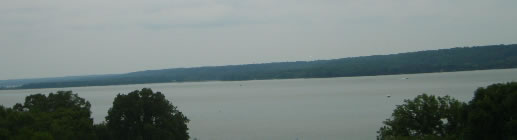
Mt. Vernon |
|
Mount Vernon, located just south of Alexandria, Virginia, at the southern terminus of the famed George Washington Memorial Parkway, was the plantation home of George Washington. Little Hunting CreekThe estate on which Mt. Vernon would be built was part of the Washington family estate as early as 1674. When George's father, Augustine Washington, lived on the estate, it was known as Little Hunting Creek. Augustine died in 1743, at which point, George's oldest half-brother, Lawrence moved his family to the plantation, which became known as Mount Vernon, after Edward Vernon, a British military officer whom Lawrence admired. Lawrence, however, died suddenly in 1752 and left the plantation to his wife and George, who had previously taken up residence at the plantation and was likely serving as its manager. When Lawrence's widow re-married, she sold her interest in the plantation to George in 1757, who became its official sole owner in 1761 after her death. Grounds and BuildingsGardens, walkways, lanes, and outbuildings were carefully situated to create a peaceful setting that blended ingeniously with the natural beauty of the land. Up until the Revolutionary War, George worked the land of the estate and divided it into five working farms of over 8,000 acres. Each farm had its own management team of overseers and slaves, livestock, equipment, and buildings. After the war, George continued his work on the estate and grew hemp, cotton, silk, flax, and numerous fruits and vegetables. George considered himself an agriculturalist and liked to experiment with grasses, wheat, grains, and vegetables to produce seeds for his farming operation. In 1786, George planted a huge orchard which provided the estate with fresh peaches, cherries, pears, plums, and apples.
WhiskeyIn 1797, he built a whiskey distillery nearby (next to his gristmill), which, for a short time, would become one of the nation's top whiskey producers. In 1799, the distillery produced over 11,000 gallons of rye whiskey. Mount Vernon TodayBoth George and Martha Washington died at the estate and are buried on the grounds. Today, Mount Vernon has been carefully restored as is a major tourist destination. The current estate features the mansions, its many outbuildings, gardens, livestock areas, and associated buildings. It features an incredible museum that details the life of George Washington and history of the American Revolution. There are numerous interactive exhibits, artifacts (such as George's dentures), works of art, and exciting films. You can learn all about the various buildings, china, and furniture of Mount Vernon, or, about George's unfortunate dental problems, the details of the last hours of his life, his religious beliefs, or, the loving relationship between he and Martha. Mount Vernon also features several gift shops (where you can buy $5,000 china settings, rare coins and currency, as well as more modestly priced souvenirs) and a full-service restaurant. If you visit Mount Vernon in the summer, make sure you get there early. There are long lines to enter to the mansion. But even if you don't tour the mansion, there is plenty to do and see. Mount Vernon is just south of Alexandria, Virginia. It was George Washington’s plantation home, located at the end of the George Washington Memorial Parkway. Little Hunting CreekThe land was part of the Washington family estate from 1674. It was called Little Hunting Creek when George Washington's father, Augustine, lived there. After Augustine died in 1743, George’s half-brother Lawrence took over and renamed it Mount Vernon, after a British officer he admired. Lawrence died in 1752, and George eventually became the full owner in 1761. Grounds and BuildingsGeorge Washington designed the estate to blend with nature. He divided the 8,000-acre estate into five farms, each with its own workers, animals, and buildings. He grew crops like hemp, cotton, flax, and various fruits and vegetables. George loved farming and experimented with plants. In 1786, he planted a large orchard with peaches, cherries, apples, and more. WhiskeyIn 1797, George built a whiskey distillery near his gristmill. By 1799, it was one of the biggest whiskey producers in the country, making over 11,000 gallons of rye whiskey. Mount Vernon TodayGeorge and Martha Washington died at Mount Vernon and are buried there. Today, the estate is a popular tourist site. It includes the mansion, gardens, livestock areas, and many original buildings. There is also a museum with exhibits about George Washington’s life, his dental problems, his last days, and his relationship with Martha. Visitors can shop for everything from expensive china to affordable souvenirs and eat at the on-site restaurant. Summer visits can get busy, so arriving early is recommended. |
| Mt. Vernon Activities |
|