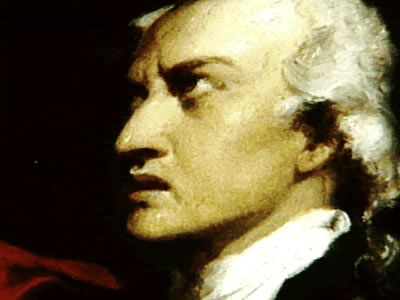
Patrick Henry |
||||||
Early YearsPatrick Henry was born in Hanover County, Virginia, on May 29, 1736, to John and Sarah Henry. Although he was mostly educated at home by his father, Patrick took an active interest in law, which he pursued on his own. In 1760, Patrick was admitted to the Virginia bar. He soon became a well-known and persuasive attorney and a staunch advocate for American independence. Vociferous Opposition to the Stamp ActPatrick Henry's words were extremely influential. In 1763, Henry argued against the King of England in the Parson's Cause case in Hanover County. Henry defended the right of the colony to fix the price of the tobacco in which the clergy were paid. When clergymen complained to the king, the ruling was nullified. Henry argued that any king who would veto a law implemented by a locally elected council is not a father to the people but a tyrant undeserving of the allegiance of his subjects. Henry was equally as vociferous in his opposition of the 1765 Stamp Act, which he voiced at the Virginia House of Burgesses. Despite cries of treason throughout the meeting room for his impassioned scolding of the Stamp Act and its creators, the House ultimately sided with Patrick Henry and his resolutions asserting that colonists, as Englishmen, have the exclusive right to tax themselves.
Give me Liberty or Give me DeathHenry became a delegate to the House of Burgesses in 1765 and served until 1774. Henry became a powerful voice in the quest for American independence and advocated the arming of civilians. His famous words, "Give me liberty or give me death," spoke for a generation of Americans ready to rebel against England. Political Contributions to the New NationPatrick Henry was more than just a radical - he was a very successful politician. He was a delegate to the Virginia Provincial Convention in 1775 and was a member of the Continental Congress from 1774-1776. Henry was twice elected as governor of Virginia and led the fight for the Virginia Religious Freedom Act of 1785. Even though he was a Federalist, Henry opposed ratification of the US Constitution, asserting it jeopardized states' rights. He worked hard to have the Bill of Rights added to the Constitution. Henry died June 6, 1799. Most Famous Quote"Give me liberty or give me death!" Discussion Questions
Glossary
Five Interesting Facts About Patrick Henry
Timeline of Patrick Henry’s Life
Patrick Henry was born on May 29, 1736, in Hanover County, Virginia, to John and Sarah Henry. He was mostly educated at home by his father. Patrick had an interest in law and studied it on his own. In 1760, he became a lawyer and quickly became well-known for his persuasive skills and support for American independence. Opposition to the Stamp ActIn 1763, Henry argued against the King of England in the Parson's Cause case, defending the colony's right to set the price of tobacco. Henry's powerful words helped sway the court. He also strongly opposed the 1765 Stamp Act in the Virginia House of Burgesses, where his passionate speech led the House to support his view that only colonists should have the right to tax themselves. Famous Words: "Give Me Liberty or Give Me Death"Henry was a delegate to the House of Burgesses from 1765 to 1774. He became a key leader in the fight for independence. His famous quote, "Give me liberty or give me death," inspired many Americans who were ready to fight for freedom from England. Contributions to the New NationPatrick Henry was not just a radical; he was also a successful politician. He served as a delegate to the Virginia Provincial Convention in 1775 and the Continental Congress from 1774 to 1776. He was elected governor of Virginia twice and fought for the Virginia Religious Freedom Act in 1785. Although he was a Federalist, he opposed the ratification of the U.S. Constitution, fearing it would harm states' rights. He worked to add the Bill of Rights to the Constitution. Patrick Henry died on June 6, 1799. |
||||||
|
||||||
| Patrick Henry Activities | ||||||