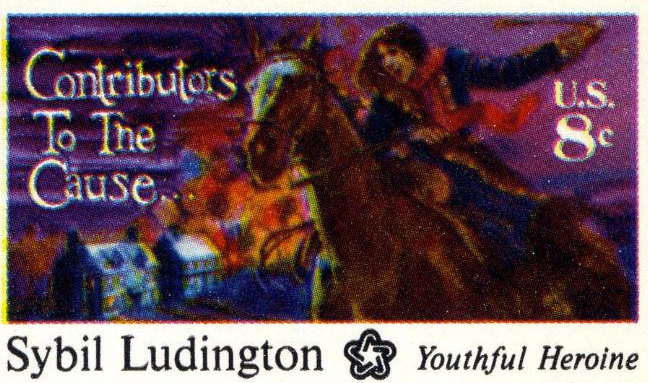
Sybil Ludington |
||||||||||
IntroductionSybil Ludington was a prominent figure and heroine during the Revolutionary War, although many believe her story is more myth than fact. She was born on April 5, 1761, in Fredericksburg, New York. Today, the area where she grew up has been renamed Ludingtonville. Ludington was the daughter of Henry Ludington, an officer in the militia and a future aide to General George Washington. Ludington was supporting the Patriot cause, which fought for independence from England. Attack on DanburyOn April 25, 1777, Governor William Tryon arrived near Connecticut with a 2,000-man British military force. His plan was to attack the city of Danbury, where the supplies for the Continental Army were being stored. That day, Tryon and his army moved south, searching for the army’s weapons and foodstuffs; they left chalk marks on the houses of British supporters and informers, setting any house that was unmarked for destruction. Since the Continental Army had recently moved its supplies to Danbury, the area was not well-guarded; all of their food stores, including flour, beef, pork, and wheat, were left vulnerable. Hero at Age SixteenOn the night of April 26, 1777, a messenger arrived at the Ludington house who explained the imminent British attack. Henry Ludington tried to pull together his forces, but all of his men had traveled home for spring planting and were spread out across the area. The messenger didn’t know the area well enough to find each of them and warn them - but Sybil Ludington did. At only sixteen years old, she embarked on a 40-mile journey atop her horse, Star, traveling south to Mahopac and north to Stormville to warn the men of the impending attack. She rode more than twice the distance of Paul Revere, another prominent Revolution hero, calling out: “The British are burning Danbury. Muster at Ludington’s at daybreak!” Her Story was Lost in History Until 1907The next day, most of the 400 soldiers in the area were ready to fight, thanks to Sybil Ludington’s brave and heroic efforts. Although Danbury was partially burned down, her famous ride helped protect a Continental Army storehouse. Her journey was not fully recognized until 1907, when her great nephew, Louis S. Patrick, revealed it to the world in an article. Today, statues of Sybil Ludington on her horse can be found on the shore of Lake Gleneida in New York, in Danbury, and in Washington D.C., at the headquarters of the Daughters of the American Revolution. Was the Story of Sybil Ludington Fact or Fiction?
Glossary
Five Interesting Facts
Timeline
Sybil Ludington was a young heroine during the Revolutionary War. She was born on April 5, 1761, in Fredericksburg, New York—now called Ludingtonville. Her father, Henry Ludington, was a militia officer who supported the fight for American independence. Attack on DanburyOn April 25, 1777, British troops led by Governor William Tryon planned to attack Danbury, Connecticut, where the Continental Army kept food and supplies. The town was poorly defended, and the British marked the homes of their supporters while planning to burn the rest. Hero at Age SixteenOn the night of April 26, a messenger came to the Ludington home to warn of the attack, but he didn’t know how to find the local soldiers. Sixteen-year-old Sybil knew the area well and rode 40 miles on her horse, Star, warning the militia. She shouted, “The British are burning Danbury. Muster at Ludington’s at daybreak!” Her Story Was Forgotten Until 1907Because of Sybil’s ride, about 400 men were ready to fight the next day. Although part of Danbury was burned, her warning helped protect army supplies. Her story was not widely known until her great-nephew told it in 1907. Today, statues of Sybil riding her horse can be seen in New York, Danbury, and Washington, D.C. |
||||||||||
| Sybil Ludington Activities | ||||||||||
|