The Hessians

The Hessians

What were Hessians?

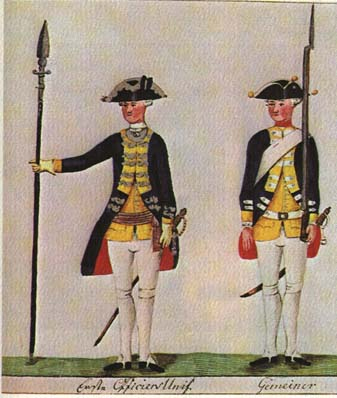
During the Revolutionary War, British military forces hired about 30,000 German soldiers, known as Hessians. The word "Hessian" came from the German states of Hesse-Cassel and Hesse-Hanau, where some of the Hessians came from.

German Landgraves

Germany was much different in 1776 than it is today. Then, it was made up of various states, each of which was ruled by a landgrave (prince). Men who lived within each state were often forced into the landgrave's army at an early age. The landgrave could increase his fortune by renting out these armies to foreign powers in their times of need. The individual soldier had no say in the matter. Payment for the soldiers was sent directly to each state's landgrave. In this way, the fate of Hessian soldier is sometimes compared to the practice of slavery, although the soldiers were paid well.

Hessian Prisoners
Captured Hessian Soldiers Being Marched to Philadelphia

Undeserved Reputation?

The "Hessians" that fought in the Revolutionary War gained a reputation for savagery and were greatly feared amongst the ranks of Continental soldiers. Curiously, several diaries gathered from Hessian soldiers in the field, revealed that they, in fact, were horrified by the way the British soldiers destroyed civilian property and executed prisoners. Despite their military prowess, British soldiers also feared and mistrusted the Hessians, and thus treated them badly.

The Battle of Trenton

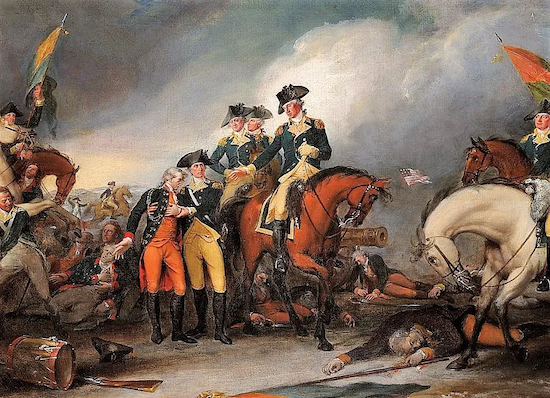
While the Hessians fought in every battle of the Revolutionary War, they are best remembered in America for their defeat at the hands of George Washington and his soldiers on December 26, 1776. In the battle, Washington's men crossed the icy Delaware River on Christmas night and marched nine miles to Trenton, staging an ambush on the sleeping Hessians. Many of Washington's men lacked shoes and the soldiers were said to have left a trail of blood all the way to Trenton. In all, Washington captured about 1,000 Hessian soldiers, who were paraded through the streets in an effort to raise the morale of the beleaguered Patriot cause.

Becoming Americans

Captured German soldiers were sent to area farms to work as farm hands. Other Hessian soldiers were sent to Lancaster, Pennsylvania, where they were treated well. Many of the Hessians sent to Lancaster stayed permanently rather returning to their dreadful existence in Germany. Of the 30,000 Hessian soldiers that fought in America, approximately 3,000-5,000 stayed to live in the United States.

During the Revolutionary War, the British hired about 30,000 German soldiers called Hessians. The name came from the German regions of Hesse-Cassel and Hesse-Hanau, where many of them were from.

German Landgraves

In 1776, Germany was made up of small states ruled by princes called landgraves. Young men were often forced to join the landgrave’s army. These rulers made money by renting out their armies to other countries. Soldiers didn’t have a choice and were often compared to slaves, though they were paid fairly well.

Undeserved Reputation?

Hessians were feared by American soldiers for their toughness and supposed cruelty. However, diaries from Hessian soldiers showed they were shocked by how British soldiers treated civilians and prisoners. The British also didn’t trust the Hessians and treated them poorly.

The Battle of Trenton

Hessians are most famous for their defeat at the Battle of Trenton on December 26, 1776. George Washington and his army crossed the icy Delaware River on Christmas night and surprised the Hessians in Trenton. Many of Washington’s men had no shoes and left a trail of blood in the snow. Around 1,000 Hessians were captured and marched through town to lift American spirits.

Becoming Americans

Some captured Hessians were sent to work on farms or were housed in Lancaster, Pennsylvania, where they were treated well. Many chose to stay in America rather than return to their harsh lives in Germany. Of the 30,000 Hessians who fought in the war, about 3,000 to 5,000 stayed in the United States.

Hessians Activities