The War of 1812 |
||
 |
||
ImpressmentAfter the resumption of war between France and Great Britain, British ships frequently harassed American trade vessels in the Atlantic. Not only did the harassment disrupt America’s international trade, but it also resulted in the impressment of American sailors. Because of desertions in the Royal (British) Navy, British naval forces had to recover their losses. As a result, they forced Americans to serve in their navy. They justified impressment by claiming that because American sailors were once British, they were always British. Jefferson's Useless ActsOn June 22, 1807, the British frigate Leopard stopped the U.S. frigate Chesapeake off the coast of Virginia and demanded permission to search the ship for British deserters. When their demand was refused, the British attacked the American ship killing three sailors and wounding 18 more. After the attack, British naval forces announced their intention to search all American vessels. In response, Congress passed the Embargo Act of 1807 which put a complete stop to all foreign exports, and which virtually stopped all imports. The point of the Embargo Act was to punish the British and French until they began to respect the authority of the American nation. In actuality, however, American merchants were punished because they were prohibited from exporting. In 1809, Jefferson signed the Non-Intercourse Act which repealed the Embargo Act and opened foreign trade to all countries except France and Great Britain. The Non-Intercourse Act proved impossible to enforce, and was replaced with Macon's Bill Number 2 by Congress in 1810. Macon's Bill Number 2 allowed for the resumption of trade with all nations including Great Britain and France. Siding with France This TimeNapoleon I of France indicated he would respect U.S. neutrality in the war between England and France, if the U.S. reimposed non-intercourse with England. The U.S. president at the time, James Madison agreed, and subsequently suspended trade with England. Pressured by Henry Clay, John C. Calhoun and others, Madison called up 100,000 militiamen for six months service for the purposes of declaring war on England. Fighting BeginsDespite poor preparations, weak military units, a central government that was not taken seriously in the northeast, and opposition from the Federalist Party, the war commenced. It started off poorly as U.S. forces were routed in several attempts to invade English strongholds in Canada. Furthermore, British Naval forces had staged a powerful naval blockade along much of America's Atlantic coast which prevented any imports or exports. On August 19, 1812, British forces and their allied Indians invaded and took Detroit, Michigan. U.S. Naval forces did manage a victory against British forces off the coast of Nova Scotia. Nevertheless, the blockade remained in place. American Victories at Lake Erie and TippecanoeOn September 10, 1813, American Naval forces under General Oliver Hazard Perry won a major victory over British forces at Lake Erie on Pennsylvania's coastline. Because the American victory closed off British navigation of Lake Erie, British forces evacuated Detroit. The retreating British and Indian forces were subsequently engaged at the Battle of Thames River in Upper Canada, where Shawnee chief Tecumseh was killed and the British lost control of southwestern Ontario.
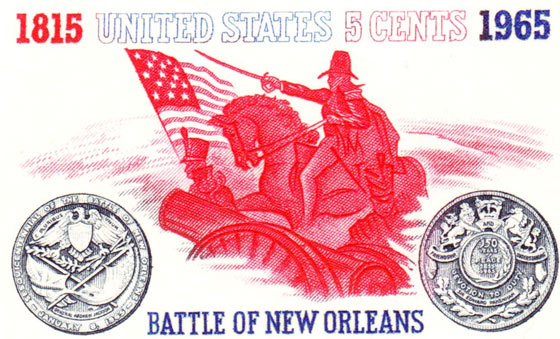
The Burning of WashingtonDespite the mounting American victories, English forces had defeated France in Europe. The British victory made available large numbers of troops and supplies which were sent to America in 1814. Nevertheless, setbacks continued to plague the British. Their southern campaign was thwarted by Andrew Jackson’s bloody victory over Creek Indians at Horseshoe Bend, Alabama and set the stage for a massive battle at New Orleans. In August of 1814, however, substantial British forces sailed through the Chesapeake Bay and landed in Maryland. British forces routed American resistance at Bladensburg, Maryland, and quickly took the American capital - Washington. On August 24-25, British forces burned Washington to the ground. Despite the bombardment of Baltimore, Maryland, which resulted in Francis Scott Key authoring the Star Spangled Banner, American forces resisted. On September 11, 1814, American forces defeated the British at Lake Champlain and thwarted a large-scale British invasion from Canada. The British Abandon the WarAfter the defeat at Lake Champlain, and because American trade with a defeated France was no longer an issue, Royal authorities decided to abandon the war in America. On December 14, 1814, America and England signed the Treaty of Ghent which ended the war and called for the abandonment of British forts along its northwestern frontier. Jackson's Monumental Victory at New OrleansDespite the Treaty of Ghent, word of the war’s end failed to reach all areas. General Andrew Jackson, a band of pirates, and several armies of free black men, Kentucky militia, and Louisiana militia defeated the much larger British forces at the Battle of New Orleans. At the end of the battle, American casualties numbered 71, while British casualties exceeded 2,000. Despite the fact that the war was over, if New Orleans had not have fallen into America’s hands, England would not have honored the Treaty of Ghent, and would not have surrendered New Orleans.
After war broke out again between France and Great Britain, British ships began to stop American trade ships. They not only disrupted trade but also forced American sailors to work for the British Navy. Britain claimed this was legal because many American sailors had once been British citizens. Jefferson’s ActsIn 1807, a British ship attacked the U.S. ship Chesapeake, killing and injuring American sailors. In response, President Thomas Jefferson and Congress passed the Embargo Act, which stopped all trade with other countries. This hurt American merchants more than Britain or France. In 1809, the Embargo Act was replaced with the Non-Intercourse Act, which banned trade only with Britain and France. That law also failed, and in 1810, Congress passed Macon’s Bill Number 2, reopening trade with all countries. Choosing France Over BritainNapoleon of France promised to respect American neutrality if the U.S. stopped trading with Britain. President James Madison agreed and cut off trade with Britain. Encouraged by leaders like Henry Clay and John C. Calhoun, Madison prepared for war. The War BeginsThe U.S. was not well-prepared for war. Early attempts to invade Canada failed, and the British Navy blocked American ports. In August 1812, British and Native American forces took Detroit. One American success was a naval victory near Nova Scotia. Victories at Lake Erie and TippecanoeOn September 10, 1813, American General Oliver Hazard Perry won a major naval battle on Lake Erie. This forced British troops to leave Detroit. U.S. forces later defeated the British and their Native allies at the Battle of the Thames, where Shawnee leader Tecumseh was killed. The Burning of WashingtonIn 1814, Britain sent more troops after defeating France. British forces captured Washington, D.C., and burned government buildings, including the White House. However, American forces held strong in Baltimore, and Francis Scott Key wrote “The Star-Spangled Banner” during the battle. Britain Ends the WarAfter losing at Lake Champlain and with France no longer a threat, Britain decided to end the war. The U.S. and Britain signed the Treaty of Ghent on December 14, 1814, which ended the war and required British troops to leave American forts. Victory at New OrleansNews of the treaty didn’t reach everyone in time. In January 1815, General Andrew Jackson led a group of U.S. troops, militia, and even pirates to defeat the British at the Battle of New Orleans. The British lost over 2,000 soldiers, while the Americans lost only 71. This battle ensured that Britain would respect the treaty and leave New Orleans in American hands. |