Battles of the War of 1812 |
|
| Click on a battle below for a detailed article and printable and online activities. | |
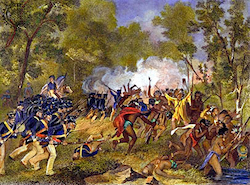 |
Battle of Tippecanoe - November, 6, 1811 The Battle of Tippecanoe took place in 1811 between U.S. forces led by Governor William Henry Harrison and Native American warriors associated with Tecumseh’s confederacy. Though the Native forces launched a surprise attack, Harrison’s troops held their ground and later burned the village of Prophetstown, increasing tensions that led to the War of 1812. |
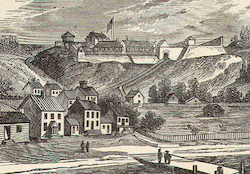 |
Battle of Fort Mackinac- July 17, 1812 The Battle of Mackinac took place in 1812 when British forces and Native American allies captured Fort Mackinac from a small American garrison without a fight. In 1814, American troops tried to retake the fort but failed due to strong British defenses on the island. |
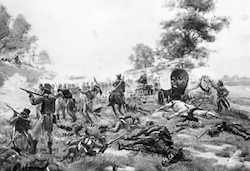 |
Battle of Dearborn- August 15, 1812 The Battle of Dearborn took place in August 1812 near present-day Chicago when Potowatomi warriors ambushed American evacuees from Fort Dearborn. Over half of the group, including women and children, were killed, and the fort was burned down, leaving the area under Native control until after the war. |
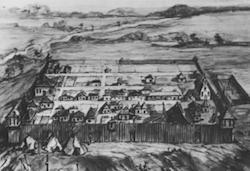 |
- August 16, 1813
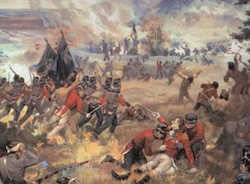
The Battle of Fort Detroit occurred on August 16, 1812, when U.S. General William Hull surrendered the fort to British General Isaac Brock without a fight. The British, with the help of Tecumseh and his warriors, used deception to appear stronger, leading to an early and embarrassing American defeat. |
 |
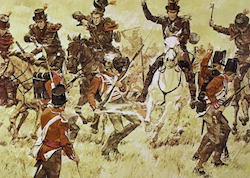
Battle of Queenston's Heights - October 13, 1812 The Battle of Queenston Heights took place on October 13, 1812, when American forces attempted to invade Canada by crossing the Niagara River but were stopped by British troops and Mohawk warriors. The Americans suffered heavy losses and were forced to surrender, though the British lost their respected General Isaac Brock in the battle. |
 |
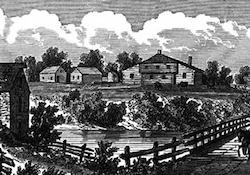
Battle of Frenchtown - January 22, 1813 The Battle of Frenchtown, also known as the Raisin River Massacre, was a major defeat for American forces in January 1813 when they were surprised and overwhelmed by British and Native troops. Most American soldiers were killed or captured, and many prisoners were later executed, making it the deadliest battle for Americans in the War of 1812. |
 |
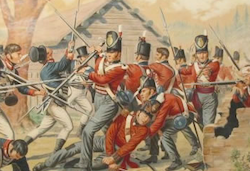
Battle of Lacolle Mills - March 30, 1813 The Battle of Lacolle Mills took place in 1814 when American forces led by General James Wilkinson attempted to capture a small British outpost in Canada. Despite outnumbering the British, the Americans failed to break through the strong stone mill defenses and were forced to retreat with heavy losses. |
 |
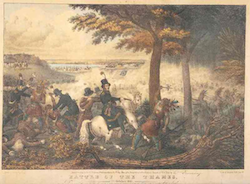
Battle of York - April 27, 1813 The Battle of York took place on April 27, 1813, when American forces invaded and captured the town of York (now Toronto), then the capital of Upper Canada. Although the Americans won, a large explosion set by retreating British forces killed many, including American General Zebulon Pike, making it a costly victory. |
 |
Siege at Fort Meigs - May 1-9, 1813 The Siege of Fort Meigs took place in 1813, when British and Native forces led by General Henry Proctor and Tecumseh attacked the American fort in northwest Ohio. Despite eight days of bombardment and heavy losses, the Americans held the fort, and the British were forced to retreat. |
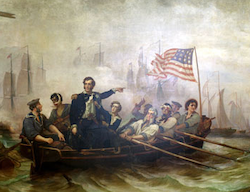 |
Battle of Lake Erie - September 10, 1813 The Battle of Lake Erie was fought on September 10, 1813, and resulted in a major American naval victory during the War of 1812. U.S. Commander Oliver Hazard Perry defeated the British fleet, securing control of the lake and boosting American morale. |
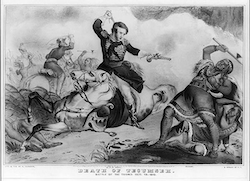 |
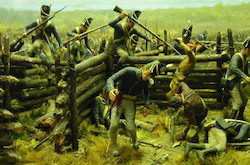
Battle of Thames - October 5, 1813 The Battle of the Thames took place on October 5, 1813, and ended in a decisive American victory over British and Native forces in Ontario, Canada. U.S. troops, led by General William Henry Harrison, defeated the British and killed Tecumseh, weakening Native resistance in the Northwest. |
 |
Creek War- 1813-1814 The Creek War (1813–1814) was a conflict between the United States and a faction of the Creek Nation known as the Red Sticks, who opposed American expansion. It ended with a U.S. victory led by Andrew Jackson at the Battle of Horseshoe Bend, forcing the Creeks to give up millions of acres of land. |
 |
Battle of Chippawa - July 5, 1814
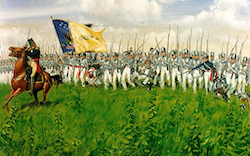
The Battle of Chippawa was fought on July 5, 1814, and marked a significant American victory during the War of 1812. U.S. forces, led by General Winfield Scott, defeated British regulars in Canada, proving that American troops could stand toe-to-toe with British soldiers in open battle. |
 |
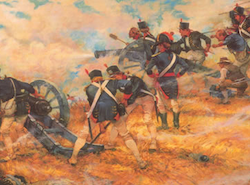
Battle of Lundy's Lane- July 25, 1814 The Battle of Lundy’s Lane took place on July 25, 1814, and was one of the bloodiest battles of the War of 1812. Fought near Niagara Falls, it ended in a costly stalemate, with both American and British forces suffering heavy casualties and neither side gaining a clear victory. |
 |
Battle of Bladensburg- August 24, 1814
The Battle of Bladensburg took place on August 24, 1814, and ended in a quick British victory over poorly organized American forces defending Washington, D.C. The defeat allowed British troops to march into the capital and burn key government buildings. |
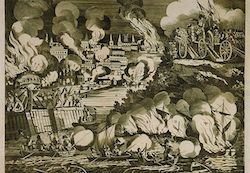 |
Razing of Washington - August 25, 1814 In August 1814, during the War of 1812, British forces invaded Washington, D.C., and set fire to key buildings, including the White House and the Capitol. The attack was in retaliation for the American burning of York (modern-day Toronto) and marked a low point for U.S. morale during the war. |
 |
Battle of Plattsburgh - September 6-11, 1814 The Battle of Plattsburgh took place in September 1814, when American forces defeated a larger British army and navy on Lake Champlain during the War of 1812. The victory stopped the British invasion of New York and gave the U.S. a strong position in peace negotiations. |
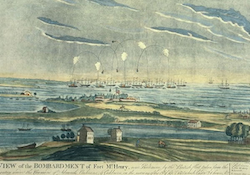 |
Siege of Baltimore - September 12-14, 1814 The Siege of Baltimore in September 1814 was a key battle in the War of 1812, where American forces successfully defended Fort McHenry from a 27-hour British naval bombardment. The defense inspired Francis Scott Key to write “The Star-Spangled Banner,” which later became the national anthem. |
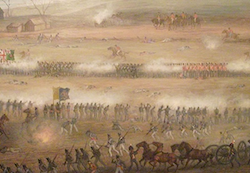 |
Battle of Crysler's Farm - November 11, 1814 The Battle of Crysler's Farm took place in November 1813 during the War of 1812, when a smaller British and Canadian force defeated a much larger American army trying to invade Canada. The American defeat ended their attempt to capture Montreal and was considered a major embarrassment due to their overwhelming numbers. |
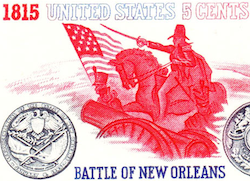 |
Battle of New Orleans - January 8, 1815 The Battle of New Orleans took place on January 8, 1815, after the War of 1812 had officially ended, but before the news of the peace treaty reached the fighters. American forces under Andrew Jackson defeated a much larger British army, causing over 2,000 British casualties and making Jackson a national hero. |