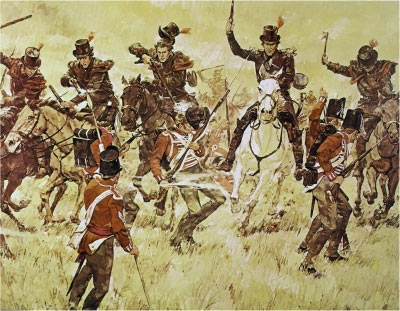
Battle of Frenchtown - January 22, 1813 |
Disobeyed Orders Leads to MassacreThe Battle of Frenchtown, also known as the Raisin River Massacre, was a devastating defeat for American forces. American general James Winchester ignored orders from William Henry Harrsion to keep his soldiers near Harrison's brigade for support. Instead, Winchester marched his soldiers well ahead to Frenchtown, where he promptly invaded the town. Four days later, the main force of British and Indian troops arrived at Frenchtown and surprise attacked the Americans. The disorganized Americans were massacred. Only 33 out of the original 400 American combatants escaped with their lives and hundreds were taken prisoner. Many prisoners were subsequently executed by the Indians. The mass execution of Americans became known as the Raisin River Massacre. More American fatalities were recorded here than at any other battle in the War of 1812. Disobeying OrdersThe Battle of Frenchtown, also called the Raisin River Massacre, was a major loss for American forces during the War of 1812. General James Winchester ignored orders to stay close to William Henry Harrison’s troops and instead marched ahead to Frenchtown. The Surprise AttackFour days after taking Frenchtown, British and Native American forces surprised the Americans with a powerful attack. The American troops were unprepared and quickly overwhelmed. Massacre and LossesOnly 33 out of about 400 American soldiers survived the battle. Many captured Americans were later killed by Native forces, leading to the event being remembered as the Raisin River Massacre. Worst American LossThe massacre caused more American deaths than any other battle in the War of 1812. It shocked the nation and became a rallying cry for revenge: “Remember the Raisin.” |