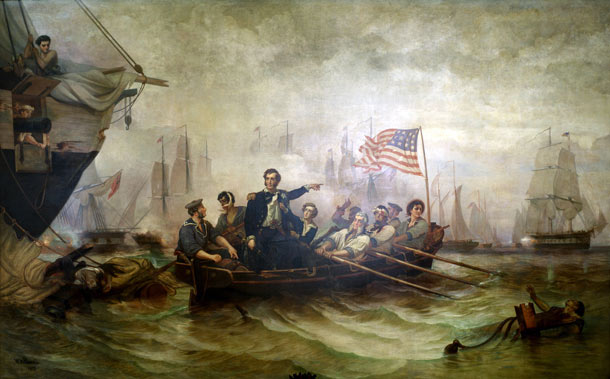
Battle of Lake Erie - September 10, 1813 |
|
The Battle of Lake Erie was a major naval battle in the War of 1812. It featured nine U.S. naval vessels and six British naval vessels. Perry Captures Five British ShipsAfter the British surprisingly withdrew from their naval blockade at Erie, Pennsylvania, a fleet of American ships organized by Oliver Hazard Perry prepared for battle, sailing west on Lake Erie. Perry's fleet eventually captured five British ships. He received the British surrender on the deck of his damaged flagship, the Lawrence. The British Lose Control of the Great LakesAs a result of the battle, the British retreated to Detroit and lost control of the Great Lakes. The loss prevented them from reinforcing or resupplying their troops in Upper Canada. It also ensured there would be no British attacks in the Great Lakes states of Ohio, Pennsylvania, Michigan, and New York. Overview of the BattleThe Battle of Lake Erie was an important fight during the War of 1812. It involved nine American ships and six British ships. Perry Captures British ShipsWhen the British left their blockade near Erie, Pennsylvania, U.S. commander Oliver Hazard Perry got his fleet ready. He sailed west on Lake Erie and captured five British ships. Perry accepted the British surrender on his badly damaged ship, the Lawrence. Results of the BattleThe British lost control of Lake Erie and had to retreat to Detroit. This defeat stopped them from sending supplies or troops to Upper Canada. It also protected U.S. states like Ohio, Pennsylvania, Michigan, and New York from British attacks. |