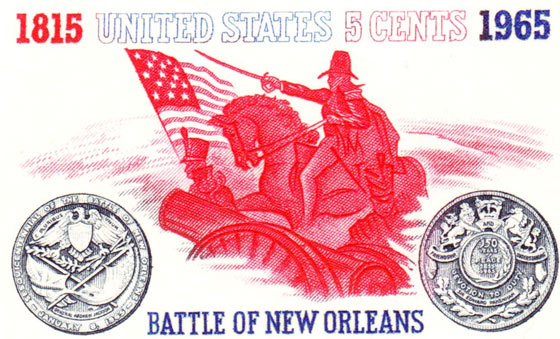
Battle of New Orleans - January 8, 1815 |
The Deadliest BattleThe bloody Battle of New Orleans, the deadliest battle of the War of 1812, actually occurred after the signing of the Treaty of Ghent in late 1814, which put an end to hostilities between the Americans and British. Word of the war's end, however, failed to reach New Orleans in time to prevent the battle. The British Suffer More Than 2,000 CasualtiesOn January 8, 1815, British General Edward Pakenham and over 10,000 British soldiers and Native warriors attacked Andrew Jackson and his well fortified army of over 5,000 men at Chalmette, about five miles downriver from New Orleans. The object was to separate Louisiana from the rest of the United States. American soldiers, aided by pirates under the command of Jean Lafitte, cut down wave after wave of British soldiers from behind impenetrable defenses. Pakenham was killed in the battle and the British suffered over 2,000 total casualties. The battle was the last armed conflict of the War of 1812. Jackson is a HeroAlthough the battle had no impact on the war, it did elevate Andrew Jackson to a national hero and eventually propelled him to the White House. The Deadliest BattleThe Battle of New Orleans was the bloodiest battle of the War of 1812. It happened in January 1815, after the peace treaty had already been signed, but the news had not yet reached New Orleans. The British Suffer Heavy LossesOn January 8, 1815, over 10,000 British troops attacked American forces led by Andrew Jackson near New Orleans. Jackson's well-defended army, with help from pirates, defeated the British, killing their general and causing over 2,000 British casualties. Jackson Becomes a HeroEven though the battle did not change the outcome of the war, it made Andrew Jackson a national hero. His popularity helped him later become the President of the United States. |