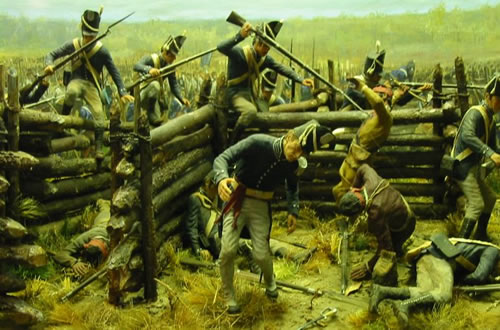
Creek War - 1813-1814 |
|
The Creek War was a localized war between the settlers in Kentucky, Alabama, and Tennessee and the Creek Indians. It is sometimes considered part of the War of 1812, a larger conflict between the United States and Great Britain, though in reality the two events were totally separate. U.S. military intervention in 1814 quickly brought an end to the hostilities. Massacre at Fort MimsAs White settlers invaded the ancestral lands of the Creeks, leadership within the tribe differed on how to approach the problem. The upper Creeks favored violence, while the lower Creeks favored diplomacy. In August of 1813, the upper Creeks took matters into their own hands my massacring settlers at Ft. Mims on the Alabama River. Over 350 settlers were killed in the ambush. The ambush quickly provoked various militia groups into action, along with the U.S. military. Tennessee militiamen, Lower Creek warriors, and other forces commanded by Andrew Jackson staged retaliatory attacks on the Upper Creeks at Talladega and Auttosee, killing hundreds and scorching many villages. Horseshoe Bend and the Treaty of Fort JacksonOn March 27, 1814, Jackson and his forces annihilated Creek resistance at Horseshoe Bend, Alabama, killing over 900 Creek warriors and capturing 500 women and children as prisoners. This battle ended the Creek War and caused many in the resistance to flee and join the Seminoles in Florida. The Lower Creeks, who remained loyal to Jackson, were forced to sign the 1814 Treaty of Fort Jackson, which ceded 20 million acres of Creek territory in Georgia and Alabama to the U.S. Government. By 1836, virtually all Creeks were removed from the area and forced into reservations in Oklahoma A Local War in the SouthThe Creek War was a conflict between settlers from Kentucky, Alabama, and Tennessee and the Creek Indians. Though it happened during the War of 1812, it was a separate conflict. U.S. military action in 1814 ended the fighting. Massacre at Fort MimsAs settlers moved into Creek lands, the tribe split on how to respond. The Upper Creeks wanted to fight, while the Lower Creeks preferred peace. In August 1813, the Upper Creeks attacked Fort Mims and killed over 350 settlers. This led to swift retaliation by Tennessee militia, Lower Creek allies, and U.S. forces led by Andrew Jackson, who attacked Upper Creek villages at Talladega and Auttosee. Horseshoe Bend and the Treaty of Fort JacksonOn March 27, 1814, Jackson's army defeated the Creeks at Horseshoe Bend, killing over 900 warriors and capturing many others. This battle ended the Creek War. The remaining Creek leaders signed the Treaty of Fort Jackson, giving up 20 million acres of land in Georgia and Alabama. By 1836, nearly all Creeks had been removed to reservations in Oklahoma. |