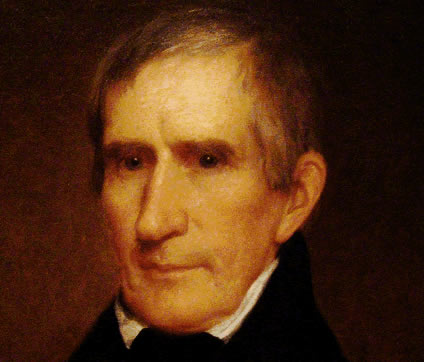
William Henry Harrison |
||
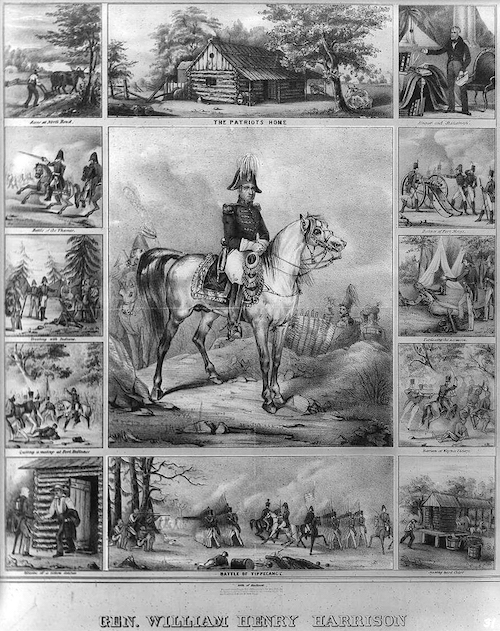
Early LifeWilliam Henry Harrison was born into an influential political family on February 9, 1773, in Charles City County, Virginia. Harrison's father was a wealthy Virginia planter who signed the Declaration of Independence and later became governor of Virginia. Mentored by "Mad" Anthony WayneHarrison attended Hampden-Sydney College and studied classics and history. He next moved to Richmond to study medicine. In 1791, after the death of his father, Harrison stopped studying medicine and joined the US Army. He was sent to the Northwest Territory (present-day Ohio, Indiana, and Illinois), where he served as an aide to 'Mad' Anthony Wayne. Under Wayne, Harrison learned how to command an army of frontier soldiers. The Battle of TippecanoeIn 1798, Harrison resigned from the US Army and became Secretary of the Northwest Territory. In 1799, Harrison was elected as a delegate representing the Northwest Territory in Congress. After helping to gain passage of the Harrison Land Act, which made it easier for settlers to buy land in the Northwest Territory, Harrison resigned as a delegate from Congress and became governor of the Northwest Territory. As governor, Harrison secured a vast expanse of land at the expense of the Indians who inhabited it. Indian resistance, under the leadership of Tecumseh and Tenskwatawa, would soon become violent. In 1811, Harrison and 1,000 soldiers marched to Prophetstown, Indiana (an Indian village), for the purposes of removing the Indians. An epic battle ensued known as the Battle of Tippecanoe, in which Harrison and his men massacred the Indians. Later, in the War of 1812, Harrison commanded an army that routed the British at the Battle of Thames (in present-day Ontario). Harrison instantly became a war hero. 9th PresidentAfter serving in both the Ohio Senate and House of Representatives, Harrison was elected to the US Senate. He served in the Senate until he was appointed Minister to Colombia in 1828. In 1836, Harrison ran for president of the United States but was defeated by Martin Van Buren. In 1840, Harrison again ran for president and was elected in a landslide victory. Harrison's vice president was John Tyler. Their catchy campaign slogan 'Tippecanoe and Tyler too" is one of the most famous in American history.
Shortest PresidencyHarrison took office on March 4, 1841. That day, Harrison delivered the longest inaugural speech in American history - in the bitter cold. Harrison quickly developed a cold, which turned into pneumonia. Despite intensive medical treatment, Harrison died just one month later. He was the first president to die in office. To this day, his presidency was the shortest in American history - 32 days. Early LifeWilliam Henry Harrison was born on February 9, 1773, in Charles City County, Virginia. His father was a wealthy planter who signed the Declaration of Independence and later became Virginia’s governor. Mentored by "Mad" Anthony WayneHarrison studied history and classics at Hampden-Sydney College. He later studied medicine but stopped after his father's death. In 1791, he joined the U.S. Army and was sent to the Northwest Territory. He worked closely with General “Mad” Anthony Wayne and learned how to lead soldiers on the frontier. The Battle of TippecanoeHarrison left the army in 1798 and became Secretary of the Northwest Territory. He was later elected as a delegate to Congress and helped pass a law making land purchases easier. He then became the territory’s governor. Harrison took land from Native Americans, which led to conflict. In 1811, he led troops to Prophetstown, Indiana, and defeated Native forces in the Battle of Tippecanoe. Later, during the War of 1812, he defeated the British at the Battle of the Thames, becoming a national hero. 9th PresidentHarrison served in the Ohio state legislature and the U.S. Senate. He was also the U.S. minister to Colombia. He ran for president in 1836 but lost. In 1840, he ran again and won with his running mate John Tyler. Their campaign slogan was “Tippecanoe and Tyler too.” Shortest PresidencyHarrison became president on March 4, 1841. He gave the longest speech in presidential history during his inauguration, which was held in freezing weather. He got sick shortly after and died from pneumonia just 32 days later. He was the first U.S. president to die in office and still holds the record for the shortest presidency. |