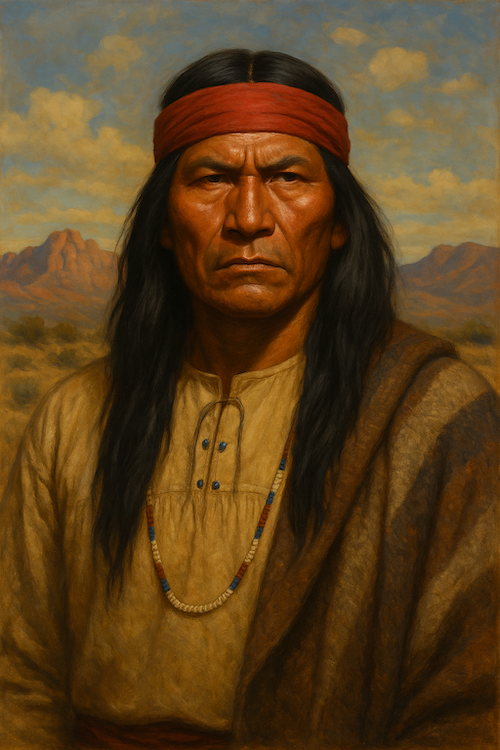
Cochise |
Depiction of Cochise |
Biography of CochiseCochise (c. 1805–1874) was one of the most respected leaders of the Chiricahua Apache. Born in the early 1800s in what is now Arizona, Cochise grew up during a time when his people lived freely across the deserts and mountains of the Southwest. Known for his strength, intelligence, and leadership, he became chief of the Chokonen band of the Chiricahua Apache. Early LifeAs a young man, Cochise earned a reputation as a brave warrior and a skilled horseman. His people depended on him to protect their lands from enemies, both Native and non-Native. He learned traditional Apache ways and valued honor, loyalty, and freedom above all else. Conflict with the U.S. GovernmentIn the 1860s, tensions grew between the Apache and U.S. settlers and soldiers. In 1861, an American officer wrongly accused Cochise of kidnapping a boy. When Cochise denied it and tried to talk peacefully, the soldiers attempted to arrest him. He escaped, but his family was taken captive and killed. This betrayal started more than ten years of warfare between Cochise’s band and the U.S. Army. Leadership and ResistanceCochise proved to be a clever and determined leader. He used his knowledge of the land to resist U.S. forces, often outsmarting soldiers in battles across the deserts and mountains. Many Apaches and even some non-Native allies respected his fairness and courage. Despite the fighting, Cochise was not cruel—he wanted his people to live freely, not to destroy others. Peace and DeathBy the early 1870s, after years of conflict, both sides were tired of war. In 1872, U.S. General Oliver O. Howard worked out a peace treaty with Cochise, allowing the Apache to live on a large reservation in their homeland. Cochise honored this peace until his death in 1874. He was buried secretly in the Dragoon Mountains, a place sacred to the Apache. LegacyCochise is remembered as one of the greatest Apache chiefs, a man who fought fiercely for his people’s freedom but also sought peace when it became possible. Today, places like Cochise County in Arizona are named after him, honoring his role in American history. Discussion Questions
Glossary
Interesting Facts
Timeline
Simplified Biography of CochiseCochise (c. 1805–1874) was a famous leader of the Chiricahua Apache in the Southwest. As a young man, he became known as a strong warrior and a wise leader. He valued freedom and honor for his people. War with the U.S.In 1861, Cochise was wrongly accused of kidnapping a boy. When soldiers tried to arrest him, he escaped, but his family was killed. This started over ten years of fighting between his people and the U.S. Army. Cochise led his warriors with skill, often defeating larger forces. Peace and LegacyIn 1872, General Oliver Howard made peace with Cochise, letting the Apache live in their homeland. Cochise kept this peace until he died in 1874. His grave is still a secret. Today, Cochise is remembered as a brave chief who fought for his people and later chose peace. |