 |
History of Arizona
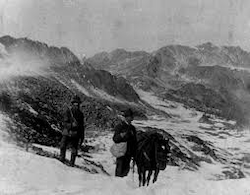
Arizona’s history stretches from ancient Native American civilizations like the Hohokam, Anasazi, and Sinagua to Spanish exploration in the 1500s and later U.S. settlement after the Mexican-American War. It became the 48th state in 1912, growing through mining, agriculture, tourism, and high-tech industries while maintaining a diverse cultural heritage. |
|
 |
Ute Nation
The Ute people are Native Americans from the Great Basin and Rocky Mountain regions, especially present-day Utah and Colorado. Traditionally, they were skilled hunters, gatherers, and horsemen, and they continue to preserve their culture and traditions today. |
|
 |
Navajo Nation
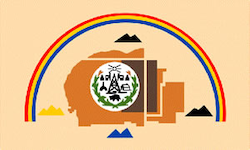
The Navajo, or Diné, are Native American people from the Southwest United States, known for their rich traditions, farming, and sheep herding. They are renowned for their weaving, silver jewelry, and ceremonies that focus on harmony, healing, and balance with nature. |
|
 |
Apache Nation
The Apache Nation is made up of several tribes from the Southwestern United States, known for their strong warrior traditions and skill in survival across deserts and mountains. They resisted Spanish, Mexican, and American expansion for centuries, with leaders like Geronimo becoming legendary. |
|
 |
Puebloan People
The Puebloan people are Native American groups from the Southwestern United States, especially in present-day Arizona, New Mexico, Colorado, and Utah. They are known for their farming, cliff dwellings, multi-story adobe homes, ceremonial kivas, and rich spiritual traditions involving Kachinas.
|
|
 |
The Travels of Francisco Coronado
Francisco Coronado was a Spanish explorer who led a major expedition through the American Southwest in search of the legendary Seven Cities of Gold. Although he never found the riches he sought, his journey marked the first European sightings of the Grand Canyon and helped map much of the interior of North America.
In Depth:
|
|
 |
Manifest Destiny
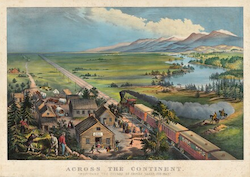
Manifest Destiny was the 19th-century belief that the United States was destined by God to expand its territory across North America. It was used to justify westward expansion, the displacement of Native Americans, and wars such as the Mexican-American War. |
|
 |
Mexican-American War and the Acquisition of the West
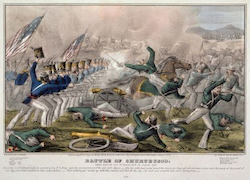
The Mexican-American War (1846–1848) was a conflict between the United States and Mexico following the U.S. annexation of Texas and disputes over the southern border. It ended with the Treaty of Guadalupe Hidalgo, through which the U.S. gained a large portion of the Southwest and established the Rio Grande as the border with Mexico.
|
|
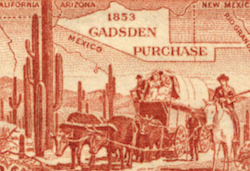 |
Gadsden Purchase
The Gadsden Purchase was an agreement in 1853 in which the United States acquired land from Mexico, roughly 29,670 square miles in present-day southern Arizona and New Mexico, for $10 million. The purchase was intended to facilitate the construction of a southern transcontinental railroad and solidify U.S. control over the region following the Mexican-American War. |
|
|