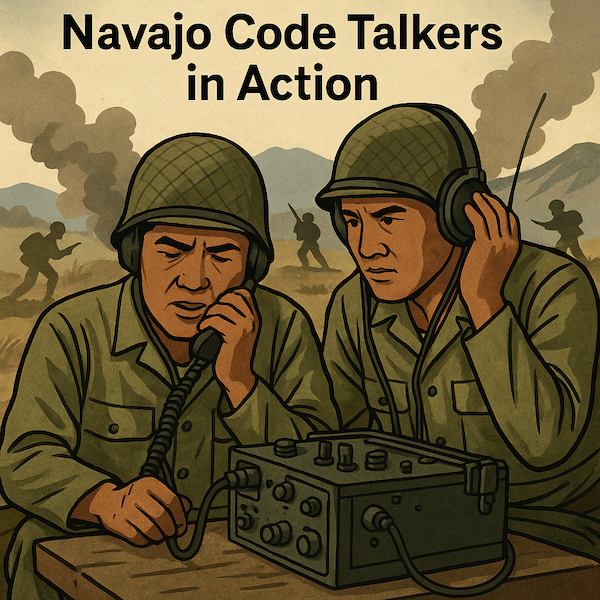
Navajo Code Talkers |
|
The Need for an Unbreakable CodeDuring World War II, the Allied forces needed to send secret messages safely. The Axis Powers often broke the codes that were used, which put soldiers at risk. To protect troops in the Pacific, the United States looked for a code that could not be broken.The Birth of the Navajo Code TalkersA World War I veteran named Philip Johnston had an idea. He grew up near the Navajo Nation and knew the Navajo language was very unique. In 1942, the U.S. Marines recruited 29 Navajo men to create a new code. They based it on their native language, which was complex and not widely known outside their community. These men became the famous Navajo Code Talkers. Using their language, they sent coded messages that enemies could not understand.
The Code Talker AdvantageFrom 1942 to 1945, the Navajo Code Talkers played a key role in the Pacific. Their code was never broken. During the Battle of Iwo Jima, they sent thousands of secure messages between U.S. bases and soldiers in Japan. Thanks to them, important strategies could be shared safely across the ocean.Celebrating the Code TalkersToday, we honor the Navajo Code Talkers for their bravery and service. August 14 is National Code Talkers Day, made official in 2021. Only four original Code Talkers are still alive: Thomas H. Begay, John Kinsel, Peter MacDonald, and Samuel Sandoval. Their work showed how the Navajo language helped protect U.S. forces during World War II.Discussion Questions
Glossary
Five Interesting Facts
Timeline
The Need for a New CodeDuring World War II, U.S. soldiers needed safe ways to send messages. Enemies often broke their codes, which made it dangerous. The U.S. needed a code that no one else could figure out.The Navajo Code TalkersPhilip Johnston, a World War I veteran, suggested using the Navajo language. In 1942, the Marines chose 29 Navajo men to create a code. Since few people knew the Navajo language, it was nearly impossible for enemies to break. These men became known as the Navajo Code Talkers.Helping in the WarFrom 1942 to 1945, the Code Talkers sent thousands of secret messages during battles like Iwo Jima. Their code was never broken, and it helped keep U.S. troops safe.Honoring the Code TalkersAugust 14 is now National Code Talkers Day. Only four of the original Code Talkers are still alive. We honor their bravery and the important role they played in World War II. |