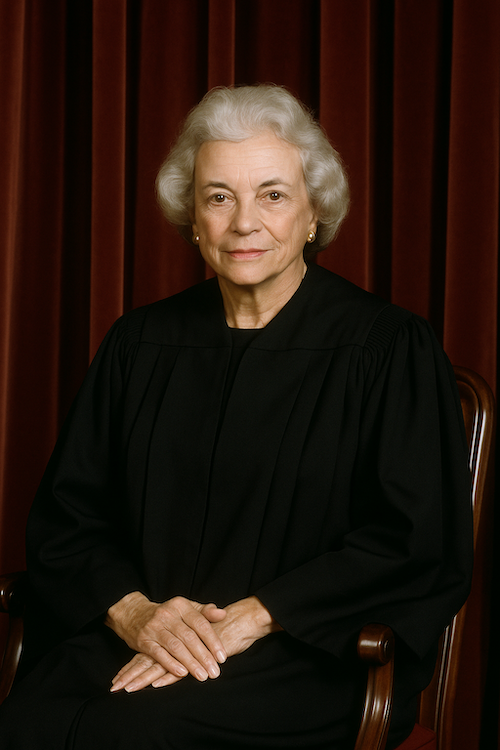
Sandra Day O' Connor |
|
Early LifeSandra Day O’Connor was born on March 26, 1930, in El Paso, Texas. She grew up on a cattle ranch in Arizona, where life was tough and isolated. Despite this, she learned responsibility, hard work, and independence at an early age. She later attended Stanford University, graduating with a degree in economics and then a law degree in 1952. At the time, very few women studied law, and it was difficult for her to find work as a lawyer simply because she was a woman. Legal CareerSandra began her career doing unpaid work at the county attorney’s office before eventually building her way up. She worked in Arizona’s state government, serving as assistant attorney general and later as a state senator. She became the first woman to serve as the majority leader in a state senate. Later, she worked as a judge on the Arizona Court of Appeals. First Woman on the Supreme CourtIn 1981, President Ronald Reagan nominated Sandra Day O’Connor to the United States Supreme Court. She was confirmed by the Senate with a vote of 99-0, making her the first woman ever to serve as a Supreme Court Justice. This was a historic moment in U.S. history and opened the doors for more women in the field of law and government. Supreme Court WorkAs a justice, O’Connor was known for being fair, practical, and often the deciding vote in many close cases. She did not always side with one political viewpoint, but instead looked carefully at each case. Her decisions had a major impact on issues like women’s rights, voting rights, and the role of government. Later YearsO’Connor retired from the Court in 2006 to care for her husband, who was ill with Alzheimer’s disease. After retiring, she worked on projects to improve civic education and encourage young people to learn about the U.S. government. She passed away on December 1, 2023, at the age of 93. Discussion Questions
Glossary
Five Interesting Facts
Timeline
Simplified VersionEarly LifeSandra Day O’Connor was born in 1930 in El Paso, Texas, and grew up on a cattle ranch in Arizona. She studied at Stanford University, earning both an economics and law degree. At the time, women had a hard time finding legal jobs, and she faced many challenges. Career and Supreme CourtShe began working in Arizona’s government and became the first woman to lead a state senate. In 1981, President Ronald Reagan chose her as the first female Supreme Court Justice. She was approved by the Senate with a 99-0 vote. On the Court, she was known for being fair and often had the deciding vote. Later LifeO’Connor retired in 2006 to care for her husband, who had Alzheimer’s disease. She later worked to improve civic education, creating the iCivics program for students. She passed away in 2023 at age 93. |