Brown Vs the Board of Education of Topeka, KS (1954) |
|
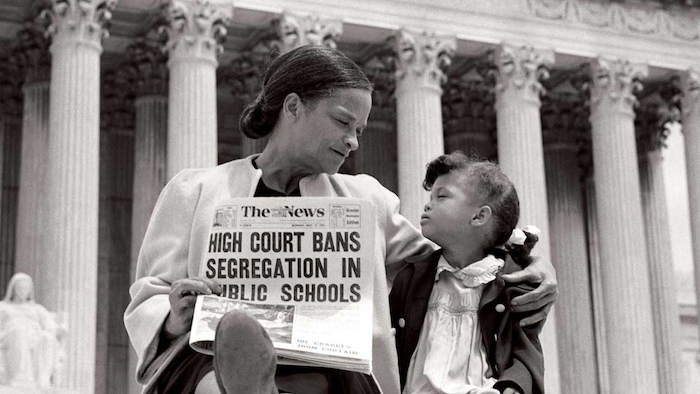
History ot TopekaLocated on the banks of the Kansas River, Topeka is the state capital. The name "Topeka" is translated as "a good place to dig potatoes" in tribal language. Topeka was founded in 1854 as a stop along a trail from Fort Leavenworth to Fort Riley in which people could cross the Kansas River. Soon, Topeka became a shipping hub for steamboats. In 1861, Topeka was named capital of Kansas, after it became the 34th state. For most people, however, Topeka would come to prominence in 1951. The CaseThat year, the city of Topeka, Kansas, was the defendant in one of the most important Supreme Court cases in the nation's history (Brown vs the Board of Education of Topeka, Kansas). In 1951, a law-suit was filed against the school board of Topeka, Kansas, by 13 families on behalf of their children. The suit called for the integration of the city's high schools that were segregated by race (African-Americans were forced to attend different schools than Whites). Federal law permitted racial segregation as long as the schools were "equal" in what they provided students. Segregated schools, however, were never equal. Schools for White students had better facilities and materials. In 1954, the U.S. Supreme Court ruled that segregation of public schools was unconstitutional, and by 1955 demanded integration of all American schools "with all deliberate speed". The vague demand by the Supreme court allowed those who favored segregation to organize resistance. Discussion Questions
Glossary
About TopekaTopeka is the capital of Kansas and sits next to the Kansas River. The name "Topeka" means "a good place to dig potatoes" in a Native American language. Early HistoryIn 1854, Topeka was founded as a river crossing point between two forts. It later became a busy place for steamboats to ship goods. When Kansas became the 34th state in 1861, Topeka became the state capital. Brown v. Board of EducationTopeka became important in American history in 1951. That year, 13 families sued the city's school board. They wanted African American and White children to go to the same schools. At the time, the law said schools could be separated by race if they were equal, but in reality, the schools for Black students were not equal. The Supreme Court DecisionIn 1954, the U.S. Supreme Court decided that public school segregation was unfair and against the Constitution. In 1955, the Court said schools had to integrate, but their instructions were not clear, which led to many people resisting the change. |