Kansas History |
|
|
|
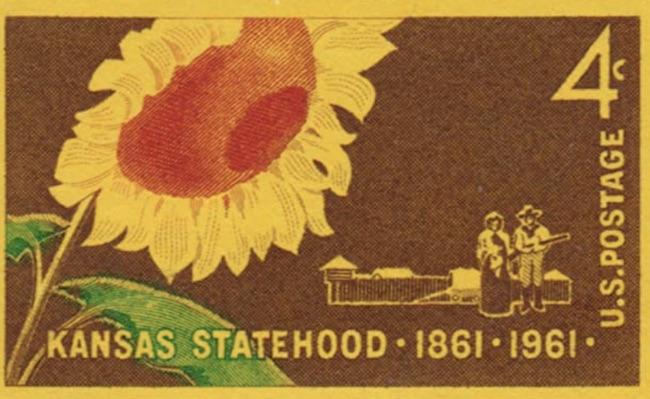
Kansas is a state located in the Midwestern region of the United States. It is bordered by Nebraska to the north, Missouri to the east, Oklahoma to the south, and Colorado to the west. Kansas has a rich and diverse history, having played a significant role in the American frontier, the American Civil War, and the American Dust Bowl. The area now known as Kansas was originally inhabited by various Native American tribes, including the Kansa, Osage, and Pawnee. The first European explorers to visit the area were Spanish conquistadors, who arrived in the 16th century. However, it wasn't until the mid-19th century that American settlers began to move into the region in large numbers. One of the defining moments in Kansas' history was the Kansas-Nebraska Act of 1854, which opened up the territory for settlement and paved the way for the American Civil War. The act sparked a conflict known as "Bleeding Kansas" between pro-slavery and anti-slavery settlers. The conflict was characterized by acts of violence and terrorism, and eventually led to Kansas becoming a state in 1861. During the American Civil War, Kansas was a key battleground between Union and Confederate forces. The state supplied thousands of soldiers to the Union army and was a center of guerrilla warfare. After the war, Kansas became an important center of agriculture and industry, with railroads and transportation networks connecting the state to the rest of the country. However, the early 20th century was a difficult time for Kansas, as the state was hit hard by the Great Depression and the Dust Bowl. The Dust Bowl was a period of severe dust storms and drought that lasted from the 1930s to the 1940s, causing widespread crop failure and migration from the state. Despite these challenges, Kansas continued to grow and develop, and today it is a thriving center of agriculture, industry, and technology.
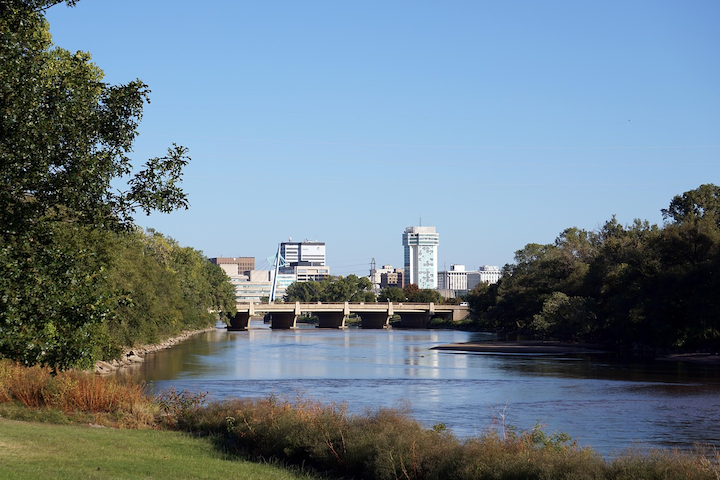
Downtown Wichita Discussion Questions
Glossary
Early InhabitantsKansas was originally home to Native American tribes like the Kansa, Osage, and Pawnee. These tribes lived on the plains, hunting buffalo and building rich cultures before European settlers arrived. European Exploration and SettlementSpanish explorers visited the Kansas area in the 1500s, but large-scale American settlement didn’t begin until the mid-1800s. The land was opened to settlers by the Kansas-Nebraska Act of 1854. Bleeding Kansas and the Civil WarThe Kansas-Nebraska Act led to violent clashes between pro-slavery and anti-slavery settlers. This period became known as “Bleeding Kansas.” In 1861, Kansas joined the Union as a free state and played an active role in the Civil War. Growth and the Dust BowlAfter the war, Kansas became an agricultural and transportation hub. However, the Great Depression and the Dust Bowl in the 1930s brought hard times, with drought and dust storms damaging crops and forcing many families to leave. Kansas TodayKansas has recovered and grown into a modern state known for farming, manufacturing, and new technology. Its history of frontier life, civil conflict, and survival continues to shape its identity today. |