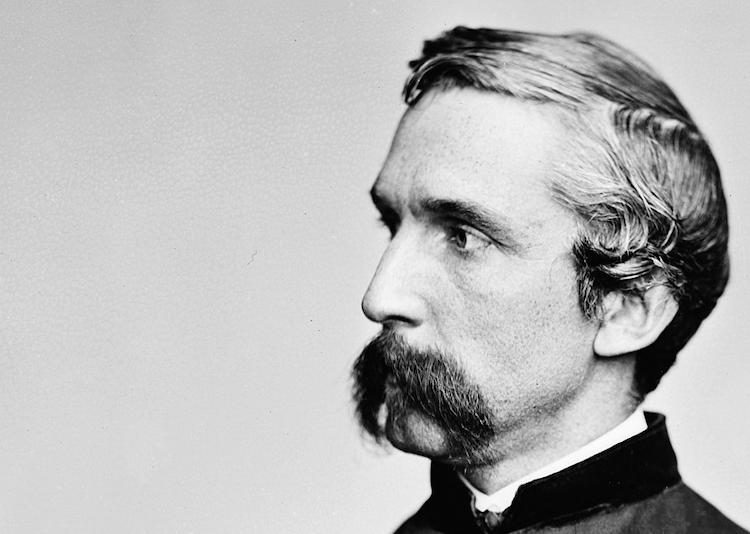
Joshua Chamberlain |
Early LifeJoshua Lawrence Chamberlain was born in 1828 in Maine. He grew up in a farming family but loved learning and books. He studied at Bowdoin College, where he became interested in languages and philosophy. After graduating, he became a professor and taught subjects such as rhetoric and modern languages. Though shy when young, he grew into a confident speaker and leader.The Civil WarWhen the Civil War began in 1861, Chamberlain felt a duty to serve his country. He left his job as a professor and joined the Union Army. He quickly rose through the ranks because of his courage and leadership. By 1862, he was a colonel in the 20th Maine Volunteer Infantry Regiment.The Battle of GettysburgChamberlain is most famous for his role at the Battle of Gettysburg in July 1863. On the second day of the battle, his regiment defended Little Round Top, a hill that was the key to the Union line. Running out of ammunition, Chamberlain ordered a daring bayonet charge down the hill. His men pushed back the Confederate attackers, saving the Union position. Historians believe his actions helped change the course of the war.Later War ServiceChamberlain continued to serve bravely. He was wounded several times, including a near-fatal injury in 1864. Despite his injuries, he returned to duty and was present at the surrender of General Robert E. Lee at Appomattox Court House in 1865. General Ulysses S. Grant chose Chamberlain to command the ceremony. Chamberlain ordered his men to salute the defeated Confederate soldiers, showing respect and a spirit of reconciliation.Life After the WarAfter the war, Chamberlain returned to Maine and became the president of Bowdoin College. Later, he served four terms as governor of Maine. He also wrote about his experiences in the war, sharing the lessons of leadership, honor, and unity. Chamberlain lived until 1914, nearly 50 years after the war ended. He is remembered as a scholar, soldier, and statesman.
YouTube video from the National Portrait Gallery Discussion Questions
Glossary
Five Interesting Facts
Timeline
Early LifeJoshua Lawrence Chamberlain was born in 1828 in Maine. He loved learning and studied at Bowdoin College. After graduation, he became a professor and taught languages.The Civil WarChamberlain joined the Union Army in 1862. He became colonel of the 20th Maine Regiment. At Gettysburg, he and his men defended Little Round Top. Running out of ammunition, he ordered a bayonet charge that saved the Union line.Later LifeChamberlain was badly wounded but kept serving until the war ended. He was chosen to lead Union troops at Lee’s surrender in 1865 and showed respect to the Confederate soldiers. After the war, he became president of Bowdoin College and governor of Maine. He died in 1914, remembered as a brave leader. |