 |
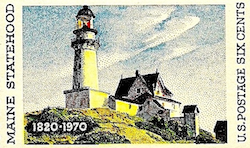
The History of Maine
Maine was originally inhabited by the Wabanaki people and later became part of the Massachusetts Bay Colony after European settlement in the 1600s. It separated from Massachusetts and was admitted as the 23rd state in 1820 as part of the Missouri Compromise. |
|
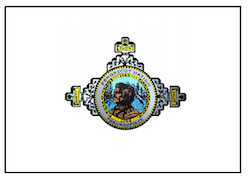 |
Penobscot Nation
The Penobscot Nation is a Native American tribe from Maine, whose homeland centers around the Penobscot River. They are part of the Wabanaki Confederacy and continue to preserve their culture, language, and traditions today. |
|
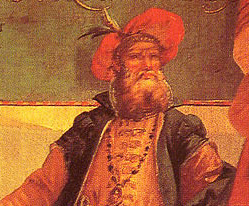 |
Travels of John Cabot
John Cabot, an Italian explorer sailing for England in 1497, is believed to have reached parts of the North American coast, including the area around present-day Maine. His voyages helped England claim land in the New World, even though he did not establish a settlement there. |
|
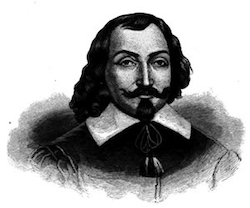 |
Travels of Samuel de Champlain
Samuel de Champlain explored parts of present-day Vermont in 1609 while traveling south from Quebec. He reached the lake that now bears his name, Lake Champlain, and encountered the native Abenaki people during his journey.
|
|
 |
The Popham Colony
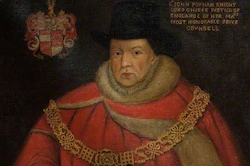
The Popham Colony was an English settlement established in 1607 near present-day Phippsburg, Maine, at the mouth of the Kennebec River. It lasted only about a year before being abandoned, making it one of the earliest but short-lived attempts at colonization in New England. |
|
 |
The Acadians
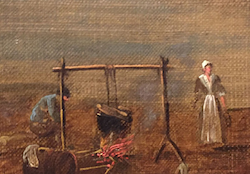
The Acadian people were French settlers who established communities in what is now Nova Scotia, New Brunswick, and Prince Edward Island during the 1600s. In the mid-1700s, many were forced from their homes in the Great Expulsion, with some eventually resettling in Louisiana as the ancestors of today’s Cajuns. |
|
 |
French and Indian War
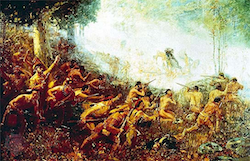
The French and Indian War, also known as the Seven Years War, began in the Spring in 1754. The dispute arose over the presence of British and French settlers in the Ohio River Valley (in and around present day Pittsburgh, Pennsylvania), but resulted in battles that were fought far from there. |
|
 |
Revolutionary War
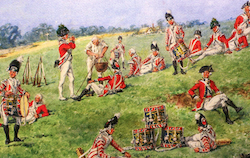
The American Revolutionary War (1775–1783) was a conflict between the thirteen American colonies and Great Britain, resulting in the colonies gaining independence. It began with growing tensions over British taxation and governance and ended with the Treaty of Paris, which recognized the United States as a sovereign nation. |
|
 |
The Missouri Compromise
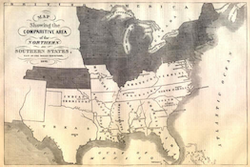
The Missouri Compromise of 1820 temporarily resolved the issue of slavery's expansion by admitting Missouri as a slave state and Maine as a free state, while banning slavery in new territories north of 36° 30' latitude. However, it highlighted the deepening sectional divide between the North and South, setting the stage for further conflict over slavery |
|
 |
Civil War
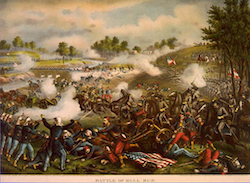
The American Civil War (1861–1865) was fought between the Northern states (Union) and the Southern states that seceded to form the Confederacy, primarily over the issues of slavery and states’ rights. It resulted in the preservation of the Union and the abolition of slavery, but at the cost of over 600,000 lives. |
|