Penobscot Nation |
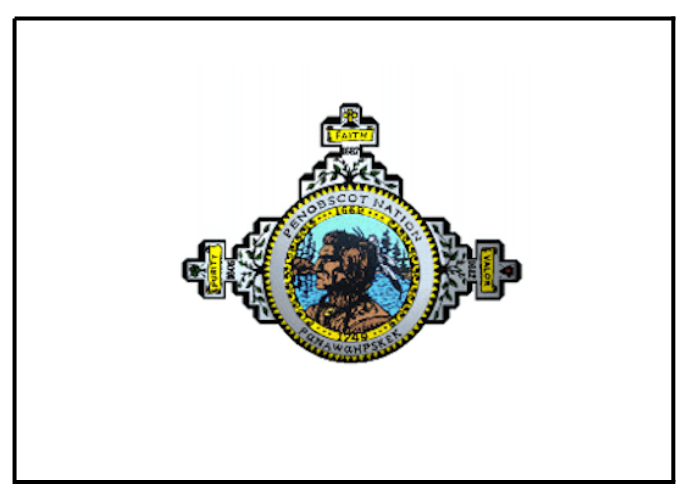
Penobscot Nation Flag |
Origin of the NameThe name Penobscot comes from the Algonquian word Penawapskewi, which means "rocky part" or "place of descending ledges." It refers to a section of the Penobscot River in present-day Maine where the people traditionally lived. The river was central to their identity, and the tribe often called themselves the "People of the River." RangeThe Penobscot traditionally lived along the Penobscot River Valley in central and eastern Maine. Their territory extended from the river’s mouth at Penobscot Bay inland to the North Woods of Maine. Today, the Penobscot Nation has a reservation on Indian Island near Old Town, Maine, and continues to maintain deep connections to their ancestral lands and waters. DietThe Penobscot diet was diverse and based on the rich resources of Maine’s forests and rivers. They fished for salmon, sturgeon, and eel in the Penobscot River, hunted deer, moose, and bear, and gathered berries, nuts, and edible plants. Corn, beans, and squash—the “Three Sisters”—were grown in limited amounts. Maple sugar was also an important seasonal food product. Home TypeThe Penobscot lived in wikuwams (wigwams), dome-shaped dwellings covered with birch bark or animal hides. These homes were relatively easy to build and suited the forest environment. In winter, they built sturdier, insulated homes, while summer camps were more open and airy. CultureThe Penobscot are part of the Wabanaki Confederacy, an alliance that also includes the Passamaquoddy, Maliseet, and Mi’kmaq tribes. They have a rich oral tradition of myths and legends, including tales about Gluskabe, a culture hero who shaped the land, animals, and people. Traditional crafts include birch bark canoes, baskets, and intricate beadwork. Seasonal gatherings, ceremonies, and dances reinforced social bonds and spiritual beliefs. Storytelling was central to passing down knowledge and values. GluskabeGluskabe, sometimes spelled Glooskap, is one of the most important cultural heroes in Penobscot tradition and in the larger Wabanaki Confederacy. He is seen as a wise teacher and transformer who shaped the world to make it suitable for human life. According to Penobscot stories, Gluskabe created rivers, tamed animals, taught people how to hunt, and introduced them to important skills such as canoe building and fishing. Unlike trickster figures in some Native traditions, Gluskabe is usually portrayed as kind and helpful, though sometimes his actions teach lessons through mistakes or unintended consequences. His stories carry moral teachings and explain natural features of the landscape, reinforcing the deep connection between the Penobscot people and their environment. Penobscot River MythOne popular Penobscot myth tells how Gluskabe created the Penobscot River. According to the story, long ago there was only a small stream where people struggled to find enough fish and water. Seeing their hardship, Gluskabe decided to help. He took his bow and shot an arrow into the stream, and where it struck, the waters began to widen and flow faster. Gluskabe then walked along the land, shaping bends, falls, and islands with his footsteps and staff. As he traveled, he released fish into the river so the people would never go hungry. This myth explains the winding course of the Penobscot River and reminds the people that their river was a gift of generosity meant to sustain them. It also teaches the importance of respecting nature, since the river’s balance was carefully made to provide life for all creatures. WarfareThe Penobscot were skilled warriors, especially during the colonial period when conflicts with European settlers and rival tribes intensified. They allied with the French during the 17th and 18th centuries in wars against the British. Despite their resistance, the tribe lost much of their territory through warfare, disease, and treaties that favored European settlers. Yet, their role in the Wabanaki Confederacy gave them collective strength in defending their homelands. The River is Our Relative - the Story of the Penobscot Nation (!YouTube Video!) History Timeline
Discussion Questions
Origin of the NameAbenaki (also Abnaki/Wabanaki) means “people of the dawn,” noting their eastern homeland. They are part of the Wabanaki Confederacy with the Mi’kmaq, Maliseet, and Penobscot. RangeTraditional lands were in northern New England—New Hampshire, Vermont, and Maine—plus southern Quebec. Forests, rivers, and some coastlines shaped daily life. DietAbenaki people farmed the “Three Sisters” (corn, beans, squash), hunted deer and moose, and fished rivers. They gathered berries and nuts, and tapped maple trees for syrup. Home TypeFamilies lived in birch-bark wigwams; larger groups sometimes used longhouses. Villages were often set along rivers for water, travel, and trade. CultureStories of Gluskabe taught lessons about living well and respecting nature. Seasonal ceremonies marked planting, harvests, and hunts. Basketry, beadwork, and birchbark crafts were key traditions, and communities shared resources to endure harsh winters. WarfareThe Abenaki allied with other Wabanaki nations and often with the French. They fought to defend their homelands during colonial conflicts with English settlers. History Timeline
Discussion Questions
|