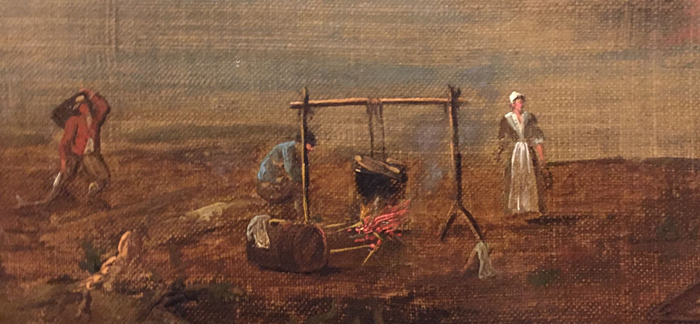
The Acadians |
The Acadians: Early French SettlersThe Acadians were a group of French settlers who lived in Canada during the seventeenth century. They established a colony on North America’s Atlantic coast, in Canada and the state of Maine. Samuel de Champlain, the French explorer who later founded Quebec, visited the Acadian colony in 1604, as did French explorer Pierre de Gua. Acadians in the French and Indian WarThe Acadian colony attained historical prominence during the French and Indian War, a conflict between France and England in the middle part of the 18th century. As part of the Treaty of Utrecht, signed between Britain and Spain, the Acadian lands came under possession of Great Britain. However, the Acadians were allowed to keep their land as long as they swore allegiance to the British crown. The Acadians were reluctant to accept that condition for two main reasons. First, the Acadians’ primary religion was Roman Catholic, while the British were Protestant. Second, the Acadians feared that accepting British rule would leave them vulnerable to attack from the Mi’kmaq, a native tribe living nearby that deeply disliked the British. Due to this, the Acadians chose to remain neutral. Fighting Against the BritishDuring the French and Indian War, the Acadians began sending supplies to the French fortresses and fought together with the Mi’kmaq tribes against the British. Military officer Charles Lawrence was angered by the Acadians’ behavior and set into motion what is known today as The Great Upheaval. On Lawrence’s orders, over eleven thousand Acadians were forcibly removed from their homes and colony. The first wave of removals sent the Acadians to rural parts of Connecticut and New York; the second forced them to France, Britain, and Halifax, Nova Scotia. Of the fourteen thousand Acadians residing in the colony, only 2,600 were able to escape capture and removal by the British. Forced Away From Their LandsThe Acadians began forming their own French-speaking colonies across the world; one group settled in southern Louisiana and are known today as the Cajuns. After the end of the war and the Treaty of Paris in 1763, Britain took control of Canada, and the Acadians ceased to exist as a political group. Acadians were allowed to return to their home if they signed allegiance to Britain; some groups traveled to Nova Scotia or New Brunswick. In 2003, Queen Elizabeth II issued a royal proclamation and formal apology to the Acadian people for their forced displacement. Most Well-Known Quote“Je me souviens” (“I remember”) — often associated with Acadian and Quebecois heritage, symbolizing memory of their history and struggles. Discussion Questions
Glossary
Five Interesting Facts
Timeline of Important Events
The Acadians: French Settlers in North AmericaThe Acadians were French settlers who lived in Canada and parts of Maine during the seventeenth century. They built a colony along North America’s Atlantic coast. French explorers Samuel de Champlain and Pierre de Gua both visited the Acadian colony in 1604. Conflict with the BritishThe Acadians became important during the French and Indian War, when Britain and France fought for control of North America. In 1713, the Treaty of Utrecht gave Britain control of Acadian lands. Britain allowed the Acadians to keep their property if they swore loyalty to the crown, but the Acadians refused. They were Roman Catholic, while the British were Protestant, and they feared attacks from the Mi’kmaq tribe if they supported Britain. For this reason, they chose to remain neutral. The Great UpheavalAlthough neutral, many Acadians secretly sent supplies to French fortresses and worked with the Mi’kmaq against the British. This angered British officer Charles Lawrence, who ordered their removal in an event known as The Great Upheaval. Between 1755 and 1763, more than 11,000 Acadians were deported to places such as New York, Connecticut, France, and Nova Scotia. Out of 14,000 Acadians, only about 2,600 escaped capture. Life After DeportationAfter being expelled, Acadians formed new French-speaking communities around the world. One large group moved to southern Louisiana, where they became known as the Cajuns. When the French and Indian War ended in 1763, Britain took control of Canada, and the Acadians no longer existed as a political group. Some were allowed to return if they swore allegiance to Britain, settling in Nova Scotia and New Brunswick. In 2003, Queen Elizabeth II issued a formal apology to the Acadian people for their forced removal. |