Oklahoma History |
||
|
||
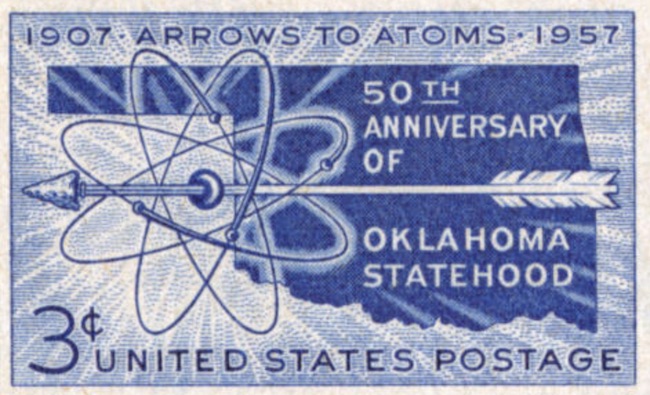
Oklahoma is a state located in the southern central region of the United States.It has played an important role in the development of the American West. The area now known as Oklahoma was originally inhabited by various indigenous tribes, including the Osage, Cherokee, and Creek nations. In the late 19th century, the U.S. government forced the removal of these tribes from their ancestral lands in the southeastern states and relocated them to Oklahoma, an area known as Indian Territory. In 1907, Oklahoma became the 46th state admitted to the Union. During the 20th century, Oklahoma experienced rapid growth and change, with the discovery of oil in the 1920s transforming the state into a major producer of petroleum. The state was also a center for the Dust Bowl migration during the Great Depression, as farmers from the Midwest moved to Oklahoma in search of work. During World War II, Oklahoma played a key role in supporting the war effort, with the state's oil and agricultural industries supplying crucial resources to the military. In the post-war years, Oklahoma continued to grow and prosper, becoming a leader in the aviation and aerospace industries. In recent decades, Oklahoma has become a major player in the energy sector, with the state's natural gas and wind power industries becoming major sources of energy for the nation. Additionally, Oklahoma is home to a number of important cultural and historical sites, including the National Cowboy and Western Heritage Museum, the Oklahoma City National Memorial and Museum, and the Cherokee Heritage Center.
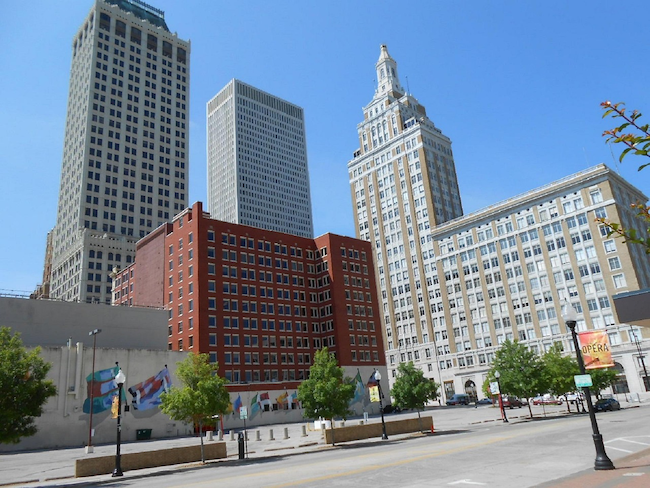
Downtown Tulsa Discussion Questions
Glossary
Early InhabitantsOklahoma was originally home to many Native American tribes, such as the Osage, Cherokee, and Creek. These tribes lived in the region for generations before the U.S. government forced many of them to move there from the southeastern United States. This area became known as Indian Territory. Becoming a StateOklahoma became the 46th state in 1907. In the 1920s, large amounts of oil were discovered, turning Oklahoma into an important petroleum-producing state. The Dust Bowl and World War IIDuring the Great Depression, many farmers came to Oklahoma because of the Dust Bowl. Later, in World War II, the state supported the war with its oil and food production. Modern GrowthAfter the war, Oklahoma grew rapidly. It became known for its work in aviation and aerospace. Today, the state is also a leader in energy, especially natural gas and wind power. Oklahoma is home to many important museums and heritage sites that celebrate its culture and history. |