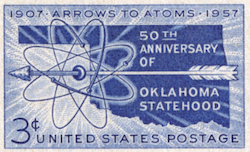
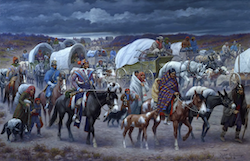
Oklahoma's history is deeply tied to Native American heritage, as it became the destination for tribes forcibly relocated during the 1800s through the Trail of Tears. It later saw rapid settlement by non-Native settlers during the Land Runs, leading to statehood in 1907 as a crossroads of Native, frontier, and oil boom cultures.
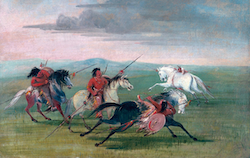
The Comanche Nation is a federally recognized Native American tribe based in Oklahoma, descended from the powerful Comanche people who once ruled the Southern Plains. Today, the Nation preserves Comanche culture, language, and traditions while providing services to its citizens.
The Osage people, originally from the Ohio Valley, migrated west and became known as powerful hunters and farmers in the central United States. They developed a rich cultural and spiritual life centered on harmony, clan structure, and ceremonies honoring nature and their creator, Wakonda.
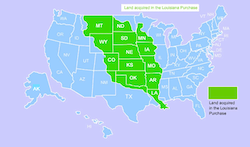
The Louisiana Purchase was a land deal in 1803 where the United States bought a large area of land from France. This purchase doubled the size of the U.S. and included land that would become all or part of 15 states, including Arkansas.
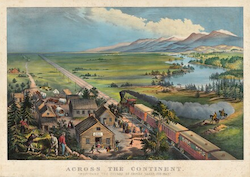
Manifest Destiny was the 19th-century belief that the United States was destined by God to expand its territory across North America. It was used to justify westward expansion, the displacement of Native Americans, and wars such as the Mexican-American War.
The Santa Fe Trail was a 19th-century transportation route that connected Missouri to Santa Fe, New Mexico, serving as a vital commercial and military highway. It played a key role in westward expansion, facilitating trade between the United States and Mexico before the arrival of the railroad.
The Trail of Tears refers to the forced removal of the Cherokee people in 1838, during which nearly 4,000 died on a brutal 1,000-mile march to present-day Oklahoma.
The Comanche Wars were a series of conflicts between the Comanche and U.S. forces in the southern plains, sparked by settler expansion and broken government promises. Despite fierce resistance, including major battles like Adobe Walls, the Comanche were eventually forced onto a small reservation, losing most of their ancestral lands.