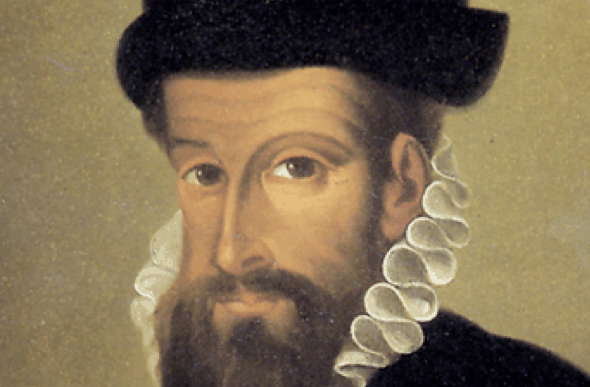
Francisco Pizarro |
Early Life and CareerFrancisco Pizarro was born in Castile (Spain) around 1475 and spent much of his childhood with his grandparents, where he likely helped to take care of the family’s pigs. In 1502, his career in ocean travel began when he accompanied the new governor to the Caribbean island of Hispaniola (modern Haiti and Dominican Republic), which was a Spanish colony. He next joined an expedition under the command of Alonso de Ojeda to Colombia, and three years later, joined explorer Vasco Nunez de Balboa on the expedition credited with the European discovery of the Pacific Ocean. First Fortune and the Search for the IncasPizarro made his first fortune after being named mayor of Panama from 1519-1523 by Pedrarias Davila. In 1523, the 48-year-old explorer voyaged along the west coast of South America through Ecuador and Peru (which he named) in search of the vast riches said to be within the Incan empire. The Incas were the largest pre-Columbian (before Columbus) empire in the Americas and ruled over much of western South America. Pizarro returned to Spain to ask permission to undertake the conquest of the lands they had discovered. His mission to conquer the Incas failed in 1524 and again in 1526. In 1530, Pizarro, now sponsored directly by King Charles I, sailed back to South America with four of his brothers and several other family members. Pizarro and his crew would establish the first Spanish settlement in Peru at San Miguel de Piura. Battle of Cajamarca and the Capture of AtahualpaHostilities between the Spanish conquistadors and the Incas erupted at the Battle of Cajamarca on November 16, 1532. During the battle, Pizarro and the Spaniards captured the Incan chief Atahualpa, after he refused to become a Spanish subject and convert to Christianity. Despite the fact that demands for Atahualpa’s release were met with an entire room full of gold, Pizarro ordered the chief’s execution for various "crimes." Pizarro then occupied and subjugated the royal capital of the Incan Empire, Cuzco. Final Years and DeathPizarro spent the rest of his life maintaining Spanish control of Peru and defending the vast wealth of his family. He founded the eventual Peruvian capital of Lima in 1535. Bitter about Pizarro receiving a larger share of the spoils from their expeditions, his own countrymen attacked his palace on June 26, 1541, and killed him. Discussion QuestionsEarly Life and CareerFrancisco Pizarro was born around 1475 in Castile, Spain, and grew up helping his family. In 1502, he sailed to the Caribbean and later joined expeditions that explored Colombia and the Pacific Ocean. First Fortune and the Search for the IncasPizarro became wealthy as the mayor of Panama. He later explored the western coast of South America, seeking the Incan Empire. After two failed attempts, he received support from King Charles I and sailed back to conquer the region. He helped build the first Spanish settlement in Peru. Battle of Cajamarca and the Capture of AtahualpaIn 1532, Pizarro captured the Incan ruler Atahualpa at Cajamarca. Even though a large ransom in gold was paid, Pizarro had Atahualpa executed. He soon took over the Incan capital of Cuzco. Final Years and DeathPizarro continued to control Peru and founded the city of Lima in 1535. In 1541, he was killed by fellow Spaniards who were angry over his wealth and power. |