World Explorers |
|
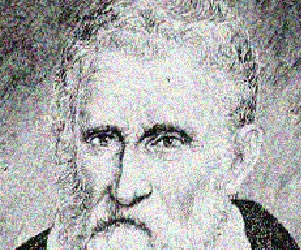 |
Marco Polo was a Venetian merchant and explorer who traveled to Asia along the Silk Road in the 13th century, spending years at the court of Kublai Khan. His detailed accounts introduced Europeans to the wealth and culture of the East, inspiring future exploration. In Depth: |
| Portuguese Explorers | |
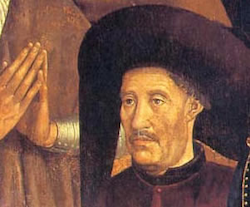 |
Prince Henry of Portugal, known as "Henry the Navigator," was a key figure in the early days of the Age of Exploration. Although he never sailed on voyages himself, he sponsored expeditions along the West African coast, promoted maritime innovation, and laid the groundwork for Portugal’s overseas empire. |
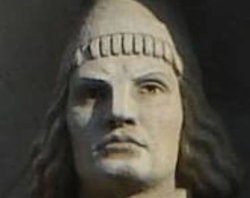 |
Bartolomew Dias was a Portuguese explorer who became the first European to sail around the southern tip of Africa in 1488, proving that a sea route to Asia was possible. His voyage around the Cape of Good Hope opened the door for future trade with India and the East. |
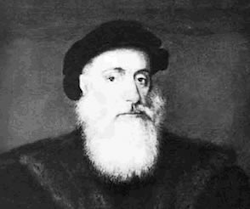 |
Vasco da Gama was a Portuguese explorer who became the first European to reach India by sea, sailing around the southern tip of Africa in 1498. His voyages opened important trade routes between Europe and Asia and helped establish Portuguese power in the Indian Ocean. |
| Spanish Explorers | |
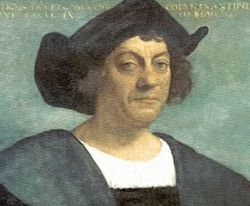 |
Christopher Columbus was an Italian explorer who sailed for Spain and is credited with opening the Americas to European exploration in 1492. Although he believed he had reached Asia, he actually landed in the Caribbean, beginning centuries of contact and colonization. |
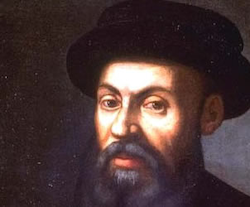 |
Ferdinand Magellan was a Portuguese explorer who led the first expedition to sail around the world, proving that the Earth could be circumnavigated by sea. Although he was killed in the Philippines before the journey was complete, his crew finished the voyage, marking a major achievement in global exploration. |
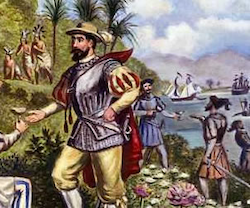 |
Ponce de León was a Spanish explorer and conquistador best known for leading the first official European expedition to Florida in 1513. He is famously associated with the legendary search for the Fountain of Youth, though he was primarily motivated by exploration and colonization. In Depth:
|
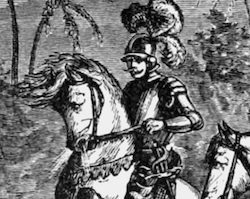 |
Hernando de Soto was a Spanish explorer and conquistador who led the first European expedition deep into the southeastern United States. He is best known for exploring parts of Florida and crossing the Mississippi River, where he died during the journey. |
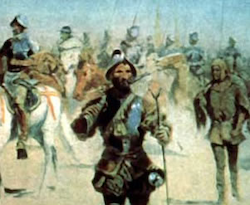 |
Francisco Coronado was a Spanish explorer who led a major expedition through the American Southwest in search of the legendary Seven Cities of Gold. Although he never found the riches he sought, his journey marked the first European sightings of the Grand Canyon and helped map much of the interior of North America. In Depth: |
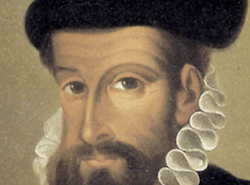 |
Francisco Pizarro was a Spanish conquistador who led the conquest of the Inca Empire in the early 16th century, capturing its ruler Atahualpa and seizing vast amounts of gold. His brutal campaign expanded Spanish control in South America and led to the founding of Lima, Peru. |
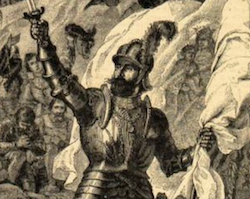 |
Vasco Núñez de Balboa was a Spanish explorer who led the first European expedition to see the Pacific Ocean from the New World, claiming it for Spain in 1513. His daring crossing of the Isthmus of Panama paved the way for future Spanish conquests, though political rivalry led to his execution just six years later. |
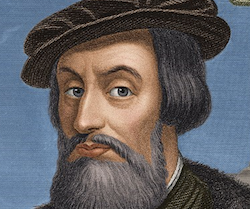 |
Hernán Cortés was a Spanish conquistador who led the expedition that caused the fall of the Aztec Empire in Mexico. Known for his bold tactics and alliances with native enemies of the Aztecs, he claimed vast territories for Spain and helped establish colonial rule in the Americas. In Depth: |
| French Explorers | |
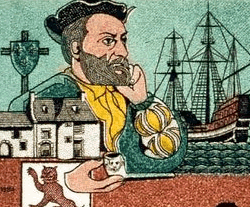 |
Jacques Cartier was a French explorer who made three voyages to North America in the 16th century, claiming parts of Canada for France and mapping the St. Lawrence River. Though he failed to find a Northwest Passage or establish a lasting colony, his journeys opened the interior of the continent to future French exploration. In Depth: |
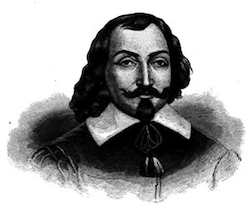 |
Samuel de Champlain was a French explorer and cartographer who founded Quebec in 1608 and is often called the "Father of New France." He established alliances with Indigenous peoples and mapped much of northeastern North America, playing a key role in the early colonization of Canada. |
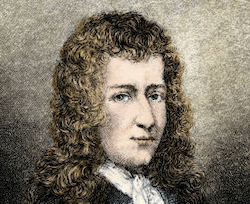 |
Robert Sieur de La Salle was a French explorer who claimed the entire Mississippi River Basin for France in 1682, naming it Louisiana. His ambitious expeditions expanded French influence in North America, though his final colonization attempt ended in disaster and his own death. |
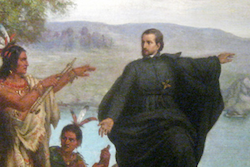 |
Jacques Marquette and Louis Joliet were French explorers who, in 1673, led an expedition to explore the Mississippi River in search of the Northwest Passage. Though they discovered the river flowed south and not west to Asia, their journey provided valuable maps and opened the interior of North America to further French exploration. |
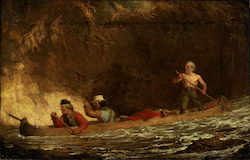 |
The Voyageurs were French-Canadian fur traders who transported goods and furs by canoe across vast distances in the 17th and 18th centuries. They played a key role in the North American fur trade, often working closely with Indigenous groups like the Ojibwe. |
| English Explorers | |
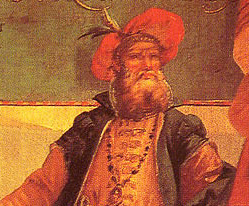 |
John Cabot was an Italian-born explorer who sailed under the English flag and is credited with the 1497 discovery of parts of eastern Canada, likely Newfoundland. Believing he had reached Asia, his voyages gave England its first claims to land in the New World. |
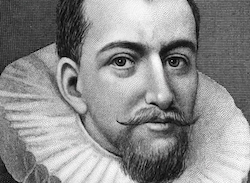 |
Henry Hudson was a British explorer and navigator who made several voyages in search of a northwest passage to Asia in the early 17th century. Although he never found the passage, his explorations led to the naming of the Hudson River and Hudson Bay and helped establish Dutch and British claims in North America. |
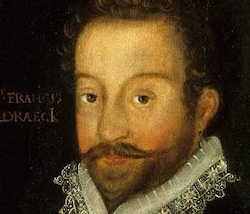 |
Sir Francis Drake was an English explorer and privateer who became the first Englishman to circumnavigate the globe, plundering Spanish ships and claiming land for England along the way. Celebrated as a hero in England and reviled as a pirate by Spain, he played a key role in defeating the Spanish Armada before dying off the coast of Panama in 1596. |
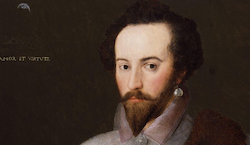 |
Sir Walter Raleigh was an English explorer, soldier, and writer who sponsored attempts to establish the first English colony in North America at Roanoke Island. He played a key role in expanding England’s influence in the New World during the late 16th century. |
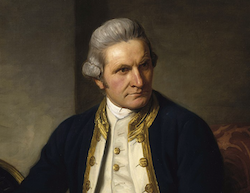 |
Captain James Cook was a British explorer and skilled navigator who mapped more of the Pacific Ocean than any of his contemporaries, including the coasts of Australia, New Zealand, and Alaska. His three major voyages brought scientific discoveries, detailed maps, and cultural insights, though his final journey ended with his death in Hawaii in 1779. |
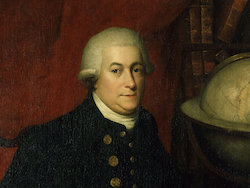 |
The Travels of George Vancouver George Vancouver explored the Pacific coast of North America from California to Alaska in the late 1700s. He carefully mapped the coastline and claimed territories for Britain, greatly expanding knowledge of the region. |
| American Explorers | |
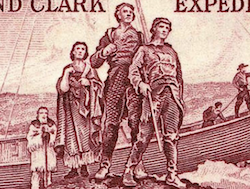 |
The Lewis and Clark Expedition, led by Meriwether Lewis and William Clark from 1804 to 1806, was a journey to explore the newly acquired Louisiana Territory and find a water route to the Pacific Ocean. Their expedition provided valuable maps, scientific data, and strengthened American claims to the western lands. |
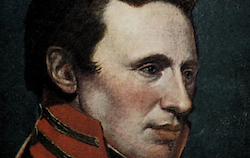 |
Zebulon Pike was an American explorer who led expeditions in the early 1800s to chart the southern portion of the Louisiana Territory. During his second journey, he explored the American Southwest and famously attempted to climb the peak now named Pikes Peak in Colorado. |
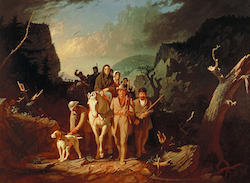 |
Daniel Boone and the Exploration of Kentucky Daniel Boone was a frontiersman who helped explore and settle Kentucky in the late 1700s, blazing the Wilderness Road through the Cumberland Gap. His adventures opened the way for thousands of pioneers to move westward into what was then the American frontier. |