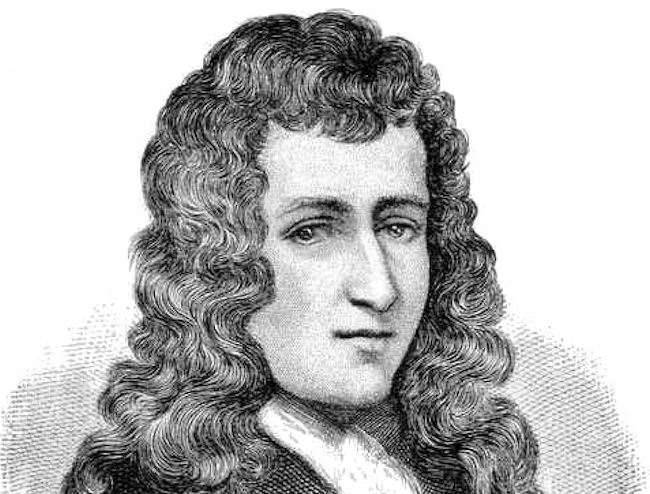
Robert Sieur de la Salle

Robert Sieur de la Salle

Robert Sieur de la Salle

Robert de La Salle, also called Robert Sieur de la Salle, was a famous French explorer. He was born on November 21, 1643, in Rouen, France. He spent nine years as a Jesuit student and teacher before renouncing his vows and traveling to the New World.

The Search for the Northwest Passage

La Salle's career in exploration began in 1666, when he traveled to Quebec, Canada as a French colonist. In 1667, he was granted a seigneury (a large plot of land) on Montreal Island, which he sold two years later in the hopes of jump starting his career as an explorer. Eager to find the fabled Northwest Passage to Asia, La Salle set up an impulsive expedition with nine canoes from Montreal, Quebec in 1669. La Salle and his crew, however, were ill-prepared for the exploration, but did reach Lake Ontario. The expedition turned back to Montreal two months later without reaching the river that La Salle believed led to China - the Ohio. La Salle made several other smaller expeditions between 1671 and 1673.

Exploring the Great Lakes

In 1677, in pursuit of his own glory, he returned to France and got permission from the King to explore all lands between Florida, Mexico, and New France. After stockpiling supplies and building a ship on the Niagara River, La Salle and his men explored parts of Lake Erie, Lake Huron, and Lake Michigan and the surrounding land (including Green Bay, Wisconsin) in 1679 and 1680.

Claiming "Louisiana"

On February 6, 1682, La Salle and 40 men reached the Mississippi River and began their journey south. On April 9, La Salle claimed the entire Mississippi River Basin for France when he reached the mouth of the river near Venice, Louisiana. The claim included not only the Mississippi River, but all land where its branches extended - approximately two thirds of the entire United States. La Salle named the region Louisiana, after his King. On the return trip, La Salle and Henri da Tonti, one of his lieutenants, oversaw the construction of Fort St. Louis in 1682 on a butte above the river in modern-day Illinois. Today, the park is known as Starved Rock and is the most visited state park in the state of Illinois. Tonti stayed as commander of the fort, while La Salle returned to France for more supplies.

La Salle's Deadly Failure

In 1684, La Salle and 300 hopeful colonists returned to North America in the hopes of establishing a large French colony along the coast of the Gulf of Mexico. The trip, however, was a nightmare. It was plagued by pirate attacks, hostile Indians, and poor navigation. One of La Salle's supply ships became shipwrecked and members of the expedition killed local Indians who had taken supplies from the wreck, making dangerous enemies. The expedition ended up in Texas where they founded another Fort St. Louis, far from their target - the Mississippi River. During one of several searches for the river, 36 of La Salle's men mutinied near present-day Navasota, Texas. It was here where La Salle was murdered by one of his own men on March 19, 1687. The colony of Fort St. Louis would persist until 1688, when its remaining residents were killed by Indians.

Discussion Questions

  • Why do you think La Salle's expeditions were both ambitious and dangerous?
  • How did La Salle's naming of "Louisiana" impact future French claims in North America?
  • What mistakes contributed to the failure of La Salle’s final expedition?
  • In what ways did La Salle’s explorations shape European understanding of the Mississippi River and the American interior?
  • Early Life

    Robert Sieur de La Salle was born on November 21, 1643, in Rouen, France. Originally trained as a Jesuit for nine years, he eventually renounced his vows and sailed to New France, determined to make a name for himself in the New World.

    The Search for the Northwest Passage

    La Salle's exploration career began in 1666 when he settled in Quebec. In 1669, he launched his first expedition in search of a Northwest Passage to Asia, hoping the Ohio River would lead there. Though the mission was poorly prepared and ultimately unsuccessful, it marked the beginning of a career filled with bold and ambitious undertakings.

    Exploring the Great Lakes

    In 1677, La Salle gained royal permission to explore lands between Florida, Mexico, and New France. He and his crew built a ship along the Niagara River and explored the Great Lakes—Erie, Huron, and Michigan—as well as the surrounding territories, including what is now Green Bay, Wisconsin. These voyages helped France expand its knowledge and claims in the interior of North America.

    Claiming "Louisiana"

    On April 9, 1682, after a long journey down the Mississippi River with 40 men, La Salle claimed the entire river basin for France, naming it "Louisiana" in honor of King Louis XIV. The claim extended French territory across two-thirds of what would become the United States. On the return journey, La Salle established Fort St. Louis near present-day Starved Rock, Illinois, before returning to France to organize further colonial efforts.

    La Salle's Deadly Failure

    In 1684, La Salle returned with 300 colonists aiming to build a permanent French settlement on the Gulf of Mexico. However, poor navigation led them to Texas instead of the Mississippi River. The expedition was plagued by shipwrecks, hostile encounters, and mutiny. On March 19, 1687, La Salle was murdered by his own men near present-day Navasota, Texas. The colony failed, and by 1688, all its settlers had been killed by local Indigenous groups.

    la Salle Activities