Sir Francis Drake |
||||
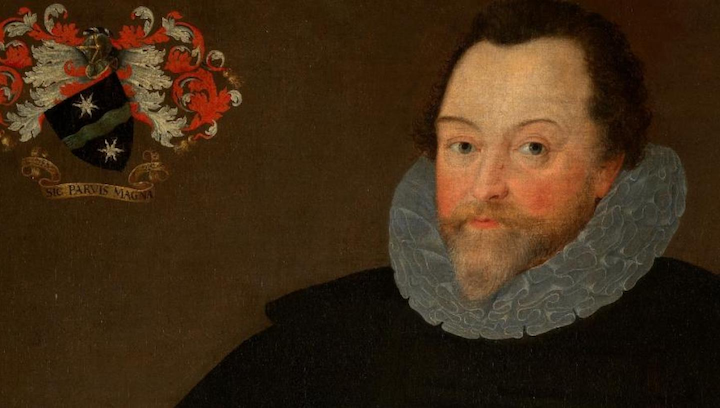 |
||||
Birth of a PirateSir Francis Drake was born sometime around 1540 as the son of a Puritan farmer. Drake taught himself navigation as the navigator of a small merchant vessel early in his career. He also served as an officer aboard a West African slave vessel. In 1567, Drake and his cousin, John Hawkins, were attacked by a Spanish ship in the Gulf of Mexico. The Spaniards took all of their sea vessels, though they allowed Drake and Hawkins to escape with their lives. At the time, the Spaniards had no idea that failing to kill Drake would prove so costly to the entire Spanish Empire. From that point on, Drake developed a hatred for Catholic Spaniards and devised plans to seek revenge. Plundering Spanish Treasure ShipsIn 1572, Queen Elizabeth commissioned Drake to work as a privateer in attacking Spanish ports and shipping. Drake left England for the Caribbean Sea with two ships and 73 sailors. After an unsuccessful attempt to attack the Spaniards in present-day Nicaragua, Drake formulated new plans to attack a Spanish vessel carrying hoards of gold brought back from Mexico. After successfully heisting the gold, he then sailed back to England and brought the spoils back to Queen Elizabeth. Queen Elizabeth promptly appointed Drake as the leader of an expedition to sail around (circumnavigate) the world. As part of the circumnavigation, Drake made further plans to plunder Spanish interests. CircumnavigationOn December 17, 1577, Drake left England with three ships and two supply ships and started his circumnavigation. The voyage got off to a poor start. Terrible weather prompted some of the crew to stage a mutiny (to take over the ship). The mutiny was unsuccessful, and when Drake reached the west coast of South America, he had the leader of the mutiny, Thomas Doughty, beheaded. After the mutiny, Drake’s ship, now named The Golden Hind, sailed for Valparaiso, Chile. The ship encountered Spanish sea vessels carrying gold. The Spanish ships could not identify The Golden Hind as a pirate ship because of rainy weather and because the Golden Hind had been ravaged by bad weather. As a result, Drake plundered the Spanish vessel and proceeded to plunder the Spanish port at Callo. Drake also learned of the location of a huge Spanish galleon named Cacafuego that was sailing toward Panama. Drake made plans to attack Cacafuego.
Attack on CacofuegoOn March 3, 1579, The Golden Hind demolished Cacafuego with cannon fire off the coast of Panama. Drake confiscated an unbelievable amount of precious metals and jewels from Cacafuego—80 pounds of gold, two tons of silver, pearls, and precious stones. Afterward, Drake sailed to California to repair his ship. He claimed the area, thought to be near San Francisco, for the English crown. Drake’s return trip to England took over a year. Not only did he become the first explorer to make the journey around the world, but upon his return, despite the demands of the Spanish crown to have him beheaded, Queen Elizabeth made him a knight. After the circumnavigation, Drake was made commander of a fleet of English ships that continued to plunder Spanish sea vessels and steal their gold. When Spain declared war on England in 1585, Francis Drake led a thunderous assault at the Spanish port of Cadiz and scored another major victory when the Spanish Armada attempted to invade the English Channel.
LegacyMany believe Francis Drake was the main reason the English defeated the vaunted Spanish Armada. He died in 1596 from dysentery off of the coast of Panama. Discussion QuestionsBirth of a PirateSir Francis Drake was born around 1540 in England, the son of a Puritan farmer. He began his career at sea as a navigator and later served aboard a slave ship. In 1567, Drake and his cousin John Hawkins were attacked by the Spanish in the Gulf of Mexico, narrowly escaping with their lives. From that moment, Drake developed a deep hatred for Spain and set out to disrupt their empire. Plundering Spanish Treasure ShipsIn 1572, Queen Elizabeth commissioned Drake as a privateer, giving him royal approval to attack Spanish ports and ships. After a failed raid in Nicaragua, Drake successfully intercepted a treasure ship loaded with gold from Mexico and returned to England in triumph. Impressed, Queen Elizabeth appointed him to lead an expedition to sail around the globe—and continue plundering Spanish riches along the way. CircumnavigationDrake began his circumnavigation on December 17, 1577, with three ships and two supply ships. Facing harsh weather and internal conflict, he had mutineer Thomas Doughty executed. On the west coast of South America, Drake’s ship, now called the Golden Hind, ambushed and looted Spanish vessels under cover of bad weather. He also raided the port of Callo and set his sights on a legendary Spanish galleon. Attack on CacafuegoOn March 3, 1579, Drake attacked and captured the Spanish treasure ship Cacafuego, seizing 80 pounds of gold, two tons of silver, and countless jewels and pearls. He then sailed north, likely landing near present-day San Francisco, and claimed the land for England. After over a year at sea, Drake returned home as the first Englishman to circumnavigate the globe and was knighted by Queen Elizabeth, despite Spain's calls for his execution. Anglo-Spanish War and LegacyDrake later led English naval forces during the Anglo-Spanish War. He scored a major victory at the port of Cadiz in 1587 and played a crucial role in defeating the Spanish Armada in 1588. Considered a national hero in England and a pirate by Spain, Sir Francis Drake died of dysentery off the coast of Panama in 1596. |
||||
| Sir Francis Drake Activities | ||||
|

