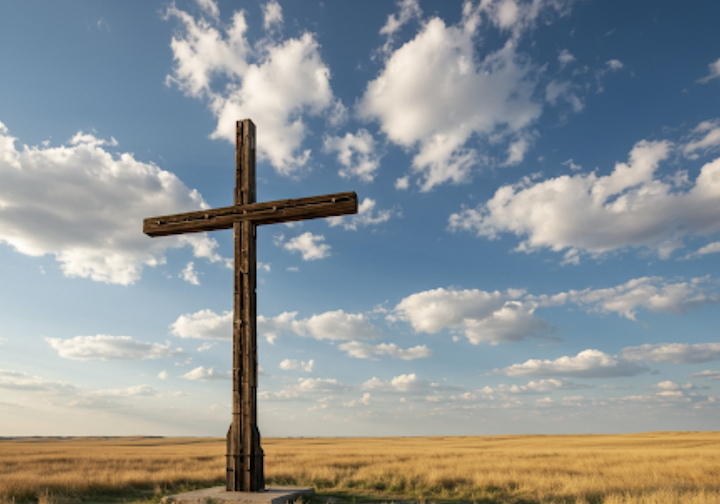
Coronado’s Cross marks a significant moment in the history of European exploration in the Americas. Francisco Vásquez de Coronado, a Spanish explorer, led an expedition in 1540 in search of the mythical Seven Cities of Cibola. During his journey through the present-day southwestern United States, he crossed the vast plains of what is now Kansas. It was here that Coronado's expedition conducted a historical event: the first Christian mass held in the interior of what would later become the United States.
In July 1541, nearly 80 years before the landing of the Pilgrims at Plymouth, Coronado and his men stopped in the region of present-day Kansas, where they erected a wooden cross as a symbol of their arrival and the Spanish claim over the land. This cross is often referred to as Coronado’s Cross, representing both conquest and the spread of Christianity in the New World. While there is no physical trace of the original cross, its legacy has endured in the history of the region.
During their stay, the Spanish expedition held a mass in the Kansas plains, marking the first time Catholic rites were performed in the interior of what would later be the United States. This mass, celebrated by the priests accompanying Coronado, was an important moment in the early history of Christianity in North America, symbolizing the religious aspirations of Spanish exploration and the European presence in the continent’s interior.
Today, a 38-foot-tall concrete cross near Fort Dodge, Kansas commemorates the first mass and the location in which Coronado and his crew most likely crossed the Arkansas River.
|