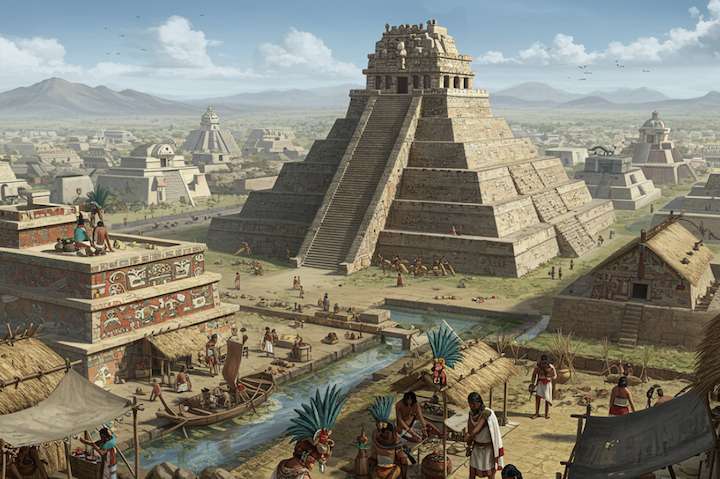
Tenochtitlán - the Grandest City in the World |
Introduction to TenochtitlánTenochtitlán, the capital of the Aztec Empire, was a breathtaking marvel that astounded all who encountered it. Founded in 1325 on an island in the middle of Lake Texcoco, the city was a masterpiece of engineering, urban planning, and cultural richness. One of its most remarkable features was its layout, with wide causeways connecting the city to the mainland, creating an intricate network of roads and bridges. The city was divided into four large sections, each containing bustling marketplaces, temples, and residential areas. The Templo MayorAt the heart of Tenochtitlán stood the Templo Mayor, a towering pyramid that served as the religious and cultural center of the city. This grand structure was dedicated to the gods Huitzilopochtli, the god of war, and Tlaloc, the god of rain. The temple complex was surrounded by beautiful gardens and terraces, adding to its awe-inspiring presence. Innovative AgricultureThe Aztecs were also famous for their innovative agricultural practices. They developed chinampas, or floating gardens, to grow crops in the shallow waters of Lake Texcoco. These man-made islands supported an abundant supply of food, allowing the city to sustain a population that may have reached up to 200,000 people. The Tlatelolco MarketThe city's marketplaces, particularly the famous Tlatelolco market, were bustling hubs of commerce where merchants sold everything from food to precious stones. It was a vibrant, thriving center of trade, with goods flowing in from all over the empire. Waterways and TransportationTenochtitlán’s beauty was further reflected in its canals and aqua-based transportation system, where canoes floated along the city’s waterways, allowing the people to travel quickly and efficiently. The capital of the Aztec Empire was not just a city; it was a dazzling, living testament to the ingenuity and power of one of the greatest civilizations in the Americas. Discussion QuestionsIntroduction to TenochtitlánTenochtitlán was the capital of the Aztec Empire and an amazing city built in the middle of Lake Texcoco in 1325. It had wide roads and bridges called causeways that connected it to the land. The city had four big areas with markets, homes, and temples. The Templo MayorIn the center of the city stood the Templo Mayor, a tall pyramid used for religious ceremonies. It was built to honor two important Aztec gods—Huitzilopochtli, the god of war, and Tlaloc, the god of rain. Gardens and terraces surrounded the temple, making it a beautiful place. Innovative AgricultureThe Aztecs grew food using floating gardens called chinampas. These gardens were built on the lake and helped feed the city's large population. This smart farming method allowed the Aztecs to grow lots of crops like corn, beans, and squash. The Tlatelolco MarketThe market at Tlatelolco was one of the busiest in the empire. People came from all over to buy and sell food, tools, clothing, and even gold and jewels. Waterways and TransportationCanals ran through the city, and people used canoes to get around. This made travel easy and showed how well the city was planned and built.
|