Portuguese Exploration in the New World |
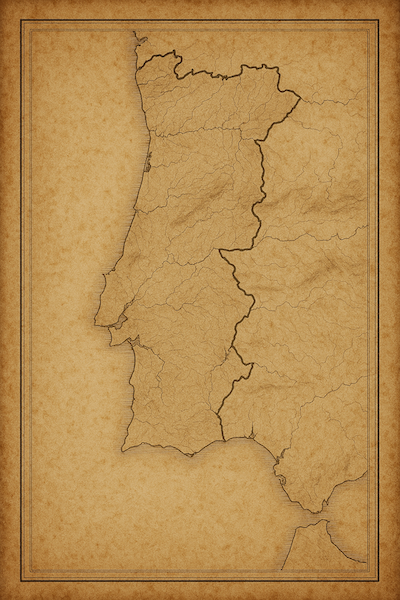
Why Portugal Led the WayDuring the Age of Exploration, Portugal became one of the most important seafaring nations in the world. Although small in size, Portugal had several advantages: it bordered the Atlantic Ocean, it had skilled sailors, and it was ruled by leaders who believed in exploring the unknown. One of the most influential figures was Prince Henry, known as “Henry the Navigator.” Even though he rarely sailed himself, Henry founded a famous school for navigation where mapmakers, shipbuilders, and sailors worked together to improve travel by sea. Under his guidance, explorers learned how to use new tools like the astrolabe and improved maps that helped them travel farther down the west coast of Africa. New Ships and New KnowledgePortuguese shipbuilders designed a new type of vessel called the caravel. These ships were lighter, faster, and easier to steer than any ships used before. With triangular sails that could catch the wind from different directions, caravels were perfect for exploring uncharted waters. As Portuguese sailors ventured farther south along Africa, they gathered valuable information about winds, currents, islands, and harbors. All of this improved knowledge made each new voyage safer and more successful than the last.
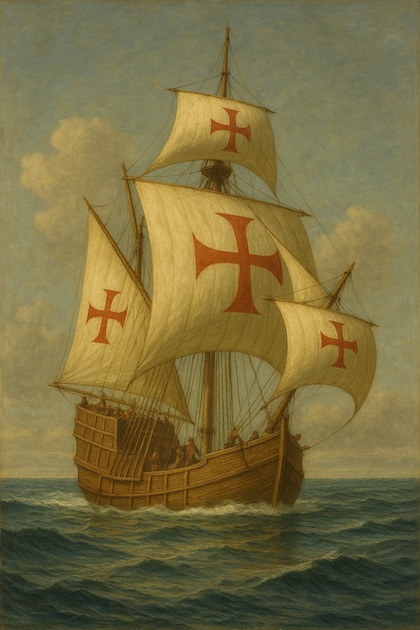
Depiction of a Portuguese Caravel Reaching Africa, India, and BeyondThe first major breakthrough came in 1488, when Bartolomeu Dias became the first European to sail around the southern tip of Africa, known as the Cape of Good Hope. This proved that ships could reach the Indian Ocean by sailing around Africa. Ten years later, in 1498, Vasco da Gama completed one of the most important voyages in world history by reaching India. His successful journey opened direct trade between Europe and Asia, allowing Portugal to trade for spices, jewels, and other valuable goods. Portuguese ships soon reached lands even farther east, including Indonesia, China, and eventually Japan. By the early 1500s, Portugal had built a powerful trading empire that stretched across Africa and Asia.
Bartholomew Dias The Impact of Portuguese ExplorationPortuguese exploration changed the world. European maps became more accurate, trade networks expanded, and distant cultures came into contact for the first time. Portugal’s success encouraged Spain, England, France, and others to send their own explorers across the oceans. Not all effects were positive, however. Portuguese expansion also played a major role in the Atlantic slave trade and brought conflict to many regions. Still, the voyages of Dias, da Gama, and other navigators marked the beginning of global exploration and helped shape the modern world. Da Gama's journey to Asia in 1497. Click a point to learn more and try to complete the scavenger hunt. Discussion Questions
Glossary
Portugal Begins ExploringPortugal was one of the first countries to explore the oceans. Prince Henry the Navigator encouraged sailors to learn new skills and travel farther than ever before. Better ShipsPortuguese sailors used a new ship called the caravel. It was fast, easy to steer, and good for long trips. Reaching New PlacesBartolomeu Dias sailed around the tip of Africa in 1488. In 1498, Vasco da Gama sailed all the way to India. This opened new trade routes for spices and other goods. How It Changed the WorldPortuguese exploration helped people learn more about the world. It started more trade, but it also brought conflict and the beginning of the Atlantic slave trade. Still, these voyages helped begin the Age of Exploration. |
| Portuguese Explorers Activities |
|