Sea Monsters in the Age of Exploration - Download Lesson |
||||||
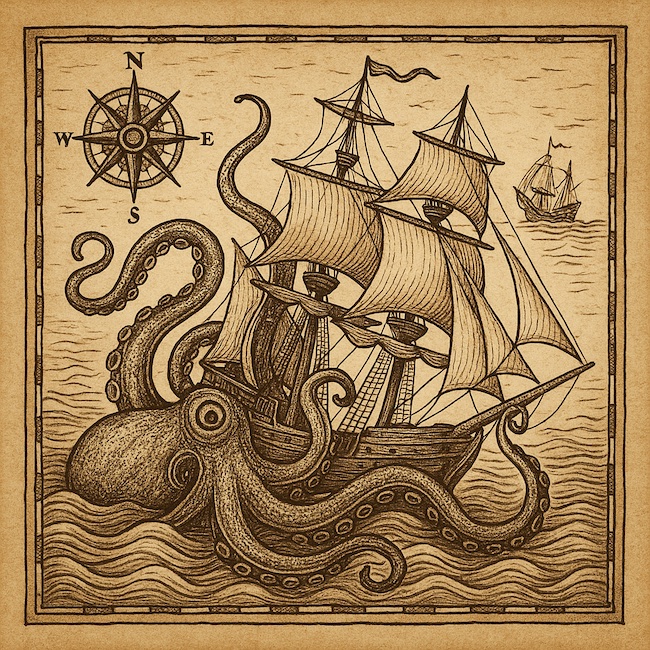
Rendering of a Sea Monster |
||||||
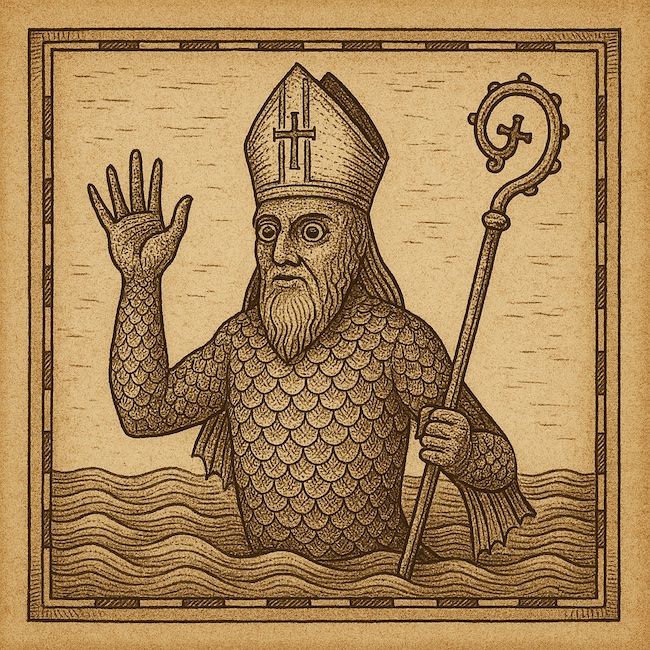
The Mysterious Oceans and the Birth of LegendsIn the Age of Exploration, the world’s oceans were mysterious and endless. Sailors told stories of boiling salt water near the equator and fearsome sea life. As these stories were repeated from crew to crew and ship to ship, the creatures grew stranger, larger, and more terrifying. The farther sailors traveled from home, the more their imaginations filled the unknown with danger. These tales helped explain the powerful waves, gigantic shadows beneath the water, and strange animals they sometimes glimpsed. Today, one of the most famous legends from this era continues to appear in movies, novels, and video games — the fearsome kraken. The Legend of the KrakenThe legend of this colossal, crew-eating, ship-sinking monster came from the wide bays and icy waters of Scandinavia. Although the kraken was described as a terrifying beast of unimaginable size, the legend was likely inspired by a real animal: the giant squid. The squid itself can reach impressive lengths, but the kraken of sailor tales grew to island-like proportions. The kraken was first described as a giant squid in Erik Pontoppidan’s The First Attempt at a Natural History of Norway (1752). In this book, Pontoppidan wrote that the kraken was so enormous that sailors sometimes mistook it for an island. Even more dangerously, he claimed that the creature created a massive whirlpool when it sank, strong enough to drag ships down with it. Although Pontoppidan insisted that the kraken preferred eating fish over people, he admitted that with its long arms, the creature could easily pull even the largest warships to the bottom of the sea. The Kraken in Books and MoviesPontoppidan’s description sparked the imagination of later authors and storytellers. In the famous novel Twenty Thousand Leagues Under the Sea, Jules Verne describes a terrifying battle between Captain Nemo’s submarine and a kraken. Verne writes that the monster “could entangle a ship of five thousand tons and bury it into the abyss of the ocean.” In modern times, the kraken continues to capture people’s imaginations. In Pirates of the Caribbean: Dead Man’s Chest, the kraken serves as a servant of Davy Jones. Jones would summon the beast with a massive hammer that sent shockwaves through the sea, calling the kraken to drag ships beneath the waves and capture their crews as slaves. Other Sea Monsters of the Age of ExplorationThe kraken was not the only legendary beast sailors feared. The oceans of the 1400s–1700s were said to be filled with all sorts of monsters. Some explorers told stories of enormous sea serpents that twisted like snakes across the water’s surface. Others claimed to see giant whales so huge that sailors mistook them for islands, or massive turtles capable of dragging ships off course. In northern waters, some sailors described the “sea bishop,” a human-shaped fish with a pointed head, while others believed in mermaids who sang sailors to their doom. These creatures were often exaggerations of real animals — whales, manatees, sharks, or squids — but to frightened sailors far from home, every odd sight in the water became a new legend.
Rendering of the Sea Bishop
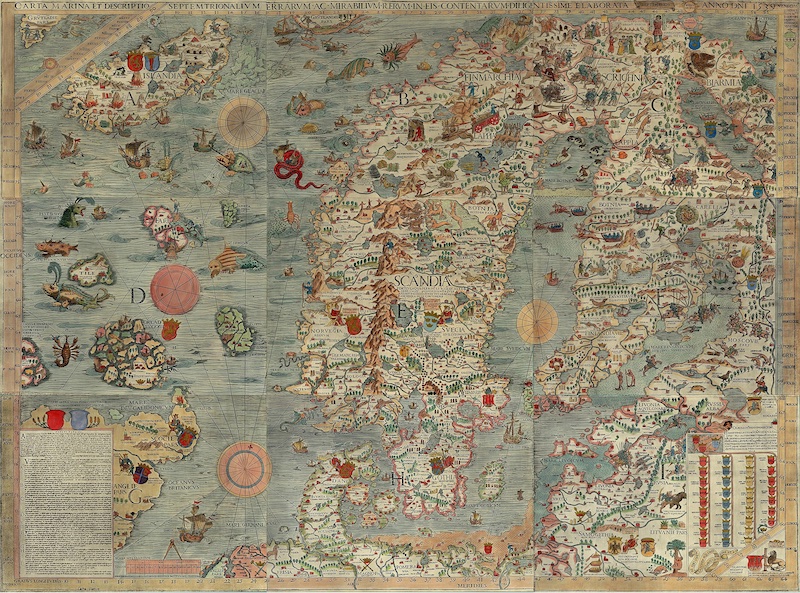
Carta Marina Map (1539) - Famous for its variety of sea monsters. Discussion Questions
Glossary
Sea Monsters and SailorsIn the Age of Exploration, sailors traveled across oceans they did not understand. They saw strange animals, big waves, and shadows in the deep water. To explain these things, they told stories about sea monsters. The KrakenOne of the scariest legends was the kraken, believed to live near Scandinavia. Sailors said it was so big that it looked like an island. Today we know the story probably came from the giant squid, a real deep-sea creature. Writers used the kraken in stories like Twenty Thousand Leagues Under the Sea, and movies like Pirates of the Caribbean made the monster even more famous. Other Sea MonstersSailors also talked about sea serpents, giant whales, huge turtles, and mermaids. Many of these creatures were based on real animals but were changed and exaggerated in the stories. |
||||||
|
||||||
| Sea Monsters Activities | ||||||
|
||||||