William Clark

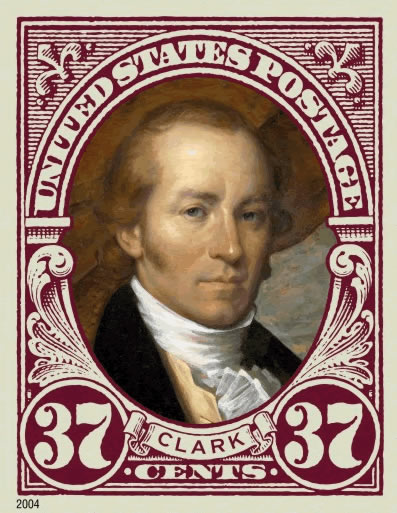
William Clark Stamp

Early Life

William Clark was born on August 1, 1770, on his family’s Virginia plantation. At age 14, Clark moved from Virginia to Louisville, Kentucky. Five years later, in 1789, Clark joined the militia to help fight the Native Americans in the Ohio Valley. After becoming an officer in the US Army, Clark retired from service and went back to Virginia to manage his family’s estate.

Exploring the West with Meriwether Lewis

In 1803, Clark’s life would change. After Thomas Jefferson’s Louisiana Purchase, in which America acquired thousands of miles of land west of the Mississippi River, Meriwether Lewis, one of Clark’s army comrades, invited him to collaborate on an expedition across the new land. Their mission was not only to explore the new land, establish friendly relations with Indians, and to discover new animals and plants, but to find the elusive Northwest Passage. Clark agreed and was made responsible for the expedition’s records and mapmaking.

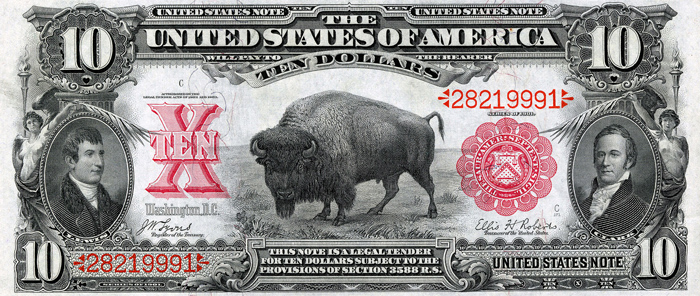
Series of 1910 $10 Bill Honoring Lewis and Clark

Roles Following the Adventure

Along with Meriwether Lewis, William Clark spent over two years exploring the new frontier. After successfully establishing Fort Clatsop, Oregon, and after discovering over 300 new species of animals and plants, the pair returned. Clark was appointed principal Indian agent and brigadier general of the Louisiana Militia by Thomas Jefferson. After the deaths of Meriwether Lewis and Sacagawea, Clark adopted her children and became governor of the Missouri Territory in 1813. After an unsuccessful bid for governor of Missouri, Clark was made superintendent of Indian Affairs in 1822. He held that position until his death on September 1, 1838.

Discussion Questions

  1. How did Clark’s early military experience prepare him for the challenges of the expedition?
  2. Why was Clark’s role in mapmaking and record-keeping important to the success of the journey?
  3. How did Clark’s life reflect the changing relationships between the U.S. government and Native American tribes?
  4. What do Clark’s post-expedition roles tell us about how the U.S. valued his contributions?
  5. How might Clark’s legacy be viewed differently if he had not partnered with Meriwether Lewis?

Early Life

William Clark was born on August 1, 1770, on his family’s plantation in Virginia. At age 14, his family moved to Louisville, Kentucky, where he later joined the militia to fight Native Americans in the Ohio Valley. Clark became an officer in the U.S. Army before retiring to manage his family’s estate in Virginia.

Exploring the West with Meriwether Lewis

In 1803, Clark’s life changed when his former military comrade, Meriwether Lewis, invited him to co-lead an expedition across the newly acquired Louisiana Territory. Their goals included mapping the land, studying plant and animal life, establishing relations with Native tribes, and searching for a water route to the Pacific Ocean. Clark was primarily responsible for the expedition’s records and detailed maps.

Roles Following the Adventure

After the expedition, Clark was appointed principal Indian agent and brigadier general of the Louisiana Militia. Following the deaths of Lewis and Sacagawea, Clark adopted Sacagawea’s children and later became governor of the Missouri Territory in 1813. Though he lost a bid for state governor, he served as Superintendent of Indian Affairs until his death on September 1, 1838.

 
William Clark Activities
William Clark - Fact or Fiction
Lewis and Clark Printable Reading Comprehension (Main Idea Focus)
Lewis and Clark Online Reading Comprehension
Comparing and Contrasting Meriwether Lewis and William Clark
Lewis and Clark Online Cloze Reading
Lewis and Clark Correct-me Passage
Dynamic Duos (Writing)
The Climb (Writing)