Reconstruction
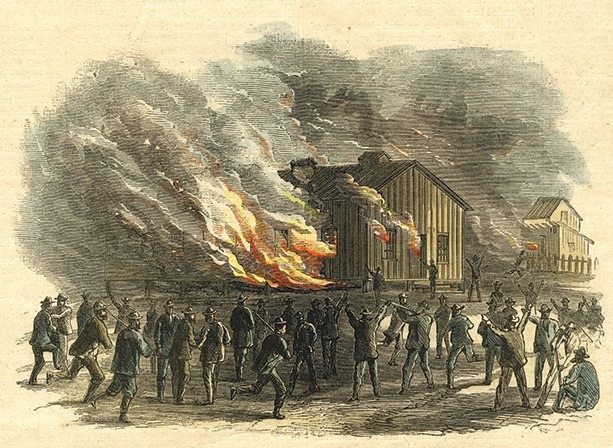
What was Reconstruction?Reconstruction refers to the period after the Civil War when the southern states were reintegrated into the Union. Immediately following the war, the southern states were in disarray. Not only were many towns and cities burned, looted and destroyed, but the southern states were still not part of the United States. Reconstruction aimed to integrate the southern states back into the Union while ensuring such states were ready to obey the new laws and measures resulting from the war. Many questions arose after the Civil War, and policies and bills passed during reconstruction aimed to answer them. The Reconstruction Acts of 1867 and 1868 divided ten confederate states into five military districts. Tens of thousands of U.S. soldiers were stationed in the south to ensure the tenets of reconstruction were honored. Constitutional AmendmentsAs a result of the Civil War, three constitutional amendments were born. The 13th amendment prohibited slavery, the 14th granted Civil Rights to black people, and the 15th granted black people the right to vote. Although president Lincoln had called for a lenient plan in dealing with the southern states, Congress enacted a plan that required the former states to meet certain conditions such as acceptance of the aforementioned amendments. Cultural ChangesThe period of Reconstruction transformed southern society and culture. Many northerners, who were referred to as Carpetbaggers, moved to the south to participate in southern governments. The Republican party ( a political party formed in 1854) gained much power in the south and passed numerous Civil Rights laws including those that legalized interracial marriage, and provided black students with the opportunities to attend school. Furthermore, black people were given positions of political power in state senates. Black people became mayors, sheriffs, and judges. Racial TensionThe cultural transformation resulted in considerable racial tension. Violent racist organizations such as the Ku Klux Klan were formed in an attempt to intimidate black people. Many white southerners joined the Republican party (they were called Scalawags), and others moved to border states such as Maryland and Kentucky, where the effects of northern occupation were absent. Jim Crow Laws and Civil Rights ViolationsReconstruction ended in 1877. By that time, all states had been re-admitted to the Union. Nevertheless, the south remained an ominous place for black people. After twelve years of southern transformation, the north lost interest in pursuing and enforcing the laws and measures passed to ensure civil rights for black people. Many of the laws were soon overturned and conditions worsened for the black citizens of the south. The south convinced Congress to pass the Posse Comitatus Act, which prohibited federal authorities from exercising any power or control over local enforcement agencies. In other words, law interpretation and enforcement were left to individual southern districts. Predictably, this led to gross violations of law and unfair treatment for black people. In 1883, the 14th amendment was rewritten to declare that Congress only had the power to outlaw public, rather than private discrimination. 13 years later, the famous Plessy v. Ferguson case ruled that state-mandated segregation (separation of races) was legal as long as the statute or ordinance provided for "separate but equal" facilities. Rulings such as these were referred to as Jim Crow laws, and were clearly passed to ensure that black people could not do the same things as white people. Such laws encouraged and promoted racial segregation and varied from district to district. Some required black people to drink at separate fountains and use separate bathrooms than white people. Others required black people to relinquish seats on public buses if a white person wanted their seat, and still others prohibited black people from attending the same schools at white people. Such laws existed until the 1964 Civil Rights Act, nearly 100 years after the Civil War. Discussion Questions
What Was Reconstruction?Reconstruction was the time after the Civil War when the southern states were brought back into the United States. Many southern towns were destroyed, and new laws had to be followed. The U.S. government sent soldiers to the South to make sure the rules were followed. The Reconstruction Acts of 1867 and 1868 divided the South into five military districts.New Constitutional AmendmentsThree important changes were made to the U.S. Constitution. The 13th Amendment ended slavery. The 14th gave black people civil rights. The 15th gave black men the right to vote. Congress required the southern states to accept these changes before rejoining the Union.Big Changes in the SouthReconstruction changed life in the South. Some northerners, called Carpetbaggers, moved south to help or find work. The Republican Party gained power and passed laws to help black citizens. Black people could vote, go to school, and even become leaders like mayors and judges.Rising Racial TensionNot everyone liked the changes. Groups like the Ku Klux Klan used violence to scare black people. Some white southerners supported the new rules, but others moved away to escape the changes.The End of Reconstruction and Jim Crow LawsReconstruction ended in 1877. After that, the federal government stopped enforcing civil rights laws. Southern states passed unfair laws called Jim Crow laws. These laws made black people use separate bathrooms, schools, and water fountains. In 1896, a court case called Plessy v. Ferguson said these rules were legal as long as things were “separate but equal.” These unfair laws lasted until the Civil Rights Act of 1964. |